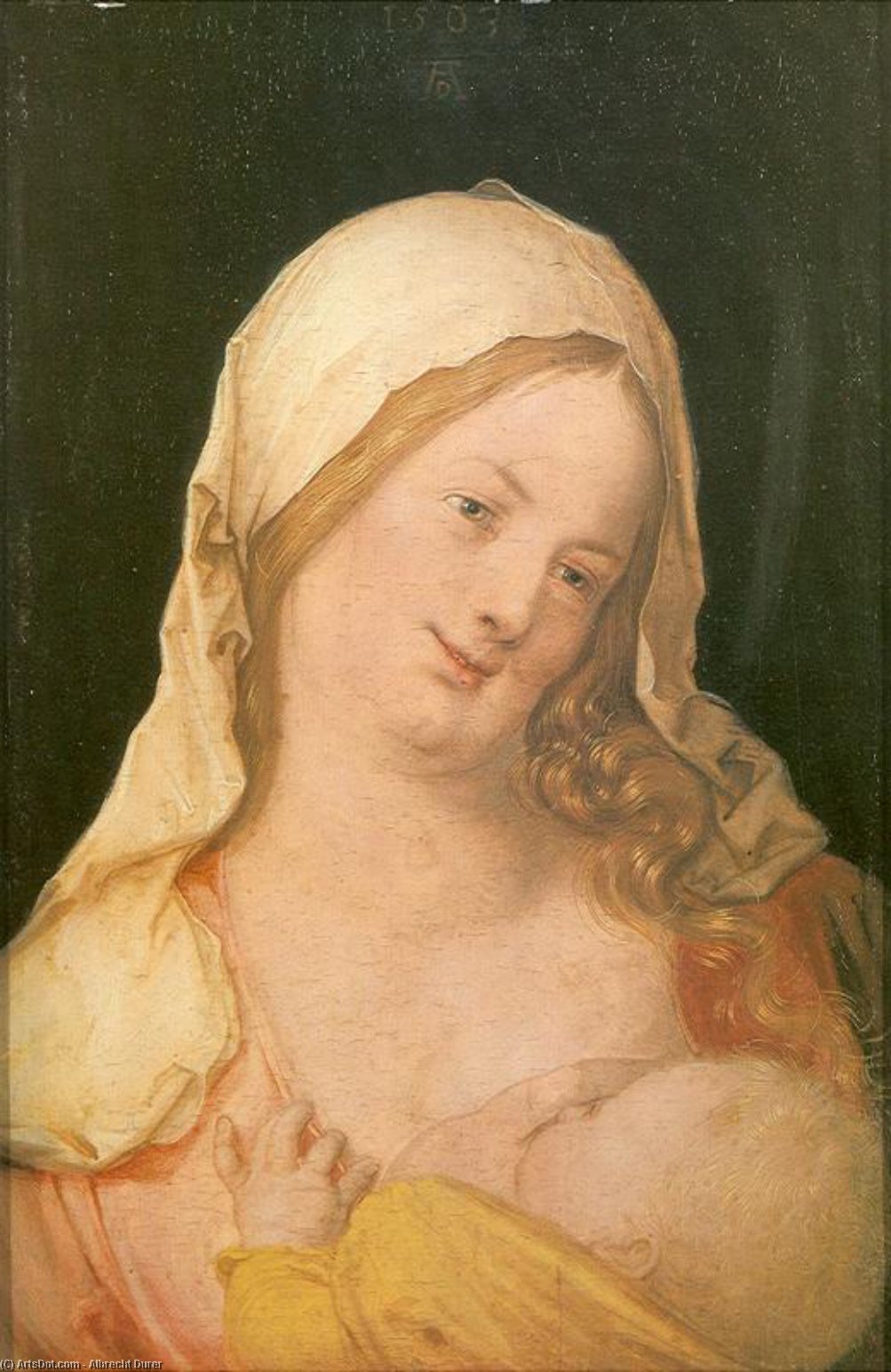
Albrecht Dürer’s iconic 1503 painting, Virgin Suckling the Child, captures a tender moment of maternal love in a meticulously detailed Renaissance style. Admire this masterful depiction and discover a timeless classic to own.
A Moment of Tender Devotion: Dürer's "Virgin Suckling the Child"
Albrecht Dürer’s “Virgin Suckling the Child,” completed in 1503, is more than just a depiction of maternal love; it’s a profound meditation on faith, humanity, and the very essence of divine grace. Executed during a pivotal moment in Dürer's career – a period marked by an intense desire to synthesize Northern European artistic traditions with his own burgeoning Renaissance ideals – this painting embodies the artist’s meticulous observation and masterful technique. The scene itself is deceptively simple: Mary, presented as a figure of serene beauty and quiet strength, offers her infant son Jesus to the viewer. Yet, within this seemingly straightforward composition lies a complex web of symbolism and emotional resonance that continues to captivate audiences centuries later.
- Subject Matter & Composition: The central focus is undeniably the intimate act of nursing – a universally recognized symbol of nourishment, protection, and unconditional love. Dürer’s careful arrangement places Jesus on the left side of Mary's body, drawing the eye upwards towards her face, suggesting a direct connection between mother and child, and by extension, between humanity and divinity. The presence of two additional figures – one standing behind Mary and another further back to the left – adds layers of narrative complexity, perhaps representing witnesses to this sacred moment or symbolizing the broader Christian community.
- Technical Brilliance: Dürer’s mastery of engraving and painting is immediately apparent in the astonishing detail and realism of the figures. His use of cross-hatching creates a remarkable sense of volume and texture, particularly evident in Mary's drapery and Jesus's skin. The subtle gradations of light and shadow contribute to an almost palpable three-dimensionality, elevating the scene beyond a mere representation and transforming it into a powerful embodiment of spiritual truth.
The Renaissance Ideal: Humanism and Divine Representation
“Virgin Suckling the Child” firmly establishes Dürer within the context of the High Renaissance, a period characterized by a renewed interest in classical antiquity and a humanist emphasis on human potential. However, unlike many Italian Renaissance artists who focused primarily on idealized beauty and mythological subjects, Dürer sought to portray biblical figures with an unprecedented degree of psychological realism. Mary is not depicted as a distant goddess but as a relatable woman – vulnerable, compassionate, and deeply connected to her child. This approach reflects the growing influence of humanist thought, which encouraged a more nuanced understanding of human emotions and experiences.
- Symbolism & Iconography: The painting is rich in symbolic meaning. The nursing itself represents Christ as the “bread of life,” offering sustenance to humanity. Mary’s pose – upright and dignified – reflects her role as a model of piety and virtue. The inclusion of the two additional figures suggests the universality of this divine gift, extending its reach beyond the immediate mother-child relationship to encompass the entire Christian community.
- Dürer's Artistic Vision: Dürer’s ambition was not simply to create a beautiful image but to convey a profound spiritual message. He meticulously researched biblical texts and consulted with theologians to ensure that his depiction accurately reflected the teachings of Christianity. This commitment to intellectual rigor is evident in every detail of the painting, from the precise rendering of Mary's features to the carefully considered composition.
A Window into Nuremberg’s Artistic Soul
Created in 1503, “Virgin Suckling the Child” reflects the vibrant artistic climate of Nuremberg during Dürer’s time. The city was a major center for printing and publishing, fostering an environment of intellectual curiosity and innovation. Dürer's workshop was at the heart of this dynamic scene, producing not only paintings but also engravings, woodcuts, and illuminated manuscripts – all hallmarks of Nuremberg’s artistic prowess. This particular work demonstrates his ability to blend technical skill with profound spiritual insight, solidifying his position as one of the most important artists of the Northern Renaissance.
- Historical Context: The painting was likely commissioned for a private devotional setting, reflecting the growing importance of personal piety within the burgeoning Protestant movement. Its themes of faith, family, and redemption resonated deeply with audiences seeking solace and guidance in a turbulent era.
- Legacy & Influence: “Virgin Suckling the Child” has had a lasting impact on Western art. Dürer’s meticulous technique and profound psychological insight influenced generations of artists who followed him, shaping the course of Northern Renaissance painting and beyond.
Capturing the Essence: A Hand-Painted Reproduction
ArtsDot offers meticulously crafted hand-painted reproductions of Albrecht Dürer's “Virgin Suckling the Child,” allowing you to experience the full impact of this masterpiece in your own space. Our skilled artisans employ traditional techniques, faithfully recreating Dürer’s intricate details and vibrant colors. Each reproduction is a testament to our commitment to preserving artistic heritage and bringing timeless beauty into contemporary homes and galleries. Own a piece of art history – order your hand-painted reproduction today.