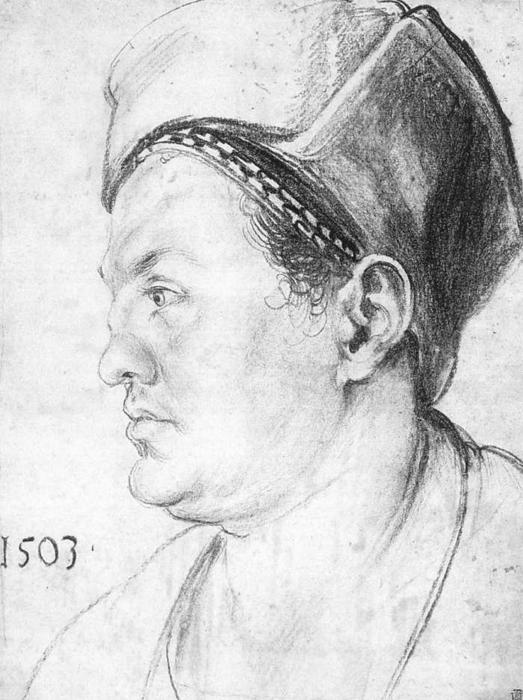
Magnificent hand-painted reproduction of Willibald Pirckheimer by Albrecht Dürer (1503). Admire the Renaissance portrait's detail & artistry. Elevate your space with this timeless masterpiece.
Explore the art of Albrecht Dürer, a German Renaissance master! Discover iconic engravings like Melencolia I and detailed self-portraits – a pivotal figure in art history.
Explore Berlin's history & art at the Staatliche Museen! Discover Nefertiti, ancient artifacts, masterpieces across 17 museums on Museum Island & beyond.
A Portrait of Dignity: Willibald Pirckheimer by Albrecht Dürer
The charcoal drawing depicting Willibald Pirckheimer, executed in 1503 by Albrecht Dürer, transcends mere representation; it embodies the spirit of Renaissance humanism and stands as a testament to Dürer’s unparalleled mastery of artistic technique. This intimate portrait captures Pirckheimer's profile view with remarkable precision, prioritizing clarity of form and conveying an understated elegance that speaks volumes about the sitter’s character. The artist’s decision to employ monochrome—a bold choice for its time—intensifies the emotional resonance of the image, stripping away superfluous ornamentation to focus solely on the essence of human presence.
The Anatomy of Line: Technique and Craftsmanship
Dürer's meticulous approach to drawing is immediately apparent in the artwork’s execution. Utilizing charcoal or graphite on paper, he skillfully employs hatching and cross-hatching techniques—a hallmark of Renaissance artistic practice—to sculpt tonal variations that imbue Pirckheimer’s face with depth and volume. The subtle interplay of lines creates an illusion of three dimensions, mirroring the humanist fascination with understanding the human body as a microcosm of the universe. Careful observation informs every stroke, reflecting Dürer's dedication to anatomical accuracy and his commitment to capturing the subtleties of facial expression. This painstaking process underscores not only artistic skill but also intellectual curiosity—a defining trait of the era.
A Window into Nuremberg’s Renaissance Soul
Created in 1503 during a period of burgeoning artistic innovation in Nuremberg, this portrait reflects the broader cultural landscape of the time. Pirckheimer himself was a prominent humanist scholar and diplomat, representing the ideals of intellectual enlightenment and civic virtue championed by figures like Erasmus and Pico della Mirandola. Dürer’s depiction aligns perfectly with these humanist values, prioritizing dignity and contemplation—qualities considered crucial for cultivating moral character. The portrait serves as a visual embodiment of Nuremberg's ambition to establish itself as a center of learning and artistic excellence.
Symbolism Beneath the Surface
While seemingly simple in its composition, the drawing is laden with symbolic significance. The profile view—a convention favored by Renaissance artists—suggests introspection and contemplation, inviting viewers to consider Pirckheimer’s inner life alongside his outward appearance. The restrained lighting contributes to a mood of solemn seriousness, emphasizing the sitter's noble bearing. Furthermore, Dürer’s masterful rendering of facial features conveys an expression of quiet confidence – a reflection of Pirckheimer’s role as a respected statesman and intellectual.
Emotional Resonance: An Image That Endures
Ultimately, Willibald Pirckheimer by Albrecht Dürer transcends its formal portrait status to evoke a profound emotional response. The drawing's understated beauty—achieved through masterful technique and informed by humanist ideals—continues to captivate audiences centuries later. It stands as an enduring symbol of Renaissance artistry and human dignity, reminding us that true greatness lies not in grand gestures but in the quiet contemplation of one’s own character. Its timeless appeal makes it a compelling subject for interior designers seeking pieces that inspire reflection and convey sophistication.