A Portrait of Dignity: Albrecht Dürer’s Reverie on Willibald Pirckheimer
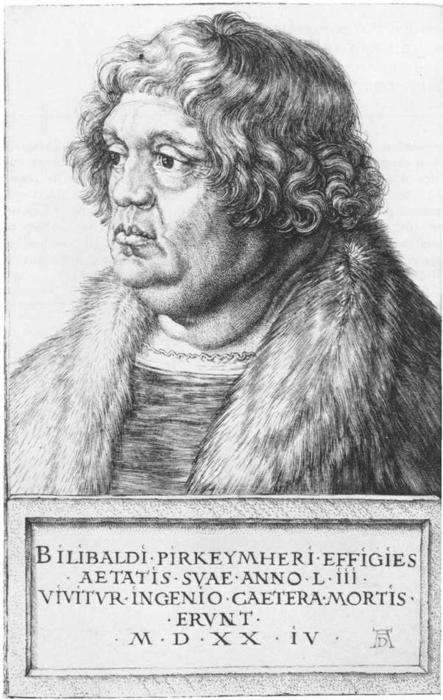
The engraving by Albrecht Dürer, depicting Willibald Pirckheimer, transcends mere representation; it embodies the humanist ideals that defined the High Renaissance. Executed in 1524, this masterful work captures not just a likeness but also an essence of character—a quiet contemplation and understated nobility—that speaks across centuries to viewers today. It’s a testament to Dürer's unparalleled skill as both draftsman and printmaker, demonstrating his profound understanding of anatomy, perspective, and the expressive potential of line engraving.
- Subject Matter: Willibald Pirckheimer (1470-1529) was a prominent humanist scholar, diplomat, and administrator in Nuremberg—a figure whose intellectual pursuits mirrored the broader Renaissance fascination with classical learning and human flourishing.
- Style & Technique: Dürer’s approach is firmly rooted in Mannerism, a stylistic movement that prioritized elegance and stylized forms over naturalistic detail. Notice the elongated proportions of Pirckheimer's torso and head—a deliberate departure from earlier Renaissance conventions—reflecting an artistic desire to convey psychological complexity rather than simply mirroring reality.
The engraving’s technique is exemplary. Dürer meticulously etched a copper plate with astonishing precision, utilizing fine lines to build up tonal variations that mimic the subtle shading of charcoal or pencil. This painstaking process resulted in a surface texture that captures the nuances of light and shadow—essential for conveying Pirckheimer's solemn gaze and conveying an aura of dignified repose. The artist’s masterful control over line weight contributes significantly to the overall impression, emphasizing key features and delineating contours with remarkable accuracy.
Historical Context: Created during a period of intellectual ferment in Nuremberg—a city at the forefront of artistic innovation—the portrait reflects the humanist spirit prevalent at the time. Dürer’s work aligns with the broader Renaissance preoccupation with portraying human dignity and virtue, mirroring the ideals championed by thinkers like Erasmus and Pico della Mirandola.
Symbolism & Emotional Impact: Beyond its realistic depiction of Pirckheimer's features, the engraving communicates a deeper symbolic message. The serene expression—a hallmark of Mannerist portraiture—suggests inner contemplation and moral fortitude. Dürer’s masterful rendering invites viewers to consider not just what is seen but also what lies beneath—the quiet strength and intellectual brilliance that characterized Pirckheimer's life.
Ultimately, this reproduction offers more than just an image; it presents a window into the artistic sensibilities of the Renaissance and celebrates the enduring power of humanist ideals. Its meticulous detail and evocative tonal qualities ensure that Willibald Pirckheimer’s portrait continues to inspire admiration for generations to come.