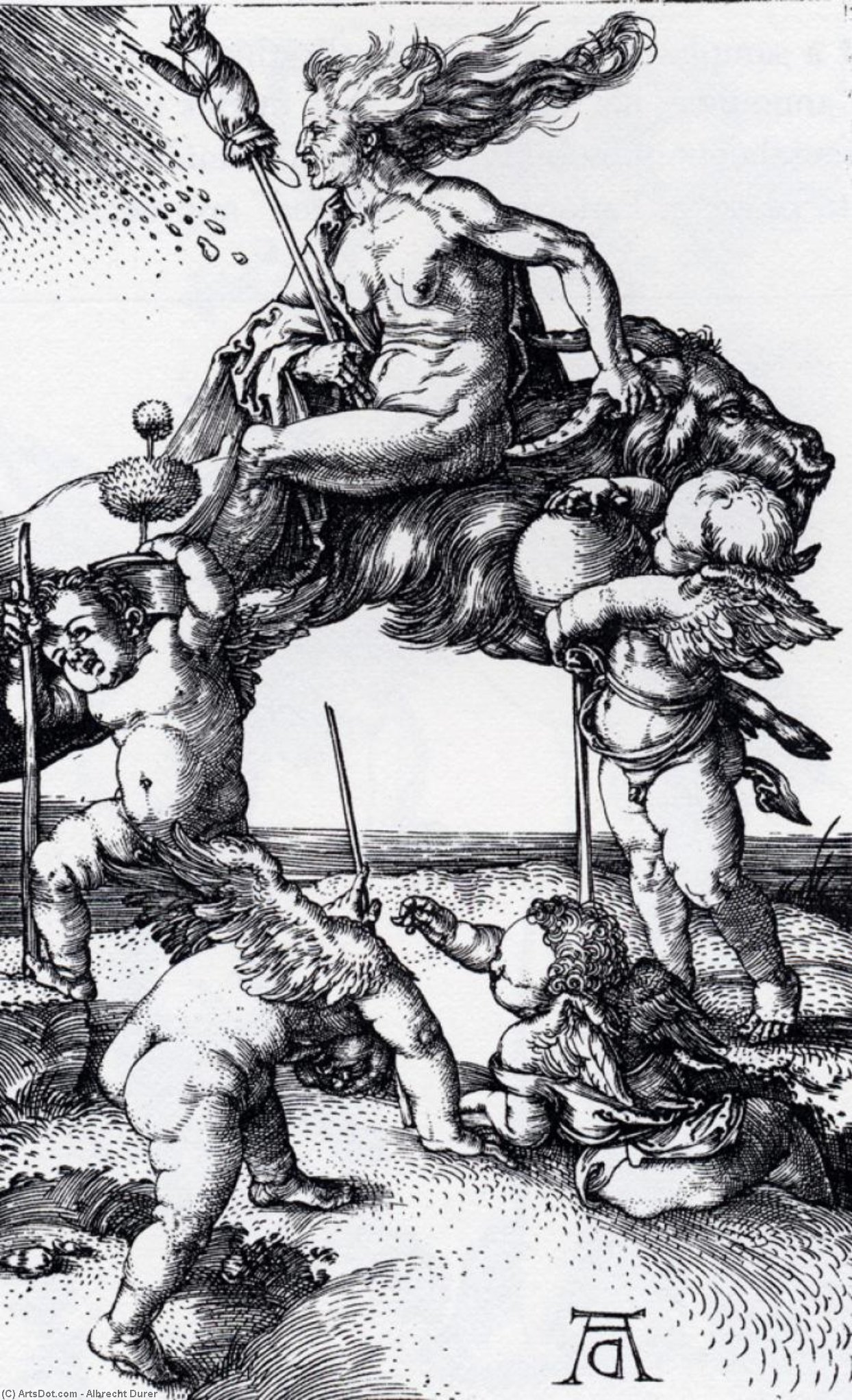
A Vision of Defiance: Unpacking Dürer's "Witch Riding Backwards on a Goat"
Albrecht Dürer’s “Witch Riding Backwards on a Goat,” created around 1500, is more than just a captivating image; it’s a window into the anxieties and beliefs of the Northern Renaissance. Executed in stark monochrome with meticulous detail, this engraving embodies the era's fascination with both the sacred and the profane, the beautiful and the terrifying. The scene depicts a woman, seemingly defying convention by riding her goat backwards – an act laden with symbolic weight – against a backdrop of fantastical elements that speak to the complex worldview of the time. Dürer’s mastery of engraving technique is immediately apparent in the incredibly precise line work, creating a sense of depth and drama that transcends the limitations of the medium.
- Technique: The artwork's creation hinged on the intricate process of engraving. A copper or iron plate was meticulously etched with a burin – a sharp tool used to cut lines into the metal surface. This plate, then inked and pressed onto paper through a complex system of pressure and dampening, resulted in the stunningly detailed image we see today.
- Composition: The vertical orientation and densely packed figures create a sense of urgency and narrative intensity. The slightly off-center placement of the witch and goat draws the viewer's eye, while the layered arrangement suggests depth and complexity.
The Symbolism of Rebellion and the Devil’s Embrace
The subject matter itself is profoundly symbolic. The image taps into prevalent folklore surrounding witchcraft – a fear deeply rooted in medieval Europe. The witch riding backwards represents defiance, unconventionality, and perhaps even a rejection of societal norms. The goat, often associated with pagan rituals and demonic forces, further reinforces this interpretation. However, the inclusion of an angelic figure in the upper right corner introduces a crucial element of moral judgment, suggesting a struggle between good and evil. This juxtaposition creates a powerful tension, inviting viewers to contemplate the nature of sin, redemption, and the precarious balance between these opposing forces.
Dürer’s choice to depict the witch riding backwards is particularly significant. It's not simply a depiction of witchcraft; it’s an assertion of agency within a patriarchal society where women were often viewed as vulnerable and powerless. This act of rebellion, rendered with such technical precision, elevates the image beyond a mere illustration and transforms it into a potent statement about human will.
A Masterpiece of Northern Renaissance Engraving
“Witch Riding Backwards on a Goat” is a quintessential example of Dürer’s style – characterized by its meticulous detail, precise line work, and narrative complexity. His influence extended far beyond Nuremberg; he set new standards for engraving across Europe. The use of hatching and cross-hatching to build up tonal values demonstrates his understanding of light and shadow, creating a dramatic effect that is both visually arresting and emotionally resonant. The flattened perspective, typical of engravings from this period, serves not to deceive but to emphasize the symbolic content rather than realistic representation.
Dürer’s dedication to craftsmanship is evident in every line of this engraving. It's a testament to his skill as an artist and his profound understanding of printmaking techniques. This piece remains a powerful reminder of the enduring fascination with human nature, morality, and the darker aspects of our world – themes that continue to resonate with audiences today.