A Masterclass in Naturalism
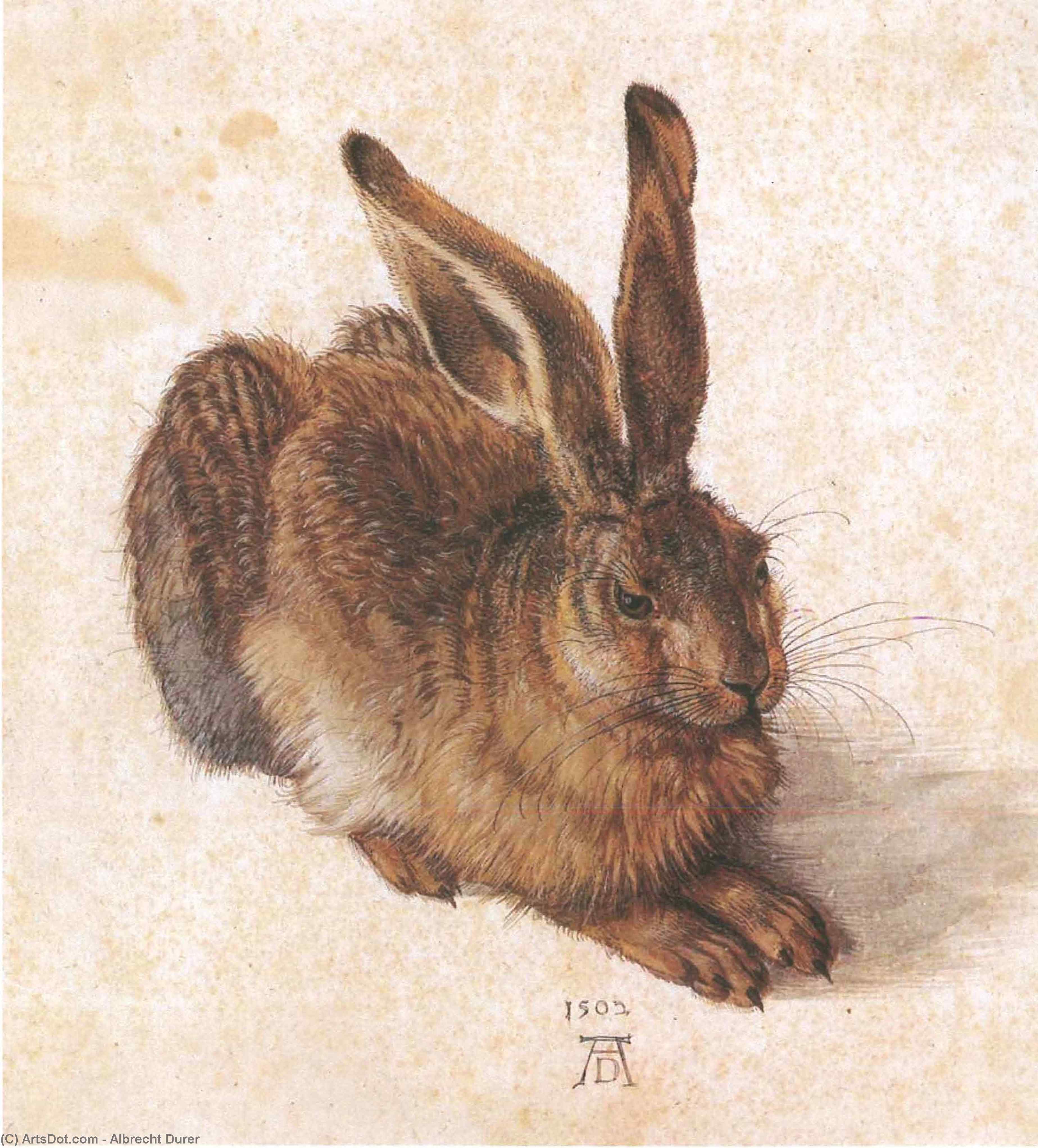
Albrecht Dürer’s 1502 watercolor masterpiece transcends mere animal portraiture; it is a profound study of nature and a testament to the artist's unparalleled skill. This remarkably detailed depiction of a young hare captures not just its physical form, but also a sense of quiet alertness and fleeting beauty that resonates with viewers centuries later.
Northern Renaissance Precision
Executed during the height of the Northern Renaissance, this work exemplifies Dürer’s dedication to meticulous observation and realistic representation. Unlike the idealized forms often found in Italian Renaissance art, Dürer embraced a direct engagement with the natural world. The painting showcases his mastery of watercolor over preliminary pen and ink drawing – a technique allowing for both precise linework defining every strand of fur, and delicate washes creating subtle tonal variations.
Anatomy & Technique
The hare is rendered with astonishing anatomical accuracy. Dürer’s painstaking attention to detail extends to the texture of the fur, the delicate structure of the ears, and even the reflection in its eye – a testament to his observational prowess. The subtle modeling of light and shadow creates a sense of volume and depth without relying on dramatic chiaroscuro, characteristic of some contemporary styles.
Symbolism & Historical Context
While lacking overt religious or mythological symbolism common in art of the period, the hare itself carries layered meanings. Historically, hares represented fertility, abundance, and swiftness. Dürer’s choice to focus on a single animal as his subject was somewhat unconventional, suggesting an interest in pure artistic exploration rather than allegorical storytelling. The prominent date and artist's monogram underscore its status as a personal study – a demonstration of skill intended for appreciation in its own right.
Emotional Resonance & Interior Appeal
This artwork evokes a sense of tranquility and connection to the natural world. Its muted earth tones—browns, ochres, and russets—create a calming palette that complements a variety of interior styles, from traditional to contemporary. A reproduction of “Young Hare” adds a touch of refined elegance and intellectual depth to any space, serving as both a beautiful object and a conversation starter. It’s an ideal piece for those who appreciate artistry rooted in observation, detail, and the enduring beauty of nature.