A Tapestry of Wisdom: Alessandro Allori’s “Stories of St. Jerome”
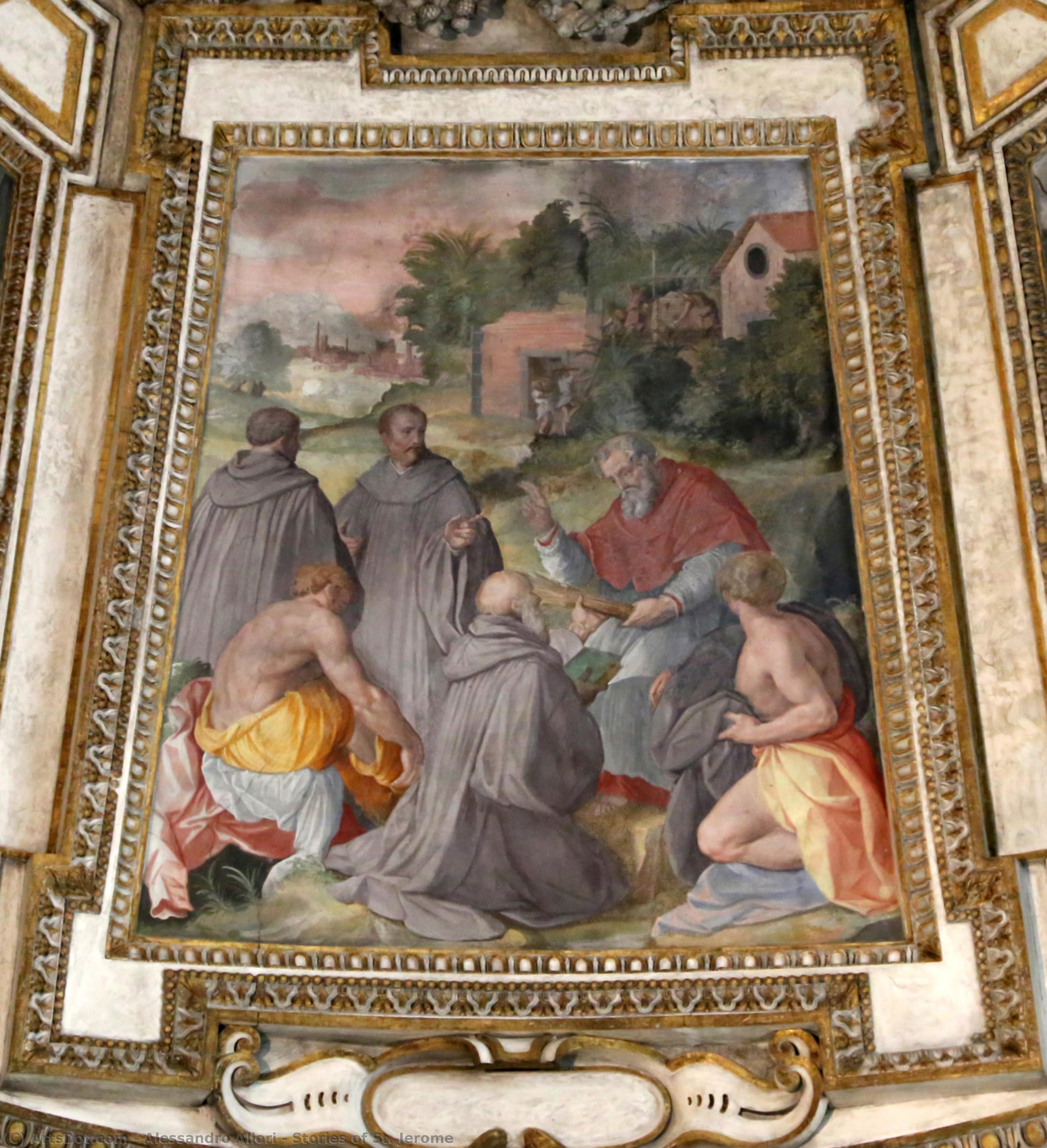
Alessandro Allori's "Stories of St. Jerome," painted in 1577, is more than just a depiction of the biblical hermit; it’s a vibrant tableau of intellectual pursuit and communal engagement, steeped in the complexities of Renaissance Florence. This fresco, now residing within the confines of a private collection (though its exact location remains discreet), offers a captivating glimpse into the artistic and philosophical currents of its time. Allori, a student of the masterful Agnolo Bronzino, skillfully blends Mannerist elegance with burgeoning Baroque elements, creating an image that is both formally sophisticated and emotionally resonant.
The scene unfolds within a meticulously rendered village setting – a carefully constructed illusionistic space that draws the viewer into the heart of the narrative. At the center stands St. Jerome, identifiable by his characteristic tonsure and the quill he holds, deep in conversation with a group of assembled men. These figures aren’t merely passive listeners; they are actively engaged in debate, gesturing emphatically, and appearing to be absorbed in the unfolding story. The composition is dynamic, filled with movement and interaction – a deliberate departure from the static formality often associated with earlier Renaissance art. Notice how Allori employs subtle gradations of light and shadow, creating a sense of depth and volume that elevates the scene beyond a simple representation.
Mannerist Refinements: Technique and Style
Allori’s mastery lies in his nuanced approach to technique. He utilizes *sfumato*, a characteristic Mannerist device, to soften outlines and create an atmospheric haze, particularly around the figures in the background. This blurring effect contributes to the overall sense of mystery and invites speculation about the nature of the conversations taking place. The color palette is rich and restrained – predominantly earthy tones punctuated by vibrant reds and blues – reflecting the artistic sensibilities of the period. The elongated forms of the figures, a hallmark of Mannerism, are rendered with a remarkable degree of grace and fluidity, suggesting both intellectual prowess and physical vitality.
Furthermore, Allori’s use of perspective is particularly noteworthy. He employs aerial perspective – diminishing detail and color intensity in the distance – to create a convincing illusion of depth. This technique not only enhances the realism of the scene but also draws attention to St. Jerome as the focal point, anchoring the composition and guiding the viewer's eye.
Symbolism and Context: Papal Authority and Scholarly Discourse
“Stories of St. Jerome” is deeply embedded within the political and intellectual landscape of 16th-century Florence. The fresco likely served as a visual testament to papal authority, subtly reinforcing the Church’s role as patron of learning and scholarship. The gathering of men represents the pursuit of knowledge – biblical interpretation, theological debate, and the dissemination of ideas. St. Jerome himself is depicted not just as a solitary hermit but as a conduit for wisdom, sharing his insights with those around him.
The inclusion of architectural details—a grand palace in the background—further emphasizes the importance of learning and intellectual pursuits within the context of Florentine society. It’s believed that Allori was commissioned by a prominent papal figure or a wealthy patron who valued both religious devotion and scholarly achievement. The fresco, therefore, functions as a complex visual argument – celebrating faith, reason, and the enduring power of human intellect.
Emotional Resonance: A Moment of Shared Contemplation
Despite its intellectual complexity, “Stories of St. Jerome” possesses a profound emotional resonance. The expressions on the faces of the assembled men—ranging from earnest contemplation to lively debate—suggest a shared experience of intellectual curiosity and spiritual inquiry. There’s a palpable sense of community – a feeling that these individuals are united by their pursuit of knowledge and their reverence for St. Jerome's legacy. The painting invites us to reflect on our own engagement with ideas, the importance of dialogue, and the enduring power of storytelling.
Reproductions of this remarkable fresco capture much of its original impact, offering a beautiful and thought-provoking addition to any interior space. Its blend of historical significance, artistic skill, and emotional depth makes it a truly exceptional work of art.