Discover Alessandro Allori (1535-1607), a Florentine Mannerist painter deeply influenced by Bronzino. Explore his statuesque portraits & frescoes, bridging Renaissance artistry with elegant detail.
Explore Santa Maria Novella in Florence: A stunning basilica blending Gothic & Renaissance art. Discover masterpieces by Giotto, Masaccio & Ghirlandaio, and the historic Officina Profumo-Farmaceutica.
Alessandro Allori’s “Stories of St. Jerome”: A Renaissance Vision of Scholastic Piety
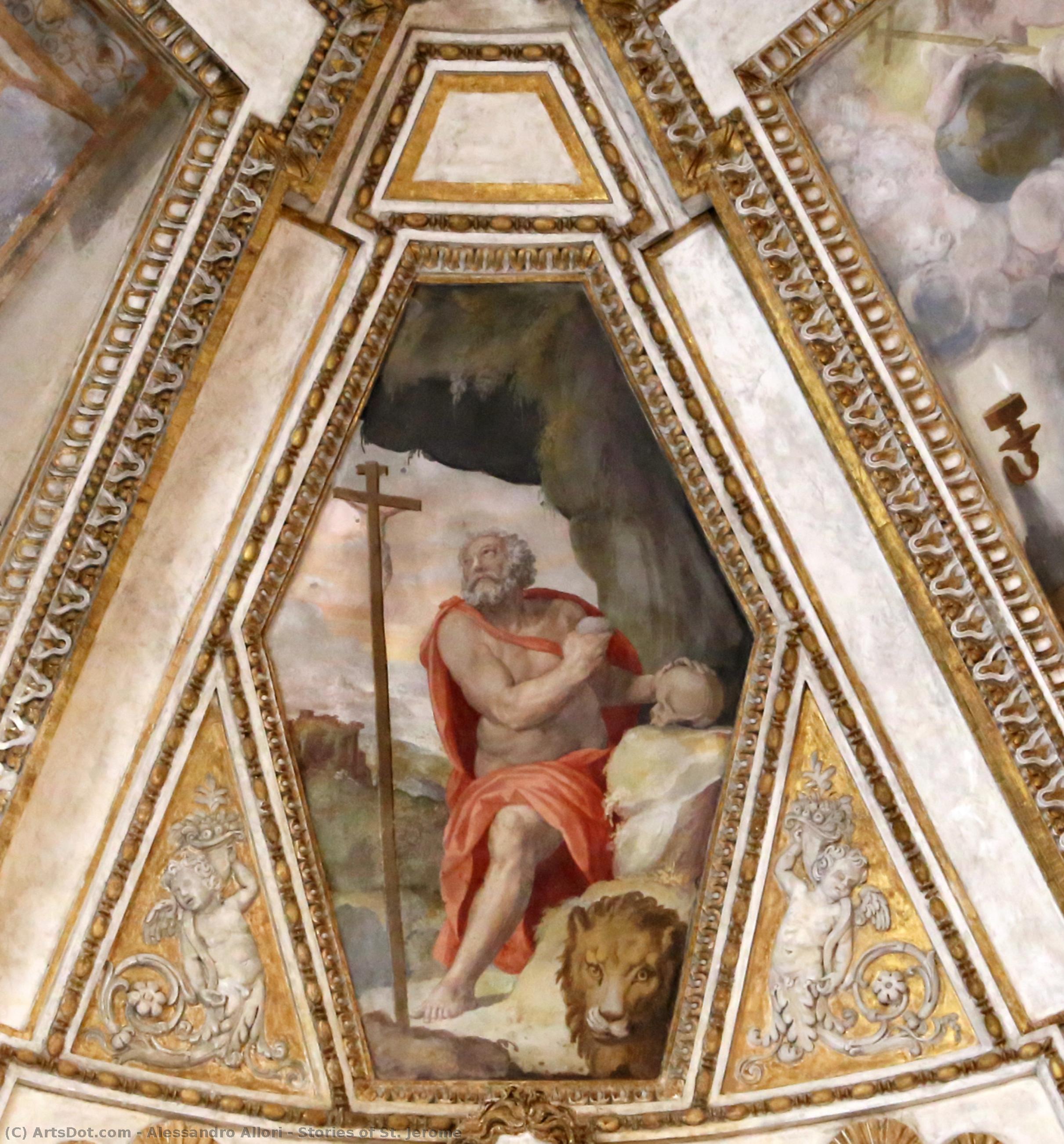
The fresco "Stories of St. Jerome," executed by Alessandro Allori in 1577, stands as a testament to the enduring power of Mannerist aesthetics within the broader context of Renaissance art. Located in the Basilica di San Lorenzo Maggiore in Florence, Italy, this monumental artwork transcends mere depiction; it aspires to convey a profound spiritual narrative interwoven with masterful illusionistic techniques and symbolic resonance. Allori’s ambition was not simply to portray Saint Jerome—the revered monastic scholar who wrestled with temptation and ultimately transcribed the Gospels—but to elevate him into an emblem of intellectual virtue and papal authority, reflecting the anxieties and aspirations of Florence during its golden age.
- Style & Technique: Allori’s approach firmly anchors itself within the Mannerist movement, characterized by a deliberate rejection of High Renaissance ideals of balance and harmony. Unlike Raphael or Michelangelo, whose works prioritized idealized beauty and anatomical precision, Allori favored elongated figures, flattened perspectives, and a disconcerting sense of spatial ambiguity. The fresco employs *trompe l'oeil*—a technique designed to deceive the eye—creating an illusionistic ceiling that mimics the expanse of the heavens, thereby emphasizing Jerome’s contemplative gaze and reinforcing the basilica’s grandeur.
- Historical Context: Florence in 1577 was a city grappling with religious upheaval following the Protestant Reformation. Pope Pius V commissioned Allori to commemorate St. Jerome's role as protector of scholars and theologians, signaling the Church’s commitment to upholding intellectual pursuits amidst growing challenges to papal dogma. The fresco served as a powerful visual affirmation of papal patronage and a deliberate rebuke to humanist skepticism.
- Symbolism & Composition: The central figure of St. Jerome dominates the composition, positioned beneath an ornate celestial vault adorned with swirling clouds and radiant stars. Beside him stands a lion—a traditional symbol of courage and vigilance—representing divine providence safeguarding Jerome’s unwavering devotion. Two birds circling above further enrich the imagery, symbolizing spiritual contemplation and aspiration toward God. The meticulous detail in portraying Jerome's drapery and facial expression underscores Allori’s commitment to conveying psychological depth.
- Emotional Impact: “Stories of St. Jerome” aims to inspire awe and reverence within the viewer. The luminous colors—particularly blues and golds—evoke a sense of celestial splendor, transporting the spectator into a realm of divine contemplation. Allori’s masterful manipulation of perspective creates an immersive experience, drawing the eye upward toward the heavens and fostering a feeling of solemn grandeur.
The fresco's enduring appeal lies not only in its technical brilliance but also in its ability to encapsulate the spiritual ethos of Renaissance Florence—a conviction that intellectual inquiry could illuminate the path to salvation. Alessandro Allori’s “Stories of St. Jerome” remains a captivating masterpiece, inviting contemplation and admiration for generations of art enthusiasts.