The Labyrinthine Wisdom of Allori’s “Stories of St. Jerome”
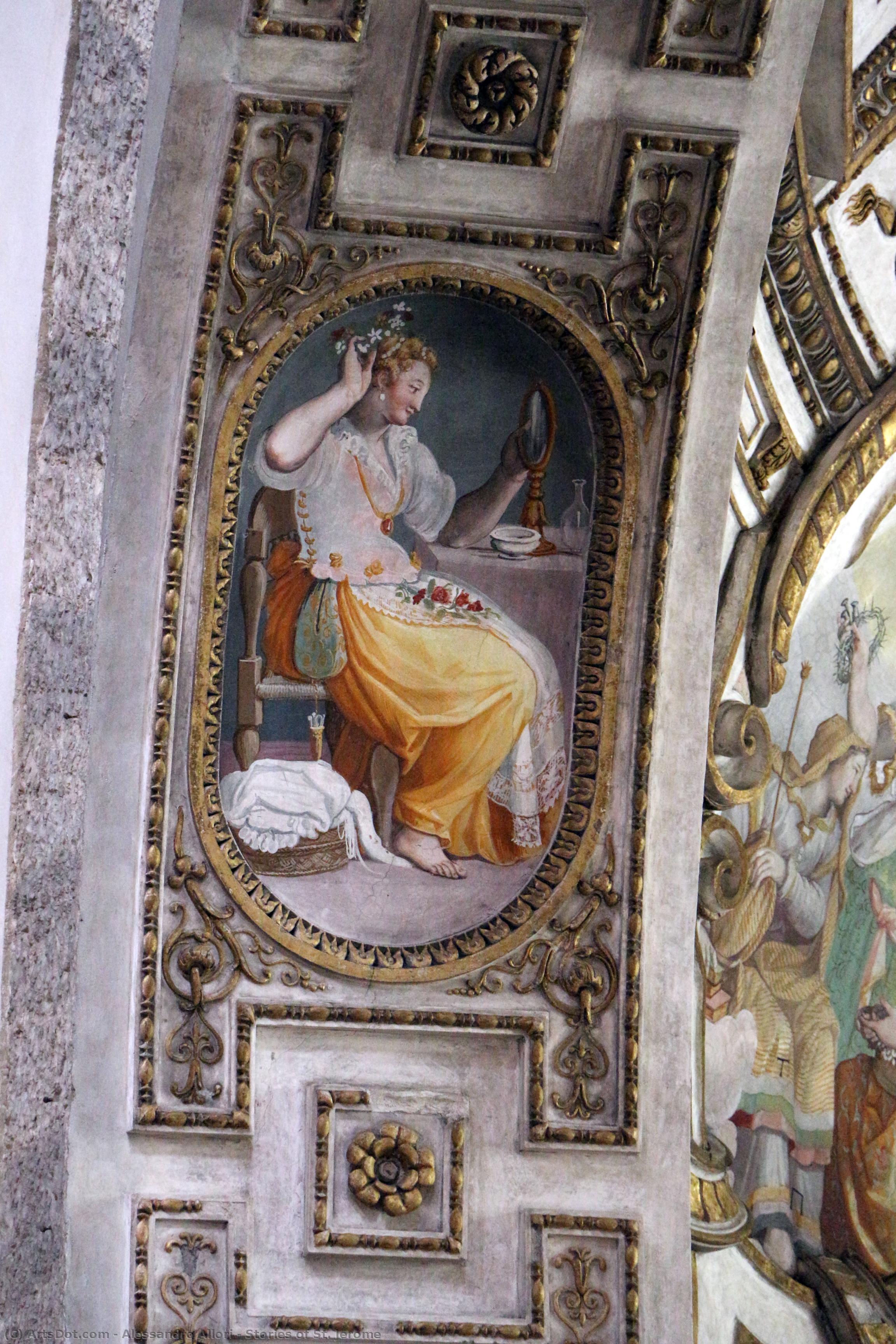
Alessandro Allori's "Stories of St. Jerome," painted in 1577, isn’t merely a depiction of the biblical figure; it’s an immersive journey into the heart of Renaissance intellectualism and papal authority. Created during a period of intense artistic and religious debate, this fresco, now housed within the Palazzo Vecchio in Florence, offers a captivating glimpse into the world of scholarly pursuits and the complex relationship between faith, learning, and power.
The scene unfolds within a meticulously rendered study – a space brimming with symbolic detail. St. Jerome, identifiable by his tonsure and the skull at his feet (a potent reminder of mortality), sits absorbed in a book, surrounded by an array of figures engaged in various intellectual activities. A scribe diligently copies texts, a philosopher contemplates geometric forms, and a musician plays a lute – each figure representing a facet of humanist learning. The composition isn’t static; it's deliberately layered with illusionistic space, creating the impression that the study extends far beyond the confines of the fresco itself. This technique, characteristic of the late Mannerist style, draws the viewer into the scene and invites contemplation.
Mannerism’s Subtle Dance: Technique and Style
Allori's mastery lies in his ability to seamlessly blend the stylistic elements of Mannerism with a heightened sense of realism. The figures are elongated and attenuated, their poses subtly theatrical – a hallmark of the style that prioritized elegance and psychological depth over strict naturalism. Notice how the drapery flows with an almost liquid quality, creating a dynamic tension within the composition. The color palette is restrained yet sophisticated, dominated by cool blues, greens, and ochres, punctuated by warmer tones in the faces and hands. The artist’s use of *sfumato*, a technique borrowed from Leonardo da Vinci, softens the edges and creates an atmospheric haze, lending the scene a sense of mystery and timelessness.
Crucially, Allori employs a sophisticated system of perspective – not one that adheres to strict mathematical rules but rather one that subtly manipulates space to create a convincing illusion of depth. This is particularly evident in the background, where architectural elements seem to recede into an infinite distance. The layering of figures and details contributes to this sense of spatial ambiguity, inviting repeated viewing and revealing new nuances with each observation.
Symbolism Woven Within: Jerome’s World
Beyond its technical brilliance, “Stories of St. Jerome” is rich in symbolic meaning. The skull represents the transience of earthly life and serves as a constant reminder of the importance of spiritual contemplation. The books and scrolls symbolize knowledge and wisdom, while the instruments of learning – the quill, the lute, the geometric diagrams – represent different avenues for pursuing truth. Most significantly, St. Jerome’s posture suggests not just intellectual activity but also prayerful devotion; he is engaged in a dialogue between reason and faith.
The presence of papal symbols—a banner bearing the papal tiara—underscores the fresco's connection to the patronage of Pope Clement VII, who commissioned it. This reinforces the idea that learning was not merely an individual pursuit but also a vital component of the Church’s mission to disseminate knowledge and uphold its authority.
A Legacy of Intellectual Engagement
“Stories of St. Jerome” remains a powerful testament to the Renaissance ideal of *studia humanitatis* – the cultivation of human intellect and virtue. It's a work that speaks not only to the artistic achievements of Alessandro Allori but also to the broader cultural context in which it was created. Today, reproductions of this fresco offer an opportunity to bring its intricate details and profound symbolism into our own homes, serving as a constant reminder of the enduring value of knowledge, faith, and the pursuit of wisdom.