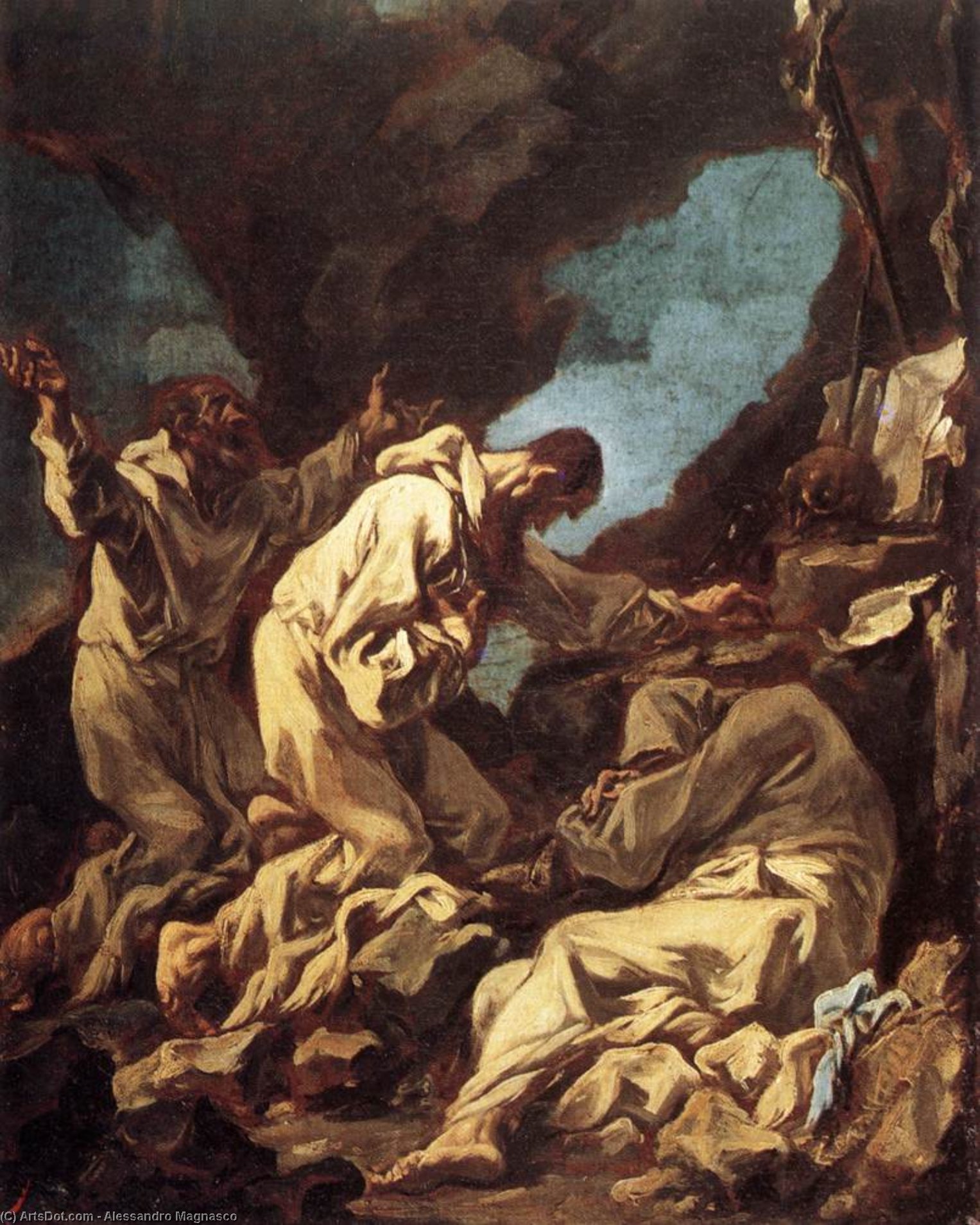
A Glimpse into Melancholy: Alessandro Magnasco’s “Three Camaldolite Monks at Prayer”
Alessandro Magnasco's "Three Camaldolite Monks at Prayer," painted in 1713, is not merely a depiction of religious observance; it’s a carefully constructed tableau of quiet contemplation steeped in a palpable sense of melancholy. This remarkable work, housed within the Rijksmuseum in Amsterdam and also documented on the Web Gallery of Art (WGA), offers a rare window into the artist's intensely personal style – one that evolved from collaborative projects to a deeply individual expression often characterized by unsettling beauty and a fascination with decay. Magnasco, born in Genoa and primarily working in Milan, spent his career navigating a subtle shift in artistic focus, moving away from established conventions toward a more introspective and emotionally charged approach.
The scene unfolds within the stark simplicity of a rugged rock formation, providing a dramatic backdrop for the three Camaldolite monks. Their postures – kneeling, seated, and leaning slightly forward – suggest an absorption in prayer, their faces averted, lost in private devotion. The composition is remarkably balanced, with each monk occupying a distinct space while maintaining a visual connection to one another and the imposing rock face. Magnasco’s masterful use of light and shadow further emphasizes this sense of depth and isolation; a diffused illumination washes over the scene, creating an atmosphere of subdued reverence.
The Language of Symbolism: Skulls and Sacred Texts
Beyond the immediate depiction of prayer, Magnasco imbues the painting with layers of symbolic meaning. The strategically placed skulls scattered throughout the composition are not presented as morbid reminders of mortality but rather as potent symbols of spiritual reflection – a meditation on life’s brevity and the pursuit of transcendence. These stark objects serve to heighten the solemnity of the scene, prompting viewers to contemplate the nature of faith and the human condition. The presence of two books, positioned near the monks, reinforces this theme, suggesting the importance of scripture and philosophical inquiry in guiding spiritual practice.
Furthermore, the rock formation itself carries symbolic weight. It’s not a picturesque landscape element but rather a monumental, almost oppressive presence – a silent witness to centuries of contemplation. Its ruggedness mirrors the challenges inherent in seeking inner peace and understanding, while its solidity provides a grounding force within the scene.
A Masterclass in Baroque Technique
Magnasco’s distinctive style is immediately recognizable through his rapid, darting brushstrokes and flashes of light. This technique, particularly evident in the rendering of the monks' robes and the texture of the rock face, creates a sense of movement and immediacy. The fragmented forms, characteristic of his work, contribute to the painting’s overall feeling of unease and psychological depth. He employed a loose, almost sketch-like approach, prioritizing emotional expression over meticulous detail – a hallmark of his mature style.
The artist's use of color is restrained yet effective. Earthy tones dominate the palette—ochres, browns, and grays—reflecting the somber mood of the scene and anchoring it in a tangible reality. Subtle highlights of light draw attention to key elements, such as the monks’ faces and hands, emphasizing their engagement with prayer.
An Enigmatic Legacy: Magnasco's Place in Art History
While Alessandro Magnasco may not be as widely celebrated as some of his Baroque contemporaries, his work possesses a unique power and emotional resonance. His paintings often evoke a sense of melancholy and introspection—a reflection of the artist’s own complex inner world. The “Three Camaldolite Monks at Prayer” exemplifies this perfectly, offering a poignant glimpse into a spiritual practice marked by both devotion and profound contemplation. Magnasco's journey from collaborative projects to his intensely personal style makes him a fascinating figure in Italian art history – an artist who dared to translate mood and feeling onto canvas with remarkable sensitivity and skill.