The Drama of Divine Exile: An Encounter with Paradise Lost
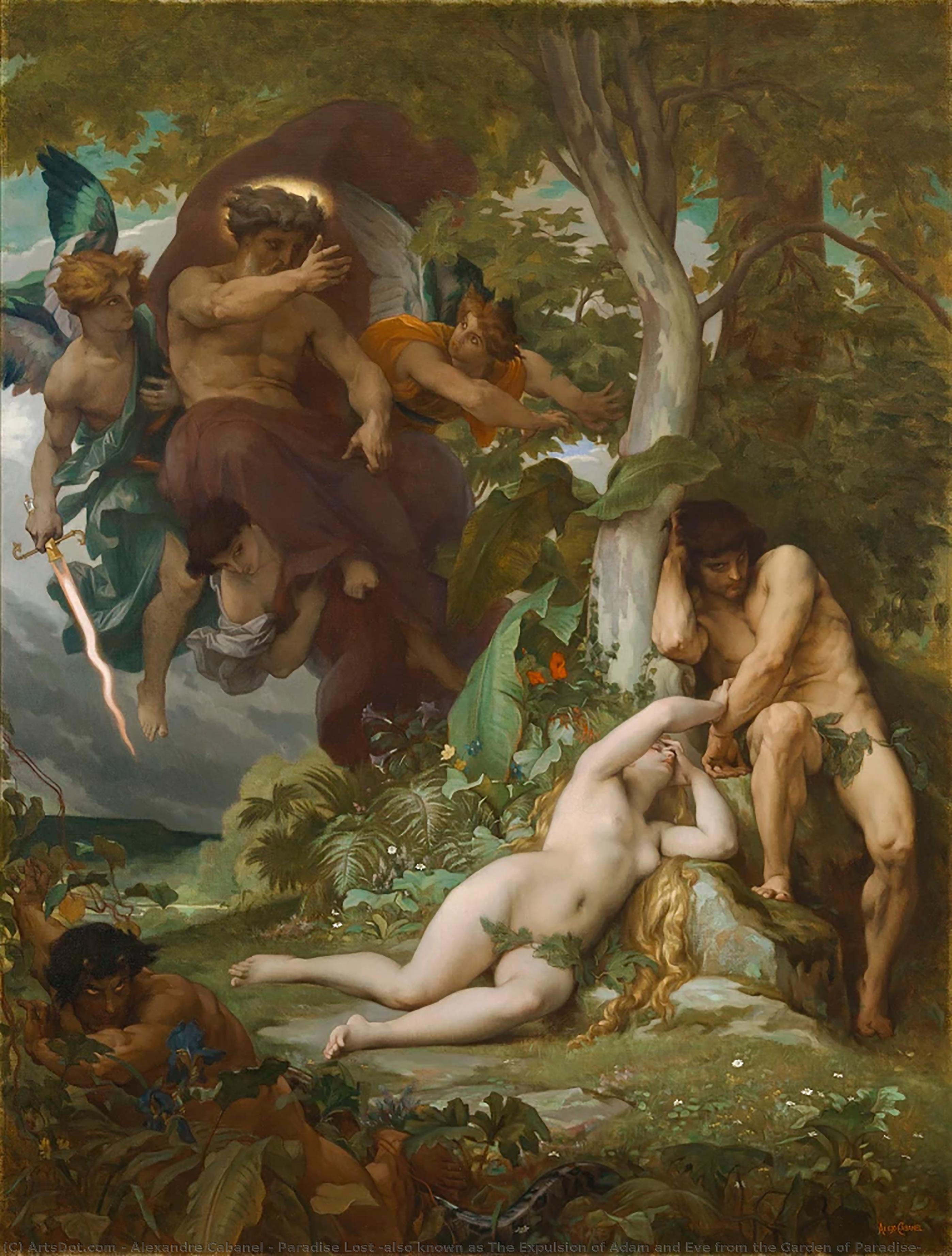
To gaze upon Alexandre Cabanel's depiction of Paradise Lost is to step directly into the crucible moment of human history, rendered with breathtaking academic grandeur. This painting captures not merely a biblical narrative, but the raw, agonizing instant where innocence fractures against divine law. The scene pulses with dramatic energy; Adam and Eve, figures stripped bare both literally and metaphorically, are caught in the aftermath of transgression. One can almost feel the tension radiating from the composition—the palpable weight of lost grace mingling with the stark reality of expulsion. Cabanel masterfully orchestrates a tableau vivant where every gesture, from the anguished embrace to the watchful presence of the surrounding figures, speaks volumes about consequence and mortality.
Mastery in Academic Grandeur: Style and Technique
Alexandre Cabanel, a titan of 19th-century French academic painting, employed a style characterized by its polished finish, idealized forms, and rich narrative scope. His technique, deeply rooted in the classical traditions he absorbed from masters like Jacques-Louis David, lends this work an undeniable sense of monumental importance. Observe the handling of the flesh tones; they possess a luminous quality, seemingly lit from within, contrasting sharply with the dramatic drapery and the symbolic elements scattered across the foreground, such as the discarded knife. The composition is meticulously balanced, yet it teeters on the edge of chaos. Cabanel’s ability to render both idealized beauty and visceral struggle within one frame is what makes this piece so enduringly captivating for collectors seeking high-art drama.
Symbolism and the Weight of Knowledge
The symbolism woven throughout Paradise Lost is rich and deeply resonant. The expulsion itself represents humanity's forced journey from blissful ignorance into the arduous, complex reality of self-awareness. The presence of angels on either side acts as a visual demarcation between divine order and fallen state. The nakedness of the central couple transcends mere depiction; it speaks to vulnerability, purity lost, and the subsequent burden of consciousness. For the modern admirer or designer, this painting offers profound contemplation: what is the cost of knowledge? What defines our inherent human struggle against limitation?
An Emotional Resonance for the Modern Interior
Bringing a reproduction of this masterpiece into your home or gallery space is to invite a conversation across centuries. It is not merely decoration; it is an artifact of profound emotional weight. The drama captured here—the mixture of sublime beauty and tragic consequence—lends an unparalleled depth to any room. Whether placed in a grand hall demanding historical gravitas or within a study meant for deep contemplation, the intensity of Cabanel’s vision commands attention while simultaneously inviting quiet reflection. It is a piece that speaks eloquently of human fallibility, divine longing, and the enduring quest for meaning.