A Visceral Encounter with Expressionism
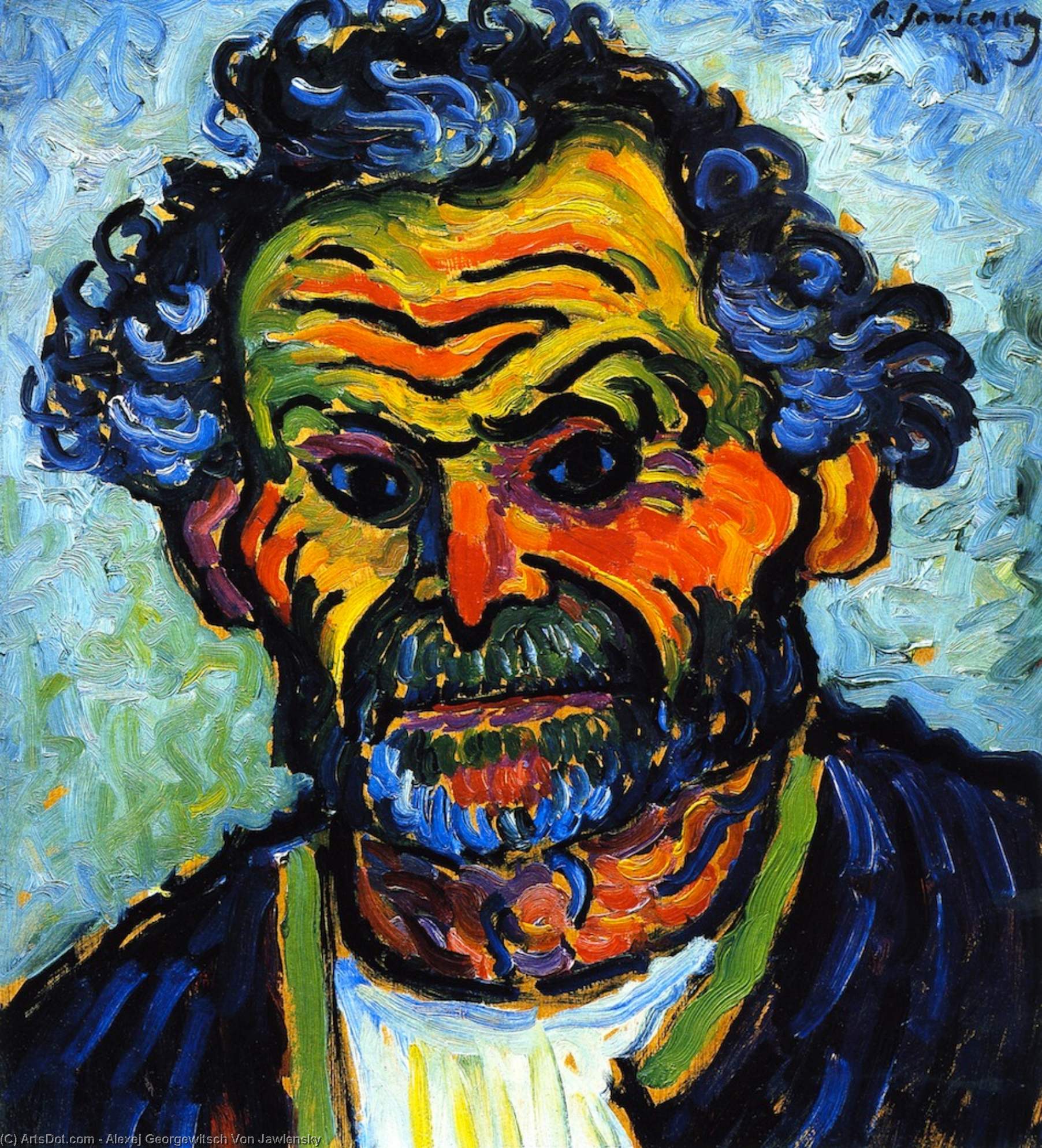
To stand before Alexej von Jawlensky’s 1912 masterpiece, "Farmer," is to step directly into the turbulent psyche of the early twentieth century. This is not a mere portrait of rural life; it is a profound psychological excavation rendered in oil on panel. At first glance, the viewer is met with an intense, almost confrontational gaze from a man whose features are etched with a raw, unshielded emotion. The subject, characterized by a thick, textured beard and a piercing expression, seems to vibrate with a sense of internal conflict. As a cornerstone of the Expressionist movement, this work transcends the boundaries of traditional representation, inviting us to look past the physical skin of the sitter and into the very soul of human experience.
The painting serves as a powerful testament to the era's shifting artistic philosophies. During this period, artists like von Jawlensky sought to bypass the rational mind, rejecting the polished perfection of academic realism in favor of a more subjective, spiritual truth. In "Farmer," we see the rejection of objective observation; instead, the artist uses distorted forms and jarring, energetic brushwork to communicate the anxieties and fervent passions simmering beneath the surface of European society at the dawn of the Great War.
The Language of Color and Texture
Von Jawlensky’s technical mastery is most evident in his use of impasto—the thick, sculptural application of paint that gives the canvas a palpable, three-dimensional presence. This heavy layering creates a rugged topography on the panel, mirroring the weathered resilience of the farmer himself. The artist employs a palette dominated by sun-drenched yellows and earthy ochres, yet these are far from pastoral or soothing. Instead, these hues pulsate with an unsettling intensity, creating a chromatic tension that mirrors the subject's aggressive and brooding temperament.
Every stroke of the brush contributes to the painting's rhythmic pulse. The way the light catches the raised ridges of paint adds a dynamic quality to the man's face, making his expression feel as though it is shifting in real-time. For the collector or interior designer, this piece offers a commanding presence; its bold textures and high-contrast tones provide a sophisticated focal point that can anchor a room with both historical weight and modern energy.
Symbolism and Emotional Resonance
Beyond the technical brilliance lies a deep well of symbolism. The man's beard, a recurring motif in von Jawlensky’s oeuvre, acts as an anchor of stability and stubbornness amidst the swirling emotional storm of the composition. It represents a rugged endurance, a connection to the earth that persists even as the modern world begins to fracture. The intense, direct gaze of the farmer creates an inescapable dialogue with the viewer, demanding an emotional response—whether it be one of empathy, discomfort, or awe.
For those seeking to bring a piece of art history into their personal spaces, "Farmer" offers more than just aesthetic beauty; it offers a window into the human condition. It is a work that celebrates the beauty found in struggle and the profound strength found in raw emotion. Whether displayed in a curated gallery setting or as a centerpiece in a contemporary living space, this reproduction of von Jawlensky’s vision continues to resonate with the same spiritual intensity that first captured the hearts of the European avant-garde.