A Portrait Steeped in Emotion: Exploring Alexej von Jawlensky’s ‘Mystical Head’
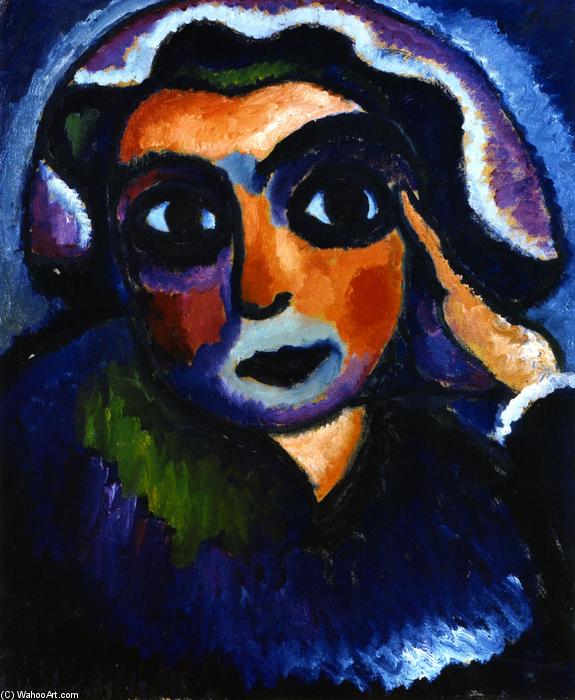
The painting “Head with Hand,” created by Alexej Georgewitsch von Jawlensky in 1912, stands as a cornerstone of Expressionist art—a movement that sought to convey raw emotion and inner psychological states rather than objective representation. More than just an image, it's a distillation of the artist’s profound engagement with spirituality and his masterful manipulation of color and form to communicate these intangible feelings. Examining this artwork reveals layers of artistic intention and historical significance.
The Expressionist Vision: Beyond Surface Appearance
Expressionism emerged in Germany during the early years of the 20th century as a reaction against Impressionism’s focus on capturing fleeting moments of light and color. Artists like Jawlensky rejected academic conventions, prioritizing instead the depiction of subjective experience—fear, anxiety, longing—above all else. This stylistic choice is immediately evident in ‘Mystical Head.’ The artist abandons realistic proportions and meticulous detail, opting for distortions that heighten emotional impact. Lines are deliberately uneven, creating a sense of instability and conveying an inner turmoil that transcends mere visual observation.
Color as Emotional Catalyst
Jawlensky’s palette—dominated by striking blues and accented with splashes of ochre—is arguably the painting's most powerful element. The deep indigo hues evoke feelings of melancholy and contemplation, mirroring the woman’s gaze which seems to penetrate beyond the surface into a realm of profound introspection. These colors aren’t merely decorative; they actively contribute to the artwork’s emotional resonance. They represent not just visual hues but also psychological states—a deliberate strategy employed by Expressionist painters to bypass rational thought and tap directly into the viewer's subconscious. The careful layering of pigments creates depth and luminosity, enhancing the overall impression of solemn beauty.
Symbolism Embedded in Form
The woman’s hand resting on her forehead is a gesture laden with symbolic meaning. Traditionally associated with worry, anxiety, and prayer—particularly within Eastern Orthodox iconography—it speaks to themes of spiritual contemplation and inner struggle. Jawlensky skillfully renders the hand with subtle shading and textural variations, emphasizing its vulnerability and conveying a sense of profound seriousness. The positioning of the hand subtly directs the viewer’s gaze upward, reinforcing the painting's preoccupation with transcendence.
A Legacy Preserved: The Lehmbruck Museum Collection
‘Mystical Head,’ alongside other works by Jawlensky housed in Germany’s Lehmbruck Museum, offers a glimpse into the artist’s artistic philosophy and his contribution to the Expressionist movement. This museum showcases not only Jawlensky's sculptures but also paintings that exemplify his distinctive approach to visual art—a testament to his enduring influence on modern aesthetics. For those seeking inspiration or considering acquiring a high-quality reproduction, exploring this artwork provides invaluable insight into the expressive power of color and form as conduits for conveying profound emotional truths.
- Artist: Alexej von Jawlensky
- Year Created: 1912
- Medium: Oil on Panel
- Dimensions: 60 x 50 cm
Further Exploration: Visit ArtsDot.com for detailed information and stunning reproductions of ‘Mystical Head.’ Explore Wikipedia to delve deeper into Jawlensky’s life and artistic context.
Photo Description: The image showcases the painting's captivating composition—a woman’s face bathed in blue light, her hand delicately positioned on her forehead. This masterful depiction captures the essence of Expressionist art, conveying a palpable sense of emotion and spiritual contemplation.