Alexej von Jawlensky’s ‘Landscape’: A Raw Expression of Emotion
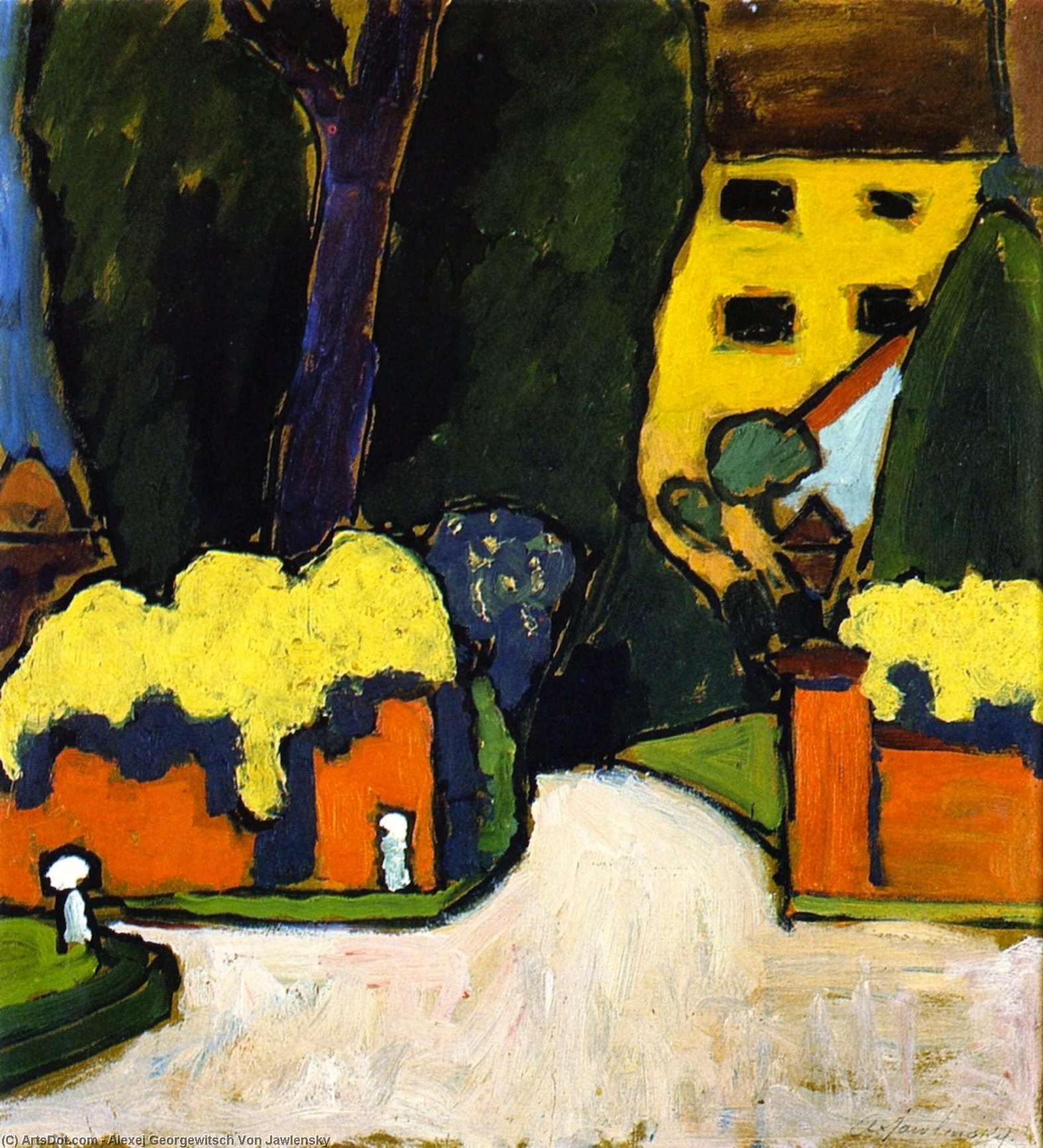
Alexej von Jawlensky's 1911 painting, ‘Landscape,’ is not merely a depiction of a street scene; it’s a visceral outpouring of emotion rendered with an uncompromising intensity that defines the core tenets of early Expressionism. This oil on panel work, measuring 53 x 49 cm, offers a rare glimpse into the artist's intensely personal vision – a world filtered through a lens of raw feeling rather than objective observation. The composition itself is deceptively simple: a street punctuated by a solitary tree, a modest house, and figures engaged in quiet activity. Yet, within this apparent stillness lies a palpable energy, a dynamism born from Jawlensky’s deliberate manipulation of color and brushstroke.
A Symphony of Color and Texture
Jawlensky's technique is immediately arresting. He abandons traditional representational methods, opting instead for bold, fractured planes of color applied with thick, impasto strokes. The palette – dominated by earthy browns, ochres, and deep blues – isn’t concerned with naturalistic accuracy; it’s employed to evoke mood and intensity. Notice how the brushstrokes aren't blended or smoothed but remain deliberately visible, creating a textured surface that seems to vibrate with unspoken emotion. This approach aligns perfectly with the Expressionist movement’s rejection of academic conventions in favor of subjective experience. The use of color isn't decorative; it’s fundamentally expressive, conveying a sense of unease and perhaps even melancholy.
Historical Context & Artistic Influences
Created during a period of profound social and artistic upheaval – the early 20th century – ‘Landscape’ reflects the anxieties and uncertainties of its time. Jawlensky was deeply involved with the burgeoning Expressionist movement in Munich, alongside artists like Wassily Kandinsky and Franz Marc. He also engaged with the Blaue Reiter group, known for their exploration of color and spirituality. His work draws upon influences from both Fauvism’s bold chromaticism and Russian icon painting traditions, evident in the simplified forms and intense emotional resonance. The painting's creation coincided with Jawlensky's exile from Germany due to World War I, a period that undoubtedly fueled his artistic intensity.
Decoding the Symbolism
While seemingly straightforward, ‘Landscape’ invites contemplation regarding its symbolic weight. The solitary tree, often associated with resilience and endurance, stands as a focal point, perhaps representing an individual's struggle against adversity. The figures within the scene – two people, possibly engaged in conversation or simply observing – add to the painting’s sense of quiet drama. The bird(s) in the sky could symbolize freedom or aspiration, contrasting with the grounded reality depicted below. Jawlensky deliberately obscures narrative clarity, leaving the viewer to interpret the scene through their own emotional lens. This ambiguity is a hallmark of Expressionist art – inviting personal engagement and fostering a profound connection between the viewer and the artwork.
Handcrafted Reproductions Available
ArtsDot.com offers meticulously crafted oil painting reproductions of Alexej von Jawlensky’s ‘Landscape,’ ensuring that you can experience the full impact of this seminal work in your own space. Each reproduction is created by skilled artisans who painstakingly recreate every detail, from the artist's distinctive brushstrokes to the rich color palette. Bring home a piece of art history and allow yourself to be moved by the raw emotion captured within ‘Landscape’ – a testament to Jawlensky’s enduring legacy.