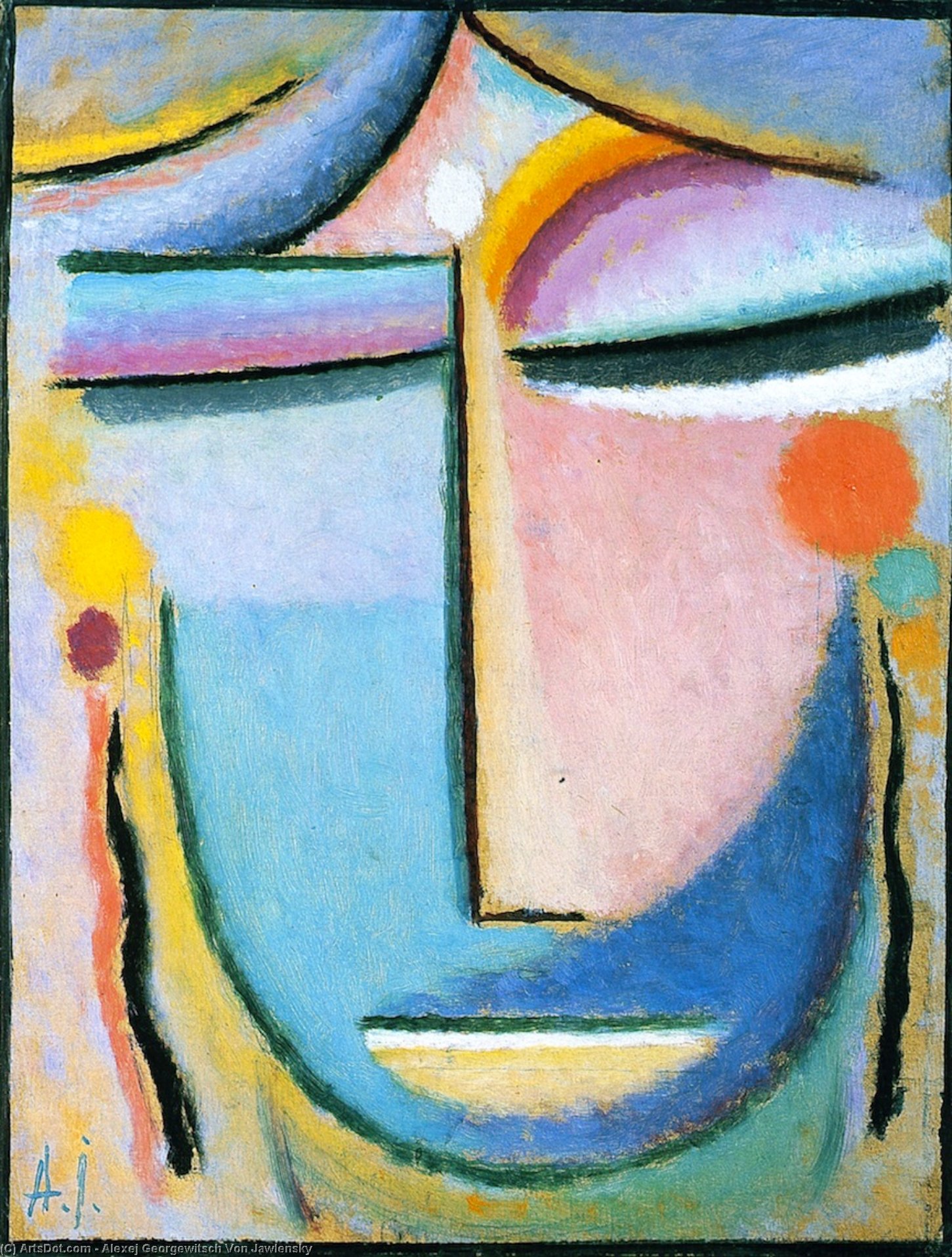
The painting exemplifies Expressionist principles through its use of bold colors and abstract forms.
Alexej von Jawlensky
A Life Painted in Emotion: The Journey of Alexej von JawlenskyAlexej von Jawlensky, born Alexej Georgewitsch von Jawlensky on March 13, 1864, in the Russian town of Torzhok, embarked on a path that would firmly establish him as a pivotal figure within early twentieth-century
A Vision in Cobalt and Crimson
This striking canvas embodies the spirit of Expressionism, capturing a moment frozen in time – June 1927 – amidst the burgeoning artistic fervor of Weimar Germany.
Subject Matter & Composition
The artwork depicts a solitary figure, rendered in bold abstraction against a swirling backdrop of deep cobalt blue and vibrant crimson hues. The figure’s form is deliberately fragmented, suggesting vulnerability yet simultaneously conveying resilience. Its placement within the composition draws the eye upwards, creating a dynamic interplay between stillness and movement.
Style & Technique
Jawlensky's masterful technique utilizes thick impasto – applying paint in textured layers – to imbue the canvas with palpable physicality. The artist eschews meticulous detail, prioritizing emotional resonance over photographic realism. Instead, he employs a reductive approach, distilling color and form into their purest expressions.
Historical Context
Expressionism emerged as a reaction against the prevailing artistic conventions of its time, rejecting academic idealism in favor of visceral emotion and subjective experience. Artists like Jawlensky sought to convey inner turmoil and spiritual yearning through distorted imagery and intense chromatic palettes. The painting reflects the anxieties surrounding societal upheaval and political instability prevalent during the Weimar Republic.
Symbolism & Emotional Impact
The dominant blues symbolize melancholy and introspection, while the crimson reds represent passion and defiance. Together, they evoke a profound sense of drama and urgency – an invitation to contemplate themes of loss, transformation, and ultimately, hope. The fractured figure serves as a metaphor for the human condition itself: broken yet unbroken, scarred but striving towards wholeness.
Concluding Remarks
“Large Abstract Head” transcends mere visual representation; it’s a conduit for emotional exploration. Its enduring power lies in its ability to resonate with viewers on a deeply personal level, prompting contemplation and fostering an appreciation for the transformative potential of art.