Alexej von Jawlensky’s ‘Maria I’: A Portrait of Intimate Intensity
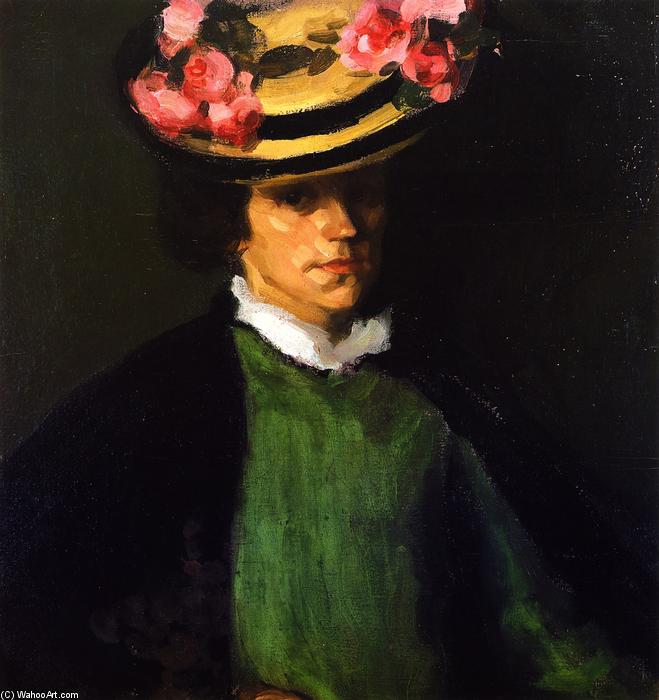
Alexej von Jawlensky's 1901 painting, “Maria I,” is not merely a portrait; it’s an arresting glimpse into the soul. Executed in his signature style – bold, reductive forms and intensely saturated color – the work immediately commands attention with its raw emotional power. The subject, identified as Princess Maria Amélia of Brazil, is presented with a startling directness, her gaze seemingly fixed on something just beyond our perception. This isn’t a formal depiction of royalty; it's a deeply personal encounter captured in pigment and brushstroke.
- Subject & Identity: The painting centers on Princess Maria Amélia, a figure shrouded in a poignant narrative of early death and familial connections. Her existence was marked by tragedy – born into privilege, she succumbed to tuberculosis at the young age of 21, mirroring the fate of her mother. Jawlensky’s choice to portray her here speaks volumes about his interest in capturing not just physical likeness but also the weight of experience and unspoken sorrow.
- Color & Composition: The dominant pink of the hat is a deliberate focal point, drawing the eye immediately to the subject's face. This intense hue, often interpreted as representing passion or vulnerability, contrasts sharply with the cool green background, creating a dynamic tension within the composition. Jawlensky’s use of color isn’t decorative; it’s fundamentally expressive, conveying mood and emotion directly.
The Expressionist Roots: Jawlensky's Vision
To fully appreciate “Maria I,” one must understand its place within the burgeoning world of early 20th-century art. Jawlensky was a key figure in movements like Der Blaue Reiter (The Blue Rider) and Die Blaue Vier (The Blue Four), groups that sought to break free from academic conventions and explore the expressive potential of color and form. His work, influenced by Symbolism and Post-Impressionism, prioritized subjective experience over objective representation. This is evident in his deliberate distortion of features – a hallmark of Expressionist technique – which amplifies the emotional impact of the portrait.
Historical Context: The painting was created during a period of significant social and artistic upheaval. The rise of industrialization, coupled with anxieties about modernity, fueled a desire for artists to grapple with fundamental questions about human existence. Jawlensky’s work reflects this spirit of questioning, offering a raw and unflinching portrayal of the individual.
Symbolism & Technique: A Masterclass in Reduction
Jawlensky's technique is characterized by its deliberate simplification. He employed thick impasto – building up layers of paint with a palette knife – to create a tactile surface that seems to vibrate with energy. The face itself is rendered with minimal detail, reduced to essential planes and contours. This reductive approach wasn’t about carelessness; it was a conscious effort to strip away superficiality and reveal the core essence of his subject. The clock and vase are subtle details, perhaps representing time's passage or domestic tranquility – elements that further enrich the painting's layered meaning.
Technique:
- Impasto: Thick application of paint creates texture and depth.
- Color Blocking: Bold use of color to convey emotion.
- Simplified Forms: Reduction of details to essential shapes.
Emotional Resonance & Collecting
"Maria I" transcends a simple portrait; it’s a powerful meditation on life, loss, and the enduring human capacity for introspection. Jawlensky's ability to capture such profound emotion through his distinctive style makes this painting a truly exceptional work of art. A hand-painted reproduction offers an unparalleled opportunity to experience the raw intensity and artistic brilliance of this iconic piece – a valuable addition to any discerning collection or a striking focal point within your interior design.