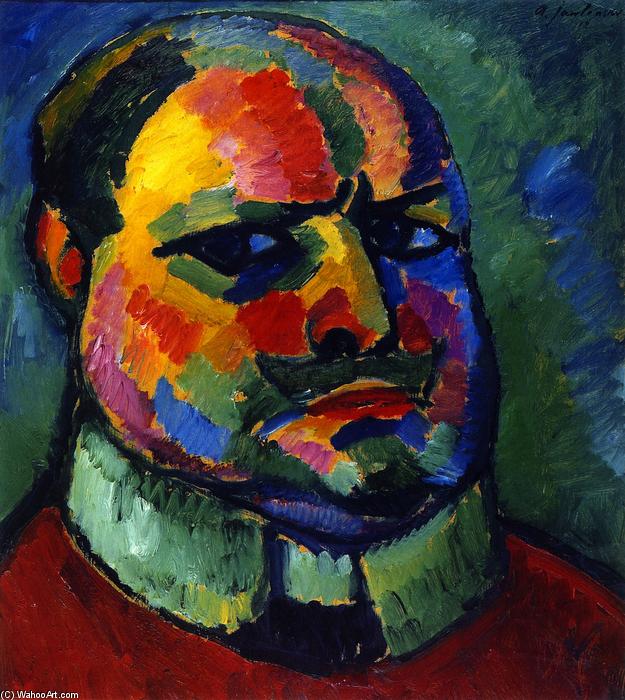
Self-Portrait by Alexej von Jawlensky: A Glimpse into Expressionist Emotion
The Self-Portrait, painted in 1912 by the Russian Expressionist artist Alexej Georgewitsch von Jawlensky, is a striking example of his unique artistic style. Housed within the Museum Wiesbaden in Germany, this artwork offers viewers an intimate and powerful exploration of selfhood through the lens of vibrant color and fragmented form. For those unable to experience it firsthand, ArtsDot.com provides meticulously crafted handmade oil painting reproductions that capture the essence of this remarkable piece.
Expressionism and Jawlensky's Vision
This Self-Portrait embodies the core tenets of Expressionism, an artistic movement that emerged in the early 20th century as a reaction against Impressionism’s focus on objective reality. Instead, Expressionists sought to convey intense emotions and subjective experiences through distortion, exaggeration, and bold color choices. Jawlensky was a key figure within this movement, consistently prioritizing emotional impact over realistic representation. His work, including the Self-Portrait, demonstrates a profound ability to translate inner feelings into visual form, using color as a primary vehicle for expression. The painting’s creation in 1912 places it firmly within the mature phase of his Expressionist development.
Visual Analysis: Color, Form, and Technique
The artwork presents a close-up view of Jawlensky's face, rendered with an almost unsettling intimacy. Rather than depicting a photographic likeness, the portrait is constructed from geometric shapes and patches of intensely saturated color – reds, yellows, blues, greens, and purples dominate the palette. Thick brushstrokes and impasto technique create a textured surface, adding depth and dynamism to the composition. Angular lines define these forms, creating a compelling interplay between order and chaos. The flattened perspective eliminates traditional depth cues, further emphasizing the painting’s focus on color and form. Lighting appears multifaceted, contributing to the overall intensity of the piece. This deliberate abstraction moves beyond mere portraiture; it becomes an exploration of how color and shape can convey complex emotions.
Symbolism and Emotional Impact
The fragmented nature of Jawlensky's face in this Self-Portrait is open to interpretation. It could symbolize psychological distress, internal conflict, or perhaps a desire to deconstruct the conventional notion of selfhood. The vibrant, non-naturalistic colors amplify the emotional intensity, evoking feelings ranging from introspection and vulnerability to strength and resilience. The overall effect is both captivating and unsettling, drawing viewers into an exploration of the artist's inner world. It’s a testament to Jawlensky’s ability to use abstraction not as a rejection of reality but as a means of accessing deeper truths about the human condition.
Jawlensky: A Notable Artist and His Other Works
Alexej Georgewitsch von Jawlensky (1864-1941) was born in Torzhok, Russia, and later settled in Germany where he became a central figure in Expressionism. He studied at the Moscow School of Painting, Sculpture and Architecture before moving to St. Petersburg. His artistic journey led him to explore various styles before fully embracing his signature Expressionist approach. Beyond the Self-Portrait, Jawlensky is celebrated for other significant works including:
For further exploration into the life and works of Alexej von Jawlensky, visit
ArtsDot.com or consult the
Wikipedia page dedicated to this renowned artist.