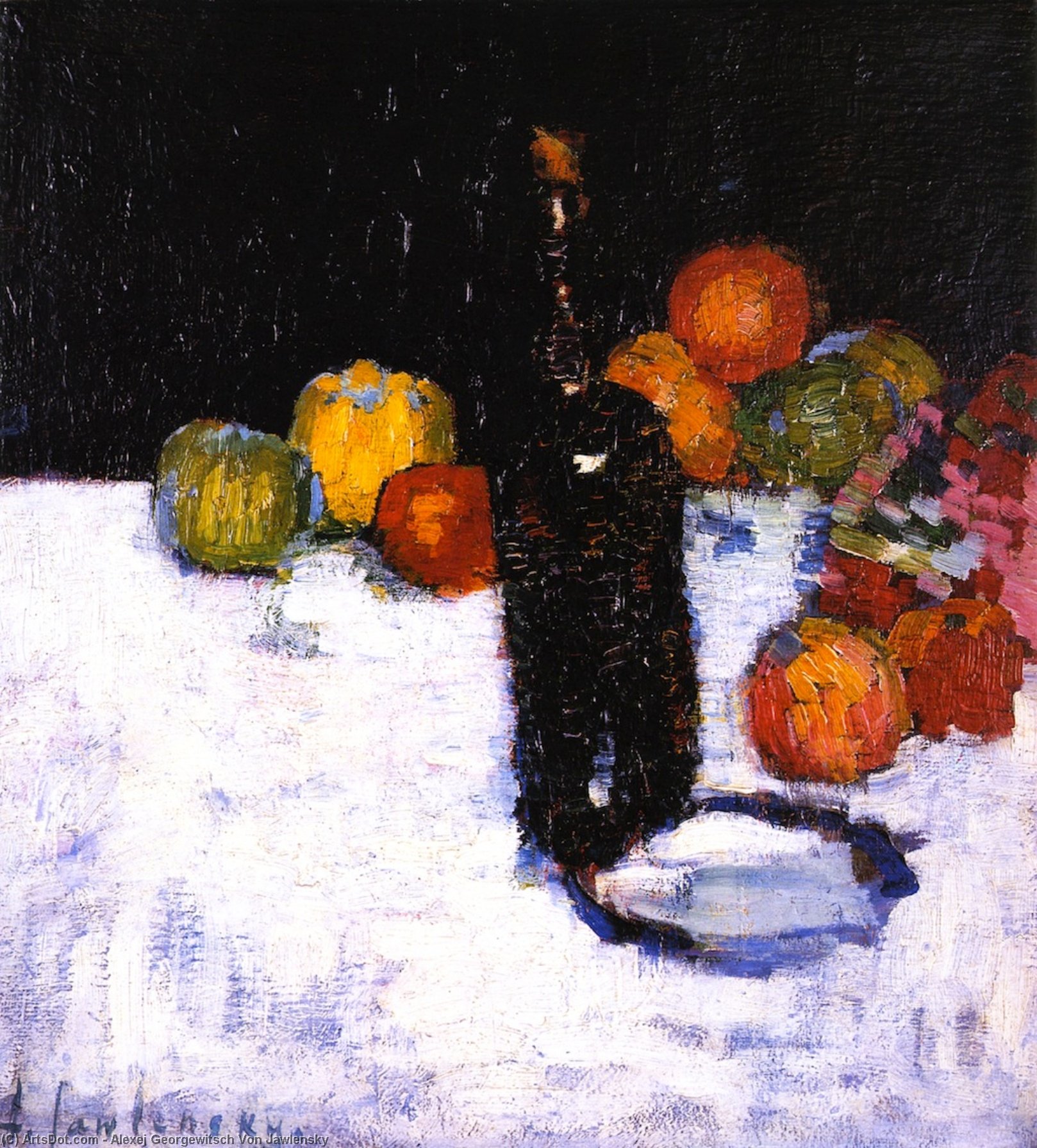
Alexej von Jawlensky
This painting depicts a still life featuring bottles of wine, apples, pumpkins, and oranges. The artist skillfully captures the essence of this genre.
Private Collection
Oil on Canvas
Still Life with Bottles and Fruit
1904
A Symphony in Ochre and Shadow: Exploring “The Wanderer” by Edvard Munch
Edvard Munch’s “The Wanderer,” painted in 1893, stands as an iconic representation of Expressionist art—a visceral exploration of psychological turmoil rendered with masterful technique and imbued with profound symbolic resonance. More than just a depiction of a solitary figure traversing a desolate landscape, it embodies the anxieties and uncertainties that characterized the fin de siècle era.
Style and Technique: Impressionistic Echoes Amidst Emotional Intensity
While Munch’s style firmly rejects Impressionism's focus on capturing fleeting moments of light and color, “The Wanderer” retains subtle influences from Impressionist brushwork. However, these echoes serve primarily to heighten the emotional impact rather than providing a realistic portrayal. Munch employs thick impasto—a technique where paint is applied in textured layers—creating palpable ridges that convey a sense of unease and instability. The swirling brushstrokes contribute to an atmosphere of turbulent emotion, mirroring the internal struggles of the central figure.
Historical Context: Anxiety and Uncertainty at the Dawn of the 20th Century
Painted during Munch’s formative years as an artist grappling with personal demons—including depression and anxieties surrounding his family history— “The Wanderer” reflects the broader societal mood of its time. The late Victorian era witnessed a growing disillusionment with traditional values, fueled by scientific advancements and philosophical debates concerning human existence. Munch's work captures this pervasive sense of apprehension, portraying a man consumed by introspection and haunted by visions of impending doom.
Symbolism: Recurring Motifs Reflecting Inner Turmoil
The painting’s symbolism is multilayered and deliberately unsettling. The central figure—a gaunt man with outstretched arms—represents humanity confronting existential dread. His posture conveys vulnerability and desperation, mirroring the psychological torment experienced by Munch himself. The desolate landscape surrounding him symbolizes isolation and emptiness – a visual metaphor for the inner void that characterizes human consciousness. Notably, the dark, swirling clouds above contribute to an oppressive atmosphere, symbolizing anxieties about fate and mortality.
Emotional Impact: A Portrait of Psychological Vulnerability
"The Wanderer" transcends mere representation; it strives to evoke profound emotional responses in the viewer. Munch’s masterful use of color—primarily ochre and muted blues—creates a melancholic palette that underscores the painting's pervasive sense of sadness and despair. The figure’s gaze is averted, suggesting introspection and confronting uncomfortable truths. Ultimately, “The Wanderer” compels us to contemplate themes of loneliness, fear, and the inescapable burden of human experience – cementing its place as one of Expressionism’s most enduring masterpieces.