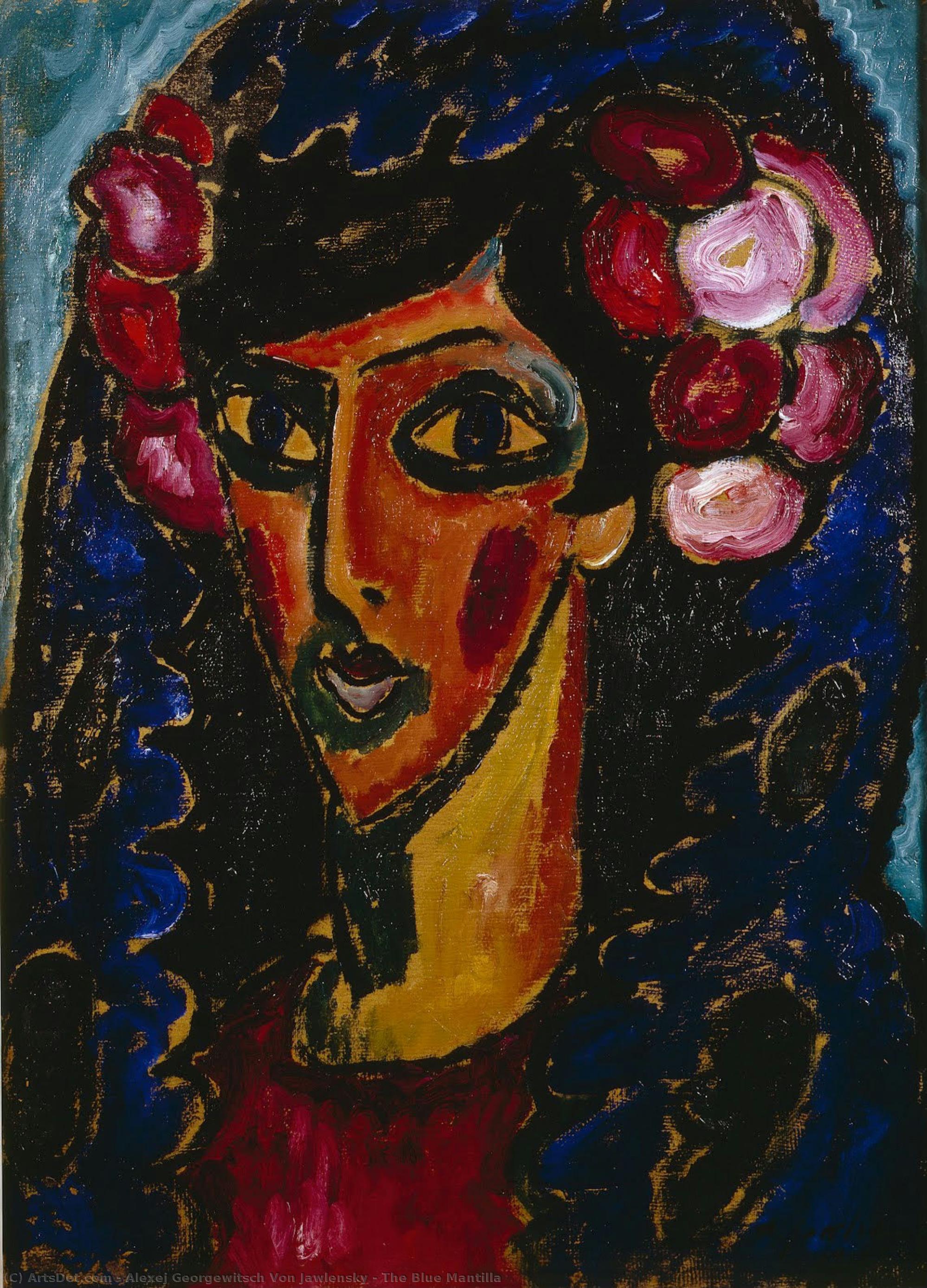
Experience Alexej von Jawlensky’s ‘The Blue Mantilla’ (1913). A powerfully emotive Expressionist portrait featuring a woman in blue, red, and flowers. Explore symbolism & technique within this cornerstone of early 20th-century art.
A Portrait Steeped in Color and Feeling – Alexej von Jawlensky’s ‘The Blue Mantilla’
Alexej von Jawlensky's “The Blue Mantilla,” painted in 1913, stands as a cornerstone of early Expressionism—a movement that prioritized subjective experience over objective representation. More than just a depiction of a woman adorned with flowers and draped in blue fabric, the painting embodies the turbulent spirit of its time, reflecting anxieties surrounding societal change and delving into profound psychological states.
- Subject Matter: The artwork centers on a female figure—a woman whose gaze meets the viewer’s directly. She wears a striking blue mantilla, a traditional Spanish veil symbolizing purity and mourning, juxtaposed against a vibrant red dress. Two additional women are subtly incorporated into the background, adding layers of complexity to the composition.
- Style & Technique: Jawlensky employed a bold, reductive style characteristic of Der Blaue Reiter (The Blue Rider), rejecting illusionistic realism in favor of flattened planes and simplified forms. The artist utilized thick impasto—heavy application of paint—creating textural surfaces that convey palpable emotion. Color is paramount; shades of blue dominate the palette, conveying serenity alongside melancholy, while splashes of red inject passion and drama.
- Historical Context: Created during a period marked by significant artistic experimentation and intellectual ferment, “The Blue Mantilla” reflects the broader anxieties of the era. Expressionist artists sought to express inner turmoil and psychological truths—a reaction against the perceived superficiality of bourgeois culture. The painting’s quiet intensity speaks to the pervasive mood of uncertainty and disillusionment that gripped Europe in the wake of World War I.
Symbolism: Layers of Meaning Beyond Appearance
Beyond its visual elements, “The Blue Mantilla” is laden with symbolic significance. The blue mantilla itself represents mourning—a solemn acknowledgment of loss and grief—yet it’s simultaneously imbued with connotations of purity and spiritual contemplation. The woman's gaze directs the viewer inward, inviting introspection and prompting consideration of themes such as vulnerability and resilience. Furthermore, the flowers woven into her hair symbolize beauty and remembrance, hinting at a celebration of life amidst sorrow.
Jawlensky’s Artistic Vision: A Pursuit of Authenticity
Alexej von Jawlensky's artistic philosophy revolved around capturing “the soul”—a concept central to Expressionist thought. He rejected academic conventions and sought instead to convey raw emotion through uncompromising color and form. “The Blue Mantilla,” with its masterful use of impasto and its emotionally resonant palette, exemplifies this commitment to authenticity. It’s a testament to Jawlensky's ability to transform personal experience into enduring visual art.
A Legacy of Emotional Intensity
"The Blue Mantilla" continues to captivate audiences today due to its profound emotional impact and its masterful execution. Its quiet grandeur speaks volumes about the artist’s dedication to conveying inner truths—a legacy that secures its place as a seminal work within Expressionist art history.