A Portrait of Intensity: Alexej von Jawlensky’s *Torandot II*
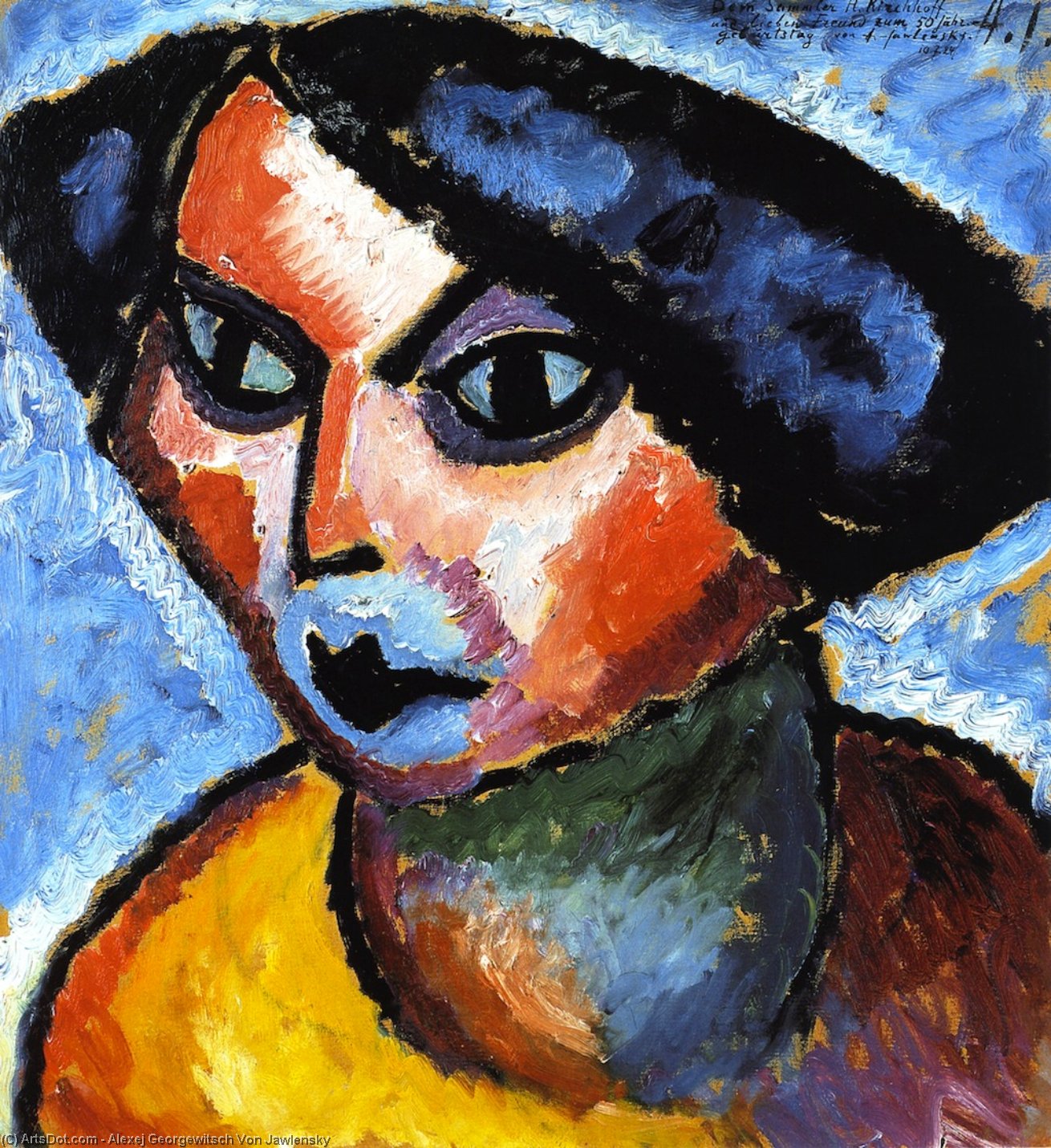
Alexej Georgewitsch von Jawlensky's Torandot II, painted in 1912, is more than just a portrait; it’s a raw distillation of emotion, a cornerstone of early Expressionism, and a testament to the artist’s profound ability to translate inner turmoil onto canvas. Created during a period of intense artistic experimentation, this work captures a woman – her identity deliberately obscured – in a moment of palpable intensity. The painting immediately confronts the viewer with a bold palette: a vibrant red face, offset by the cool blues and yellows of her attire, creating a visual tension that mirrors the subject’s implied state of mind. It's a piece that demands attention, inviting contemplation on themes of power, vulnerability, and perhaps even unspoken threats.
The Language of Expressionism
Jawlensky was a key figure in the burgeoning movement of Expressionism, alongside artists like Kandinsky and Hilma af Klint. Unlike traditional portraiture that sought to represent external likeness, Jawlensky’s work prioritized conveying inner experience. *Torandot II* exemplifies this perfectly. The distorted features, the almost violent application of paint – particularly evident in the thick impasto – are deliberate choices designed not to replicate reality but to evoke a specific emotional response. The simplification of form, focusing on essential elements like the eyes and mouth, intensifies their impact, forcing the viewer to confront the raw emotion being projected. This technique was revolutionary for its time, rejecting academic realism in favor of subjective expression.
Decoding the Symbolism
While Jawlensky rarely offered explicit interpretations of his work, art historians have long debated the symbolism within *Torandot II*. The woman’s red face is often seen as representing anger, defiance, or perhaps a suppressed rage. The blue hat, a striking element against her yellow dress, could symbolize both royalty and isolation – a queen trapped within herself. The green necklace adds another layer of complexity, potentially alluding to envy, jealousy, or even the life-giving force of nature viewed through a turbulent lens. It’s crucial to remember that Jawlensky wasn't interested in providing easy answers; he presented a puzzle for the viewer to engage with, encouraging personal interpretation.
A Masterpiece Forged in Emotion and Technique
Painted in 1912, *Torandot II* showcases Jawlensky’s masterful technique. He employed a method of applying paint directly from the tube, often using a palette knife to build up thick layers of color. This impasto creates a tactile surface, adding to the painting's dramatic effect and emphasizing the artist’s physical engagement with the canvas. The deliberate lack of blending contributes to the work’s raw energy and sense of urgency. This piece resides within the Sprengel Museum in Germany, securing its place as an important artifact within art history.
Discover a stunning hand-painted reproduction of *Torandot II* today at https://ArtsDot.com and bring this powerful work of art into your home or office. Own a piece of Expressionist history, a window into the soul of Alexej von Jawlensky.