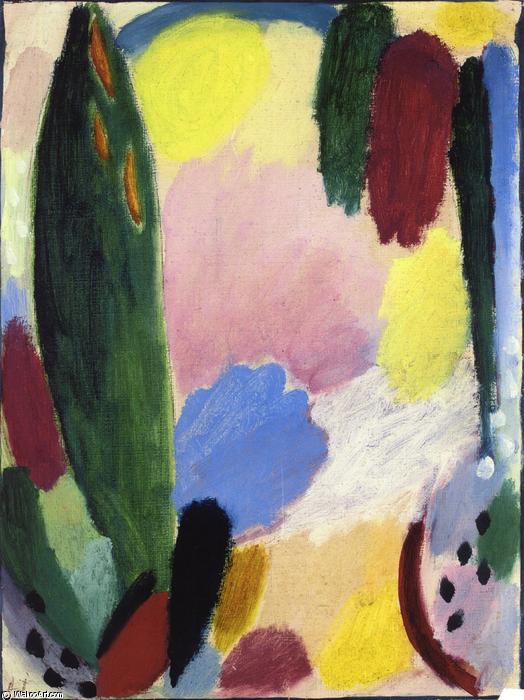
Alexej von Jawlensky’s “Variation” (1918), created in the Abstract Art style, embodies the raw emotion characteristic of early twentieth-century Expressionism. This piece showcases a stylized tree motif amidst colorful geometric forms and textured brushstrokes—a testament to Jawlensky's exploration of fundamental visual elements. Inspired by the monumental Norton Simon Museum’s collection, “Variat
A Window Into Expressionism: Exploring Alexej von Jawlensky’s “Variation”
Alexej von Jawlensky's "Variation," painted in 1918, stands as a testament to the burgeoning spirit of Expressionist art—a movement characterized by fervent emotion and subjective experience rather than objective representation. This striking landscape isn’t merely a depiction of trees; it’s an embodiment of inner turmoil subtly conveyed through bold color palettes and dynamic compositional choices. The artwork's genesis lies in Jawlensky’s formative years, marked by constant relocation and instilled within him a profound awareness of displacement—a feeling that finds resonance in the very fabric of his artistic vision.
- Style: Expressionism – Jawlensky firmly embraced this stylistic approach, prioritizing emotional intensity over realistic accuracy. He sought to capture not what he *saw*, but what he *felt*.
- Technique: Thick impasto—Jawlensky employed a technique of applying paint thickly onto the canvas, creating textured surfaces that amplify visual impact and contribute to the artwork’s palpable energy. This method is particularly evident in the depiction of the tree trunks and branches, emphasizing physicality and conveying a sense of resilience.
- Color Palette: Vibrant hues dominate “Variation,” primarily greens representing foliage alongside reds, blues, yellows, and oranges—a deliberate selection designed to evoke feelings of passion and dynamism. The artist’s masterful use of shade and tone adds depth and complexity to the scene, fostering an immersive experience for the viewer.
The painting's historical context is crucial to understanding its significance. Created during a period of considerable upheaval—the aftermath of World War I and the rise of avant-garde artistic movements—"Variation" reflects the anxieties and uncertainties of the era. However, beyond its immediate historical backdrop, the artwork speaks to universal themes of contemplation and introspection. The central tree serves as a powerful symbol of stability amidst chaos, suggesting an enduring connection to nature and offering solace in times of difficulty. It’s a visual meditation on transformation—the quiet persistence of life despite external pressures.
Further Exploration:
- Large Variation (also known as Large Variation with Gate): Discover more about this captivating artwork at WikiArt – explore its bold colors and expressive brushstrokes.
- Variation: The Road, Mother of All Variations: Explore Jawlensky's masterpiece at WikiArt.
- Variation (14): Immerse yourself in the raw emotion of Expressionism with this dynamic painting at WikiArt.
- Variation, Sunrise, 1918 - Norton Simon Museum: Learn more about Jawlensky’s artistic legacy at Norton Simon Museum
“Variation” continues to resonate with audiences today, inviting contemplation on themes of resilience and beauty amidst adversity—a timeless reminder that art can transcend time and communicate profound emotional truths. Consider commissioning a high-quality reproduction from ArtsDot.com to bring this iconic piece into your home or workspace. Explore our diverse collection of Alexej von Jawlensky prints
here!