Alexej von Jawlensky
A Life Painted in Emotion: The Journey of Alexej von JawlenskyAlexej von Jawlensky, born Alexej Georgewitsch von Jawlensky on March 13, 1864, in the Russian town of Torzhok, embarked on a path that would firmly establish him as a pivotal figure within early twentieth-century Expressionism. His formative years were characterized by frequent relocations, culminating in a settli
Alexej von Jawlensky’s ‘Variation’: A Primal Echo of Emotion
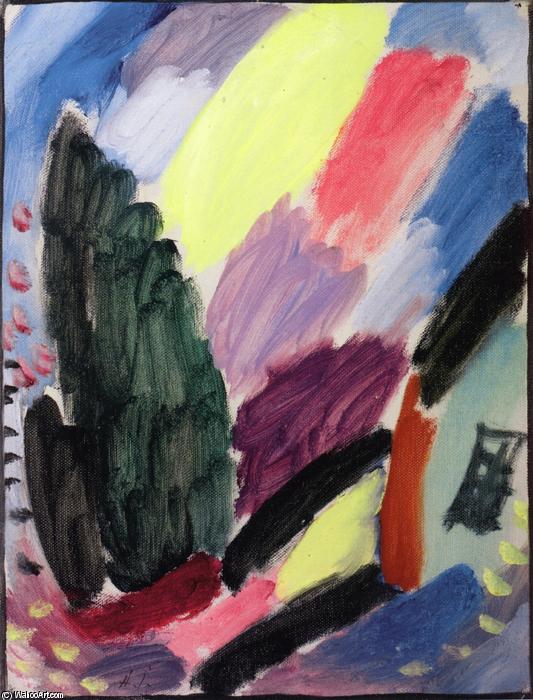
This captivating abstract artwork, titled ‘Variation,’ offers a profound glimpse into the intensely expressive world of Alexej von Jawlensky, a pivotal figure in early 20th-century Expressionism. Executed in 1915, this piece transcends mere representation, instead channeling raw emotion and primal energy through a masterful manipulation of color and form. Measuring 36 x 27 cm, ‘Variation’ is deceptively simple in its composition – a vibrant explosion of greens, purples, and other hues centered around a dominant tree-like structure – yet profoundly resonant with the artist's deeply felt convictions.
- The Artist’s Vision: Jawlensky, born Alexej Georgewitsch von Jawlensky in Torzhok, Russia, in 1864, was driven by a desire to capture not external reality but the internal landscape of human experience. His work, often characterized by bold brushstrokes and distorted forms, reflects a profound engagement with themes of spirituality, suffering, and the search for meaning.
- Color as Emotion: The deliberate use of color is central to understanding ‘Variation.’ The prominent purple hue within the tree suggests not just visual interest but also symbolic weight – often associated with royalty, mystery, and even spiritual transcendence in Jawlensky’s oeuvre. The surrounding colors amplify this emotional intensity, creating a dynamic interplay that draws the viewer into the artwork's core.
Technique and Style: A Fusion of Primitivism and Expressionism
‘Variation’ exemplifies Jawlensky’s unique artistic style, which blended elements of Primitivism with the tenets of Expressionism. He rejected academic conventions, favoring a direct, almost childlike approach to painting. The thick impasto technique – evident in the textured surface of the artwork – contributes significantly to its emotional impact, conveying a sense of urgency and immediacy. The fragmented forms, reminiscent of folk art traditions, further emphasize the raw, unfiltered nature of his artistic vision. This is not a polished or refined depiction; it’s an outpouring of feeling rendered directly onto the canvas.
- Impasto Technique: The thick application of paint creates a tactile surface, enhancing the emotional intensity and suggesting a sense of movement and energy within the composition.
- Primitivist Influences: Jawlensky’s embrace of simplified forms and bold colors reflects his interest in folk art traditions, particularly those found in Russia and Eastern Europe.
Symbolism and Historical Context
Created during a period of immense social and political upheaval – the early 20th century – ‘Variation’ can be interpreted as a reflection of the anxieties and uncertainties of the time. Jawlensky's work often grappled with themes of faith, doubt, and the human condition in the face of modernity. The central tree-like form may represent a yearning for stability and connection amidst chaos, or perhaps a symbol of resilience and enduring life. This piece aligns perfectly with the Expressionist movement’s rejection of objective representation in favor of subjective emotional expression.
Historical Note: The painting's creation in 1915 places it squarely within the burgeoning Expressionist movement, a reaction against the perceived superficiality and materialism of late-Victorian society. Jawlensky’s work anticipated many of the key themes explored by later Expressionists, such as alienation, psychological distress, and the search for spiritual meaning.
Emotional Impact and Collecting
'Variation' is more than just a beautiful artwork; it’s an invitation to engage with profound emotional truths. Its raw energy and expressive power make it a compelling addition to any collection, offering a unique window into the soul of one of Expressionism’s most enigmatic figures. A hand-painted reproduction of this piece offers a tangible connection to Jawlensky's artistic legacy – a testament to his unwavering commitment to capturing the essence of human experience through color and form.