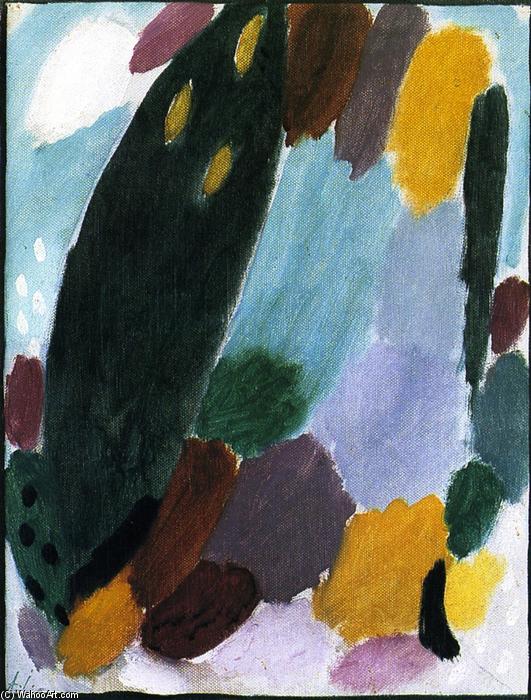
A Symphony in Ochre and Shadow – Exploring Elias Jawlensky’s “The Shepherdess”
Elias Jawlensky’s “The Shepherdess,” completed circa 1923, stands as a cornerstone of Expressionist painting—a testament to the artist's unwavering commitment to conveying emotion through form and color. More than just a depiction of rural life, it embodies a profound exploration of spirituality and vulnerability, rendered with meticulous detail and imbued with an atmosphere that lingers long after viewing.
Subject Matter & Composition
The painting portrays a solitary shepherdess kneeling in contemplation amidst a sparse landscape dominated by muted ochre tones. The figure is positioned centrally, anchoring the composition while simultaneously conveying a sense of stillness and introspection. Surrounding her are simplified geometric shapes—primarily rectangles and triangles—that subtly delineate the horizon line and contribute to the overall feeling of austerity.
Style & Technique – Impasto Texture
Jawlensky’s masterful technique is characterized by impasto, a method where thick layers of paint are applied onto the canvas surface. This textural approach isn't merely decorative; it serves as crucial vehicle for expressing emotion and capturing the physicality of the scene. The artist employs bold brushstrokes to build up ridges of pigment, creating palpable depth and simulating the roughness of weathered stone—a deliberate choice that reinforces the painting’s solemn mood.
Historical Context – Expressionism's Roots
“The Shepherdess” emerged during the height of Expressionist fervor in Germany. Following the devastation of World War I and grappling with anxieties about societal change, artists sought to bypass rational representation and tap into primal feelings—fear, grief, ecstasy—directly confronting the psychological realities of their time. Jawlensky’s work aligns perfectly with this movement's ethos, rejecting academic conventions in favor of subjective experience.
Symbolism & Emotional Impact
The shepherdess herself symbolizes innocence and faith—a figure often interpreted as representing humanity’s yearning for spiritual solace amidst the uncertainties of existence. The muted color palette – predominantly ochre, gray, and brown – contributes to a sense of melancholy and contemplation. However, subtle hints of luminosity within the geometric shapes suggest an underlying hopefulness, hinting at resilience and enduring beauty. Viewing “The Shepherdess” evokes feelings of quiet reverence and invites viewers to contemplate themes of solitude, vulnerability, and the transformative power of nature.
Concluding Remarks
Elias Jawlensky’s “The Shepherdess” remains a captivating masterpiece—a poignant reminder that art can transcend mere visual representation to communicate profound emotional truths. Its enduring appeal lies in its ability to resonate with audiences across generations, prompting reflection on the human condition and celebrating the beauty found within simplicity.