Alexej von Jawlensky’s “Variation: Winter” – A Frozen Echo of Emotion
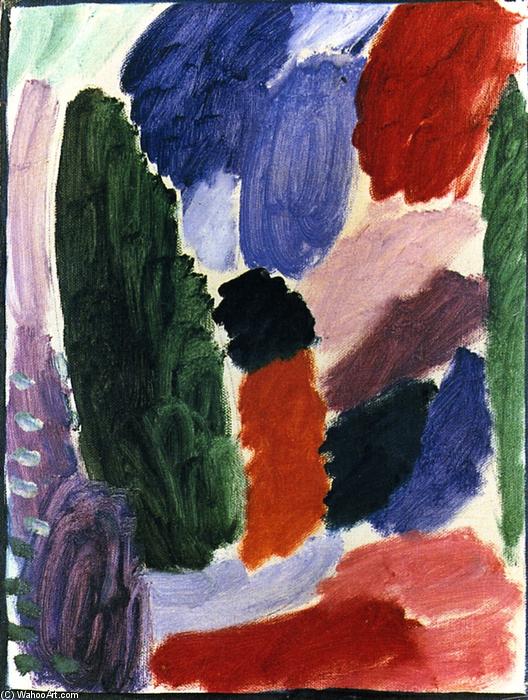
Alexej von Jawlensky's "Variation: Winter" is not merely a depiction of a snowy landscape; it’s a raw, intensely felt expression of the artist’s inner world. Painted in 1915, during a period of profound artistic and personal upheaval for Jawlensky, this work embodies the core tenets of early Expressionism – prioritizing emotional impact over photographic realism. The painting's vibrant yet muted palette, dominated by deep blues, greens, reds, and yellows, doesn’t strive to capture a specific winter scene but rather evokes the feeling of cold, stillness, and perhaps even isolation that defines the season. The dynamic brushstrokes, particularly evident in the swirling forms of the trees, contribute to a palpable sense of movement and energy, suggesting a struggle between the artist's desire for order and the chaotic forces he perceived within himself and the world around him.
Expressionist Roots & The New Munich Group
Jawlensky’s artistic trajectory was deeply intertwined with the burgeoning Expressionist movement in early 20th-century Germany. As a key member of the Neue Künstlervereinigung München (New Artists' Association) and, later, Die Blaue Vier (“The Blue Four”), he aligned himself with artists seeking to break free from academic conventions and explore subjective experience through art. This group, including figures like Wassily Kandinsky and Franz Marc, was driven by a desire to convey intense emotions – often unsettling or disturbing – rather than simply representing the external world. Jawlensky’s association with “The Blue Rider” further influenced his approach, encouraging experimentation with color as a primary vehicle for emotional expression. The painting's bold use of color aligns perfectly with this philosophy, rejecting naturalistic representation in favor of a powerfully symbolic language.
Symbolic Landscape & Personal Resonance
While the specific trees depicted are somewhat abstracted, they resonate with the artist’s personal experiences and beliefs. The winter landscape itself is often interpreted as a metaphor for introspection and spiritual searching – a time for quiet contemplation and confronting one's inner demons. The use of intense color, particularly the reds and yellows, can be seen as representing passion, vitality, and perhaps even a yearning for warmth amidst the coldness of the season. Jawlensky’s meticulous attention to detail, evident in the textured brushwork and carefully rendered forms, suggests a deliberate effort to imbue the landscape with symbolic meaning. The painting's title, "Variation: Winter," highlights the artist's focus on exploring subtle shifts in mood and atmosphere – capturing not just the visual appearance of winter but its emotional essence.
Technique & Reproduction
This hand-painted reproduction faithfully recreates Jawlensky’s original technique. The oil paint is applied with a vigorous, almost impasto style, creating a rich surface texture that adds to the painting's expressive power. The layering of colors and the deliberate use of visible brushstrokes contribute to a sense of dynamism and movement. ArtsDot meticulously replicates this process, ensuring that each reproduction captures the full depth and intensity of Jawlensky’s original vision. The linen-finish paper laid down on cardboard provides an authentic canvas texture, further enhancing the illusion of the original artwork. This is more than just a print; it's a testament to the artist’s skill and passion.
Owning a Piece of Art History
“Variation: Winter” represents a pivotal moment in the development of modern art. It stands as a powerful example of Expressionism’s ability to convey profound emotional truths through abstract forms and intense color. A ArtsDot reproduction offers you the opportunity to own a piece of this artistic legacy – a window into the soul of one of the 20th century's most significant artists. Bring the raw emotion and evocative power of Jawlensky’s “Variation: Winter” into your home or office, and allow it to inspire contemplation and wonder.