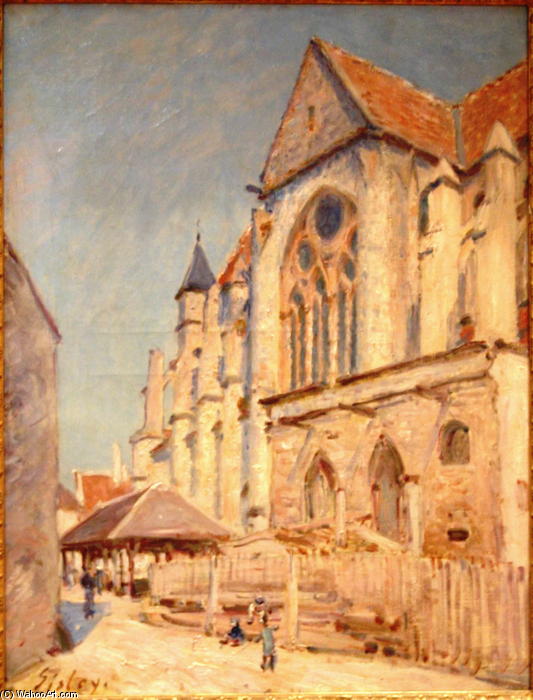
The
Eglise de Moret painting by
Alfred Sisley is a beautiful representation of a church with a clock tower in the background. This oil on canvas piece, measuring 55 x 46 cm, is a quintessential example of Impressionist art. As seen on
ArtsDot.com, the painting features a large steeple that stands tall above the surrounding buildings, with two people standing near the bottom left corner, possibly admiring the architecture or enjoying the view.
Impressionist Style and Technique
The
Eglise de Moret painting showcases Sisley's skillful technique in capturing the essence of rural France. The scene features a bench located in the lower part of the image, providing a place for people to sit and relax. The color palette is relatively muted, with whites, blues, and earth tones composing a harmony that reflects the cool ambiance of the setting. As discussed on
ArtsDot.com, the brushwork is loose and expressive, capturing the fleeting impression of light and shadow.
Similar Paintings by Sisley
Other notable paintings by Sisley include
Church of Moret and
The Church at Moret, which are also available on
ArtsDot.com. These paintings demonstrate Sisley's ability to capture the beauty of rural landscapes and architecture. The
Musee des Beaux-Arts d'Angers, as mentioned on
ArtsDot.com, is also home to several of Sisley's works, showcasing his contribution to the Impressionist movement.
- Key Features: Oil on canvas, Impressionist style, rural landscape, and architecture.
- Influences: Capturing light and shadow, expressive brushwork, and muted color palette.
ArtsDot.com offers handmade oil painting reproductions of Sisley's works, including the
Eglise de Moret painting. These reproductions are created by skilled artists who use high-quality materials to ensure an accurate and beautiful representation of the original piece.
For more information on
Alfred Sisley and his works, visit
ArtsDot.com or
Wikipedia.