A Vision of Royal Majesty
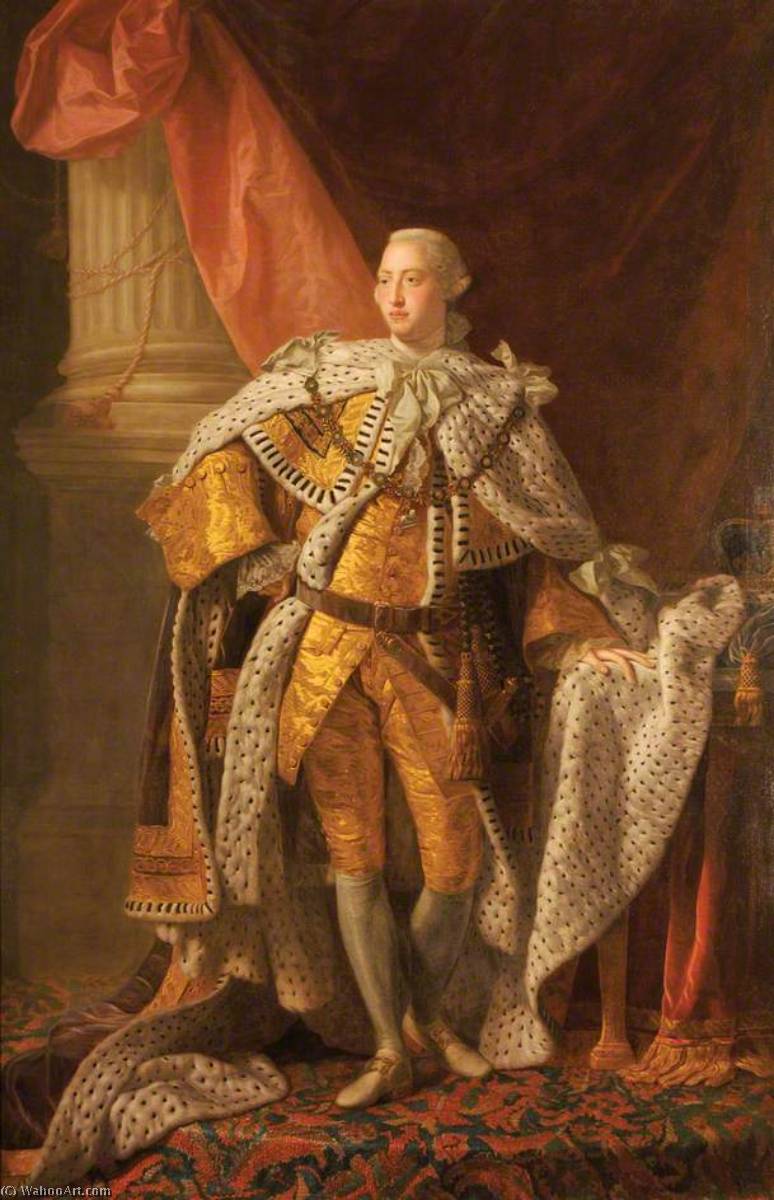
In the grand tapestry of eighteenth-century portraiture, few works command the room with as much authoritative grace as Allan Ramsay’s 1764 masterpiece, George III. This breathtaking portrait serves as more than a mere likeness; it is a profound window into the heart of the British monarchy during an era of immense transition. As the viewer gazes upon the King, they are immediately struck by the sheer scale and presence of the composition. Ramsay, a master of capturing both the physical essence and the psychological weight of his subjects, utilizes a rich, vibrant palette to breathe life into the royal figure. The deep, velvety tones of the drapery and the shimmering gold trim of the royal robes create a sensory experience that transcends the canvas, inviting collectors and art enthusiasts alike to step back into the gilded age of the Enlightenment.
The technical brilliance of this work lies in Ramsay’s ability to balance the meticulous detail of neoclassical precision with the dramatic flair of his Italian training. Having studied under masters like Francesco Solimena, Ramsay brought a sophisticated understanding of light and shadow—chiaroscroll—to the English court. In this portrait, the light does not merely illuminate; it sculpts. It catches the intricate textures of the King’s regalia, from the heavy, embroidered fabric of his mantle to the cold, hard glint of the scepter and sword. Every brushstroke serves a purpose, contributing to a sense of tactile reality that makes the royal splendor feel almost tangible. For the interior designer, such a piece offers an unparalleled focal point, providing a sense of historical weight and architectural grandeur to any sophisticated space.
Symbolism and the Language of Power
Beyond its aesthetic allure, the portrait is a complex semiotic map of sovereign authority. Every element held by George III is a deliberate symbol of his divine and temporal right to rule. The scepter, gripped firmly in one hand, represents his judicial power, while the sword serves as a reminder of his role as the protector of the realm. These instruments of statecraft are set against a backdrop of heavy, theatrical curtains, a classic trope in royal portraiture that creates an intimate yet staged atmosphere, suggesting that we are witnessing a moment of profound historical significance. The composition is designed to evoke awe, instilling a sense of stability and continuity in the viewer.
To possess a reproduction of this caliber is to invite a conversation about heritage, leadership, and the enduring beauty of classical art into one's home. It is an investment in atmosphere. Whether placed in a formal study, a grand dining hall, or a curated gallery wall, Ramsay’s depiction of George III acts as an anchor of elegance. The painting does not merely decorate a wall; it commands the environment, offering a timeless connection to the artistry and the political drama of the eighteenth century. It remains a captivating testament to the power of portraiture to immortalize not just a man, but an entire epoch of human history.