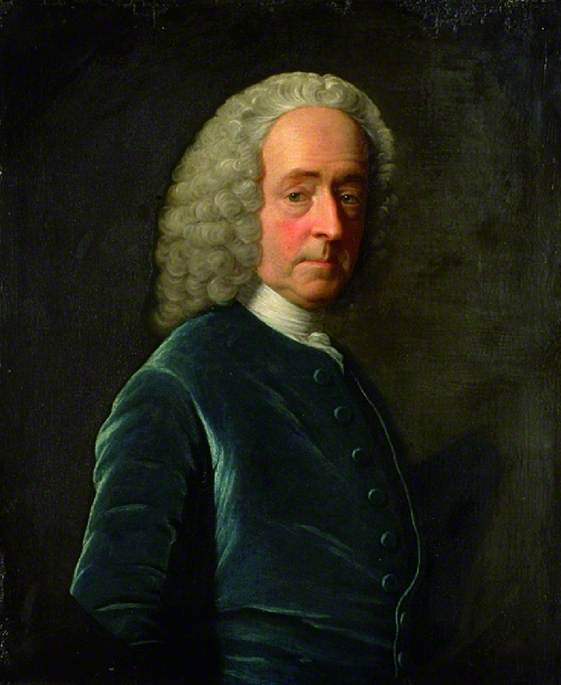
This stunning oil painting portrays James Haughton Langston with meticulous detail and refined composition. Allan Ramsay’s signature technique captures the subject’s noble bearing against a muted backdrop, embodying the artistic spirit of 18th-century Edinburgh.
Explore Allan Ramsay's (1713-1784) elegant portraits of Scottish society & nobility. Discover his Rococo style, masterful technique & iconic works like Queen Charlotte.
Discover art & history at the Fitzwilliam Museum, Cambridge! Explore world-class collections from ancient Egypt to modern masterpieces – free admission awaits!
James Haughton Langston: A Portrait of Dignified Grace
The image presents a formal portrait painting of a man identified as James Haughton Langston. The composition is a three-quarter view, focusing on the subject’s upper body and head. The background is dark and indistinct, drawing all attention to the figure—a deliberate choice that underscores Langston's prominence within his social milieu. Allan Ramsay skillfully captured this essence of aristocratic status during the Georgian era (1714–1830), a period marked by refined taste and an obsession with portraying individuals as emblems of virtue and intellect.
Style & Technique: Rococo Elegance Embodied
Ramsay’s artistic approach aligns perfectly with the prevailing Rococo aesthetic—characterized by flowing lines, delicate ornamentation, and an emphasis on sensual beauty. The painting demonstrates Ramsay's mastery of oil paint on canvas, utilizing subtle blending techniques to achieve a velvety surface texture that enhances the luminosity of the flesh tones and drapery folds. Lines are carefully employed to delineate facial features and clothing contours, contributing to the overall sense of precision and detail—a hallmark of Ramsay’s oeuvre. The artist’s meticulous attention to capturing likeness is evident in every brushstroke, reflecting the importance placed on portraying subjects accurately within Georgian society.
Historical Context: Patronage & Societal Significance
James Haughton Langston's portrait exemplifies the role of aristocratic patronage in shaping artistic production during the Georgian period. Ramsay was commissioned by influential families—including the Earls of Northumberland and Newcastle—who sought to elevate their social standing through visual representation. The painting serves as a testament to the values championed by these patrons: honor, piety, and erudition – qualities deemed essential for upholding aristocratic dignity. Furthermore, Langston’s attire—a dark blue coat adorned with intricate embroidery—symbolizes wealth and authority, reinforcing his position within the hierarchy of Georgian society.
Symbolism & Emotional Resonance
Beyond its formal depiction, the portrait conveys a profound sense of composure and inner strength. Langston's gaze directs itself squarely at the viewer, establishing an immediate connection that transcends time. The artist’s use of cool blues and grays contributes to the painting’s melancholic atmosphere—a subtle reflection of the complexities inherent in human experience. Ramsay skillfully captures not merely a likeness but also an emotional state, inviting contemplation on themes of nobility, resilience, and perhaps even unspoken sorrow.
Concluding Remarks: An Icon of Georgian Portraiture
Allan Ramsay's James Haughton Langston stands as a quintessential example of Georgian portraiture—a genre that prioritized psychological insight alongside visual accuracy. Its enduring appeal lies in its ability to transport us back to a bygone era while simultaneously capturing the timeless beauty of human dignity and grace. The painting remains an invaluable window into the cultural values and artistic conventions of its time, cementing Ramsay’s legacy as one of Scotland's most celebrated painters.