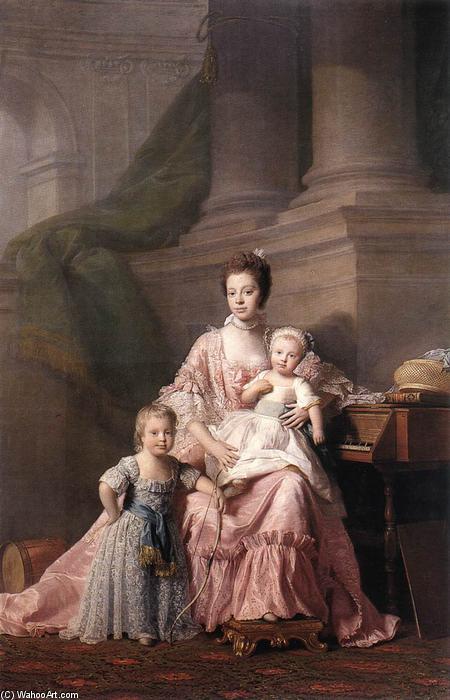
Allan Ramsay’s masterpiece depicts Queen Charlotte with her two sons, showcasing meticulous detail and Rococo influences. Painted in 1765, it resides in the Royal Collection at Windsor Castle and exemplifies Ramsay's signature style – blending grandeur with intimate observation.
Allan Ramsay’s Portrait of Queen Charlotte: Elegance Defined
Allan Ramsay's depiction of Queen Charlotte with her two sons—a masterpiece completed in 1765—stands as a cornerstone of Rococo portraiture and embodies the refined sensibilities of Enlightenment Britain. More than just a likeness, it’s an exquisitely crafted tableau that captures not only physical beauty but also psychological depth and conveys a profound sense of familial warmth. Ramsay's skill in rendering lace and fabric textures is particularly remarkable, demonstrating his meticulous attention to detail—a hallmark of his style and a testament to the influence of Italian masters like Francesco Solimena.
- Subject Matter: The painting portrays Queen Charlotte seated at an English spinnet alongside her two eldest sons, Frederick and George.
- Style: Ramsay’s work aligns with Sir Joshua Reynolds' grand manner, yet distinguishes itself through its understated elegance and intimate portrayal of the subjects.
- Technique: Employing oil paint on canvas, Ramsay achieved luminous effects and subtle tonal gradations—techniques that prioritized capturing mood and character over mere topographical accuracy.
The historical context is crucial to appreciating this artwork. Produced during George III’s reign, it reflects the prevailing aristocratic tastes of the period and underscores the importance of familial bonds within the royal family. Ramsay skillfully positioned his subjects against a backdrop of decorative elements—a spinnet adorned with lace and Locke's "Some Thoughts Concerning Education"—creating a carefully orchestrated visual narrative that speaks to intellectual curiosity alongside emotional connection.
- Symbolism: The inclusion of Locke’s book symbolizes the Enlightenment’s emphasis on reason and education, mirroring Charlotte’s commitment to nurturing her sons’ intellects.
- Emotional Impact: Ramsay's masterful brushwork conveys a palpable sense of tenderness and affection—a rare achievement in portraiture that elevates this image beyond mere representation.
Provenance reveals that the painting originated with George III himself, demonstrating its significance within royal patronage and securing its place among the treasures of Windsor Castle. Its subsequent inclusion in Pyne’s illustrated “Royal Residences” cemented its reputation as a quintessential example of British art history—a testament to Ramsay's enduring legacy as one of the era’s most celebrated artists. This painting exemplifies the delicate balance between formal precision and emotional resonance, securing its place as an icon of Rococo portraiture and demonstrating Ramsay’s unparalleled ability to capture both beauty and intellect.
Further Research: