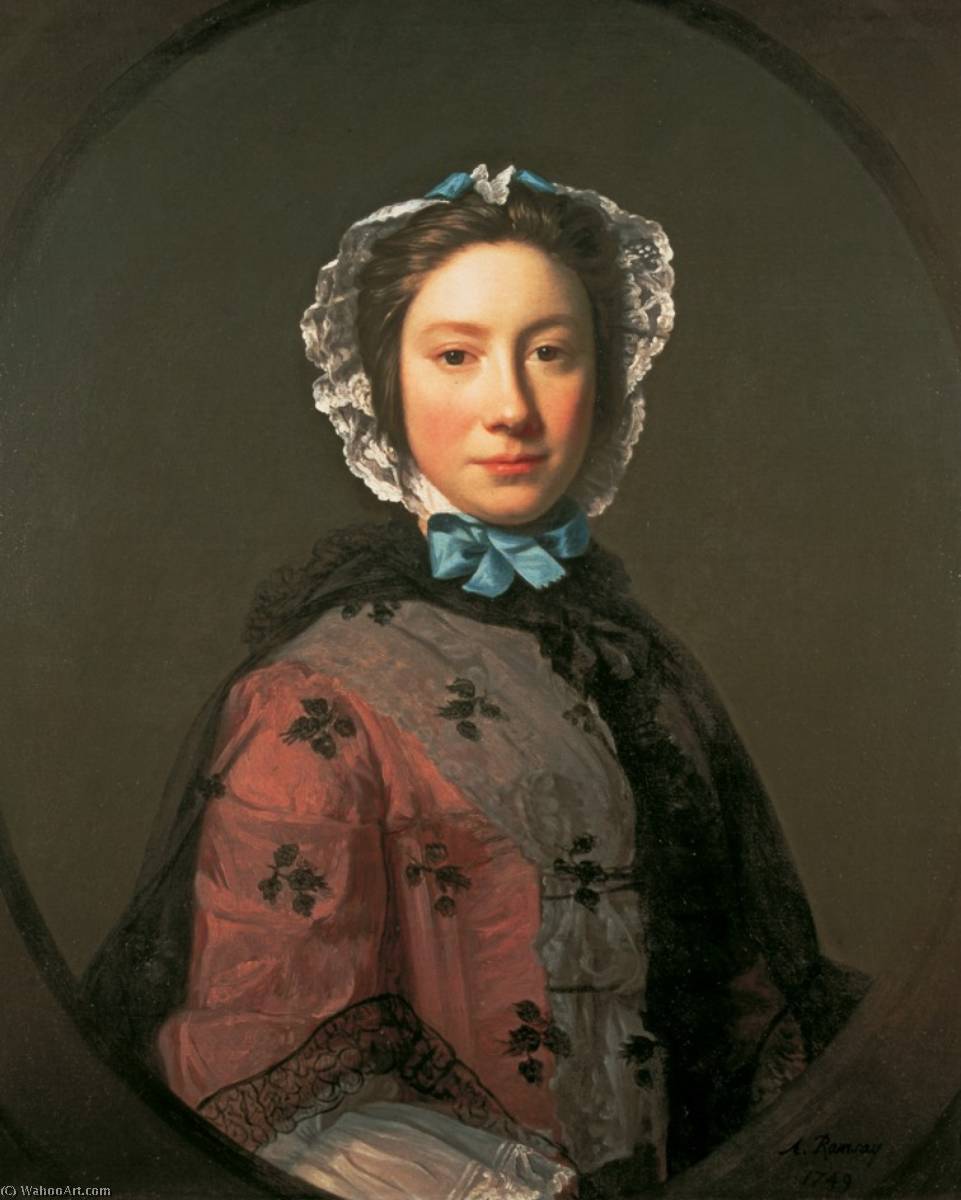
A Glimpse into Rococo Grace: Rosamund Sargent, née Chambers (1749)
To stand before this portrait of Rosamund Sargent, née Chambers, is to step directly into the luminous, delicate world of mid-eighteenth-century English society. Painted in 1749 by Allan Ramsay, the work transcends a mere likeness; it is a carefully composed tableau vivant, capturing not just the sitter’s beauty, but the very spirit of an era defined by elegance and refined leisure. The central figure commands attention, enveloped in soft pink hues that speak of springtime bloom and gentle femininity. Her gaze, directed outward toward the viewer, is both engaging and slightly reserved, inviting us into a moment of intimate observation.
Mastery of Light and Form: Technical Brilliance
Allan Ramsay’s technique here showcases his profound understanding of Rococo aesthetics, an style that favored grace over grandeur. Observe the meticulous rendering of texture—the crisp folds of her ruffled collar contrasting beautifully with the soft drape of her pink gown. The artist handles light with a masterful touch; it seems to emanate from within the scene itself, illuminating Rosamund’s features while gently defining the lace cap upon her head. Beyond the focal point, the inclusion of two smaller figures on either side adds depth and narrative complexity. These secondary portraits are handled with just enough subtlety that they support the main subject without ever competing with her presence, demonstrating Ramsay's sophisticated compositional balance.
The Context of Celebration: A Portrait of Union
Art historical research suggests this painting was created to commemorate a significant personal milestone—the marriage of Rosamund Chambers to John Sargent. This context imbues the piece with an added layer of symbolic weight; it is not just a portrait, but a visual celebration of union and social standing. The very act of commissioning such a work speaks volumes about the sitter’s place within her community. Ramsay, having absorbed influences from Italian masters during his travels, channels that classical understanding of portraiture into something distinctly English—a blend of formal structure softened by Rococo charm.
Emotional Resonance and Decorative Appeal
For the modern collector or designer, this piece offers an unparalleled infusion of historical romance. The emotional impact is one of gentle nostalgia; it whispers tales of powdered wigs, silk ribbons, and drawing-room conversations. Reproducing such a work allows one to bring that period's sophisticated atmosphere into contemporary living spaces. Imagine this painting adorning a salon or study—the delicate palette and the palpable sense of refined artistry elevate any interior design scheme, serving as both a conversation starter and a timeless piece of decorative art.