Explore the Baroque sculptures & paintings of Alonso Cano (1601-1667), a Spanish master known for religious works, architecture, & dramatic scenes in Granada.
Explore the Louvre Museum in Paris! Home to iconic masterpieces like the Mona Lisa & Venus de Milo, journey through art history from ancient Egypt to Renaissance icons. Plan your visit today!
The Contemplative Journey of St. James the Greater
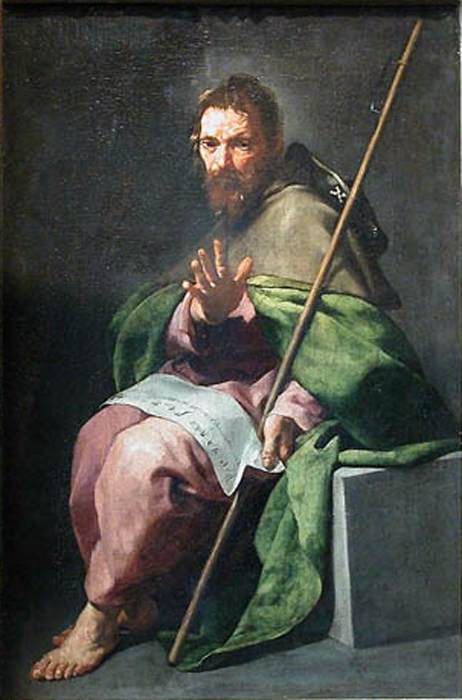
To gaze upon this depiction of St. James the Greater is to step across the threshold of time and into a moment suspended between earthly pilgrimage and divine revelation. The oil on canvas, executed with such masterful precision, immediately draws the viewer into its solemn atmosphere. St. James stands not merely as a portrait subject, but as an embodiment of enduring faith—a figure whose very presence suggests deep contemplation. His beard and mustache lend him an air of venerable wisdom, while the long hair cascading over his shoulders speaks to a life lived under the weight of profound spiritual experience.
Baroque Drama and Technical Brilliance
The technical execution points strongly toward the dramatic flair characteristic of the Baroque period. Observe how the artist has manipulated light and shadow; it is not merely illumination, but a palpable force that carves out the contours of his face and defines the rich folds of his greenish robe. This masterful use of chiaroscuro creates an almost three-dimensional depth, pulling the viewer into the scene. The attention paid to texture—the softness of the skin against the weight of the fabric, the subtle sheen on the staff he carries—testifies to a painter's supreme dedication. It is a realism that elevates mere representation to the realm of the sublime.
Symbolism of the Pilgrim’s Path
The inclusion of the staff is no accident; it anchors the narrative in the tradition of the pilgrim, forever linking St. James to his legendary journey to Santiago de Compostela. This suggests a life dedicated to movement, endurance, and spiritual questing. His raised hand, poised mid-gesture, invites interpretation—is he imparting wisdom, offering a blessing, or perhaps wrestling with an internal truth? The dark, indistinct background serves the crucial function of eliminating distraction, forcing our focus entirely onto the illuminated figure and the weight of his inner discourse.
A Touch for the Modern Sanctuary
For the collector or designer seeking to infuse a space with history, gravitas, and artistic depth, this piece offers profound resonance. While rooted in the religious iconography of 1635, its emotional impact transcends dogma. It speaks to universal themes: the search for meaning, the quiet power of reflection, and the enduring nature of belief. Reproducing such an artwork allows one to bring home not just a painting, but a carefully curated piece of spiritual drama—a focal point that encourages pause, thought, and connection within any room.