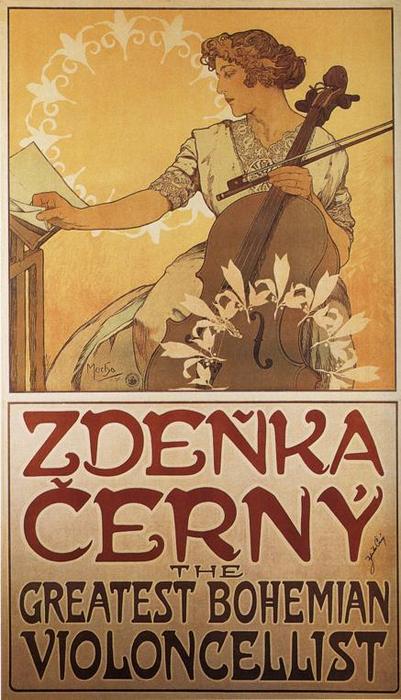
The Enchanting World of Alphonse Mucha’s Seasons
Alphonse Maria Mucha stands as one of the most recognizable figures of Art Nouveau—a movement that swept across Europe between 1890 and 1910, prioritizing organic forms, flowing lines, and a celebration of beauty. Born in Ivančice, Moravia (now Czech Republic) in 1860, Mucha’s early life instilled within him a profound appreciation for both music and art—a duality that would profoundly influence his artistic vision. Rejecting the rigid conventions of academic painting, he sought inspiration from Japanese woodcuts and embraced a distinctly personal style characterized by meticulous detail and an ethereal quality. This stylistic rebellion cemented his place as a pioneer of modern decorative arts.
- A Parisian Embrace: Mucha’s relocation to Paris in 1887 proved pivotal, propelling him into the epicenter of artistic innovation. Here, he honed his craft alongside fellow artists like Pierre-Auguste Renoir and Gustave Moreau, absorbing their influences while forging an unmistakable aesthetic identity.
- The Birth of “Mucha Style”: His breakthrough came with the commission for Sarah Bernhardt’s theatrical posters—a project that birthed what would become known as “Mucha Style.” This distinctive approach involved stylized female figures draped in flowing robes, adorned with elaborate jewelry and surrounded by floral motifs—a visual language that captivated audiences and established Mucha's reputation as a master of decorative illustration.
The Seasons: A Symphony of Color and Form
Mucha’s “The Seasons” series represents the pinnacle of his Art Nouveau style, embodying its core principles with breathtaking elegance. Created in 1896, 1897, and 1900—primarily for F. Champenois—these monumental color lithographs on paper are more than mere decorative panels; they are profound meditations on nature’s cyclical rhythms and the feminine spirit. Each of the four canvases depicts a different season—Winter, Spring, Summer, and Autumn—presented as idealized allegorical figures bathed in soft, diffused light.
- Symbolic Representation: Mucha skillfully employed symbolism to convey complex ideas about femininity, fertility, and transformation. The floral arrangements surrounding each figure serve not only as visual embellishments but also as emblems of the respective season—representing purity (Winter), rebirth (Spring), abundance (Summer), and decay (Autumn).
- Lithographic Technique: Mucha’s masterful use of lithography—a printing process involving stone etching—allowed him to achieve remarkable tonal gradations and textural nuances. This technique, combined with careful color layering, resulted in prints that shimmered with luminosity and captured the subtle beauty of natural light.
Beyond Decoration: Mucha’s Legacy
Alphonse Mucha's influence extends far beyond the Art Nouveau movement itself. His distinctive style continues to inspire artists and designers today, demonstrating the enduring power of artistic innovation. Furthermore, his monumental canvases—known as “The Slav Epic”—represent a bold undertaking to chronicle the history of Slavic peoples—a testament to Mucha’s unwavering commitment to artistic expression and cultural heritage. The series stands as an unparalleled achievement in symbolic painting, capturing the grandeur and complexity of Slavic civilization with breathtaking artistry.
Source: Kern, David M. H., ed. (October 1980). The Art Nouveau Style Book