The Enigmatic Knight: Amadeo de Souza-Cardoso’s ‘D. Quixote’
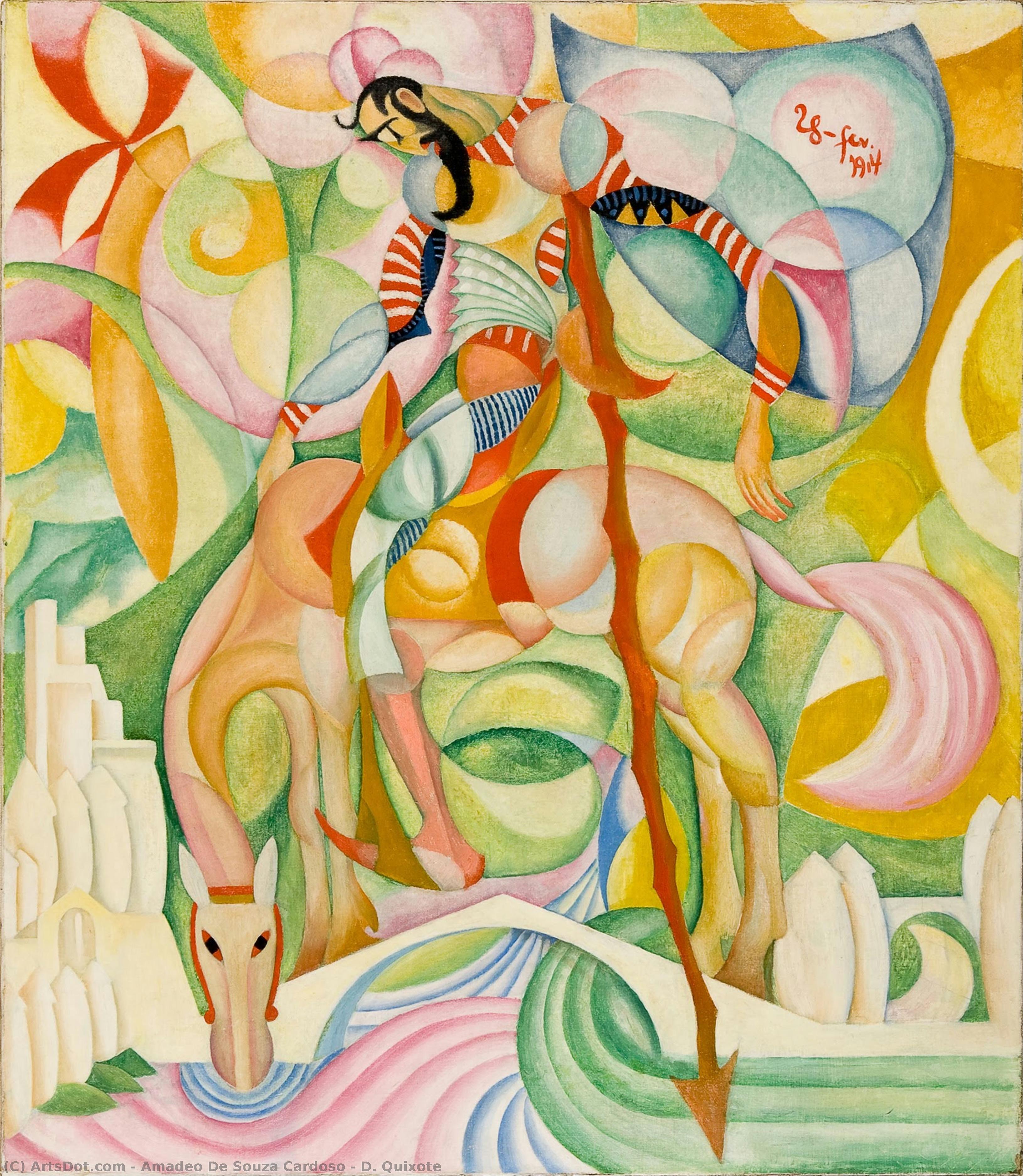
Amadeo de Souza-Cardoso's “D. Quixote” isn’t merely a depiction of the iconic literary figure; it’s a vibrant, emotionally charged exploration of idealism colliding with the harsh realities of existence. Painted in 1914, during his most intensely creative period as a pioneer of Portuguese Modernism, this artwork captures the essence of Cervantes' masterpiece – the tragicomic journey of a man consumed by dreams and stubbornly clinging to an outdated chivalric code. Souza-Cardoso, deeply influenced by the avant-garde movements of Cubism and Futurism, masterfully translates the spirit of Don Quixote onto canvas with a dynamic energy that belies the subject’s inherent melancholy.

A Symphony of Color and Distortion
The painting’s immediate impact lies in its bold, almost hallucinatory color palette. Souza-Cardoso abandons naturalistic representation, instead employing a vibrant array of hues – fiery oranges, deep blues, and swirling greens – to create an atmosphere thick with emotion. The figure of Don Quixote, mounted on his horse Rocinante, is rendered with a pronounced sense of distortion, reflecting the character’s fractured perception of reality. The horse itself isn't depicted realistically; it’s fragmented and stylized, contributing to the overall feeling of instability and dreamlike unreality. Notice how the background seems to swirl and undulate, mirroring the internal turmoil of the protagonist.
- Cubist Influence: Souza-Cardoso’s use of geometric forms and multiple perspectives echoes the principles of Cubism, a movement he embraced during his time in Paris.
- Futurist Energy: The dynamic composition and sense of movement suggest an influence from Futurism, which celebrated speed, technology, and the dynamism of modern life – qualities ironically juxtaposed with Quixote’s antiquated ideals.
Symbolism and the Burden of Idealism
Beyond its formal elements, “D. Quixote” is rich in symbolism. The suit of armor, a potent emblem of chivalry, becomes a symbol of delusion and outdated values. The horse, Rocinante, represents not just transportation but also the limitations imposed by reality – a loyal companion yet unable to alter Quixote’s misguided quest. The distant landscape, rendered with swirling brushstrokes, suggests both the vastness of Spain and the protagonist's isolation. Crucially, the painting isn’t simply a portrait; it’s an embodiment of the tragic hero’s struggle against his own illusions.
The choice of Don Quixote as subject speaks volumes about Souza-Cardoso’s engagement with themes of idealism, delusion, and the clash between tradition and modernity – concerns that resonated deeply within Portuguese society at the time.
A Legacy of Modernism
Amadeo de Souza-Cardoso's “D. Quixote” stands as a pivotal work in the development of Portuguese Modernism. His ability to synthesize influences from diverse artistic movements – Cubism, Futurism, and Symbolism – resulted in a uniquely expressive style that captured the spirit of his era. This painting is not just a beautiful image; it’s a powerful meditation on the human condition, inviting viewers to contemplate the nature of reality, the allure of dreams, and the enduring power of myth.