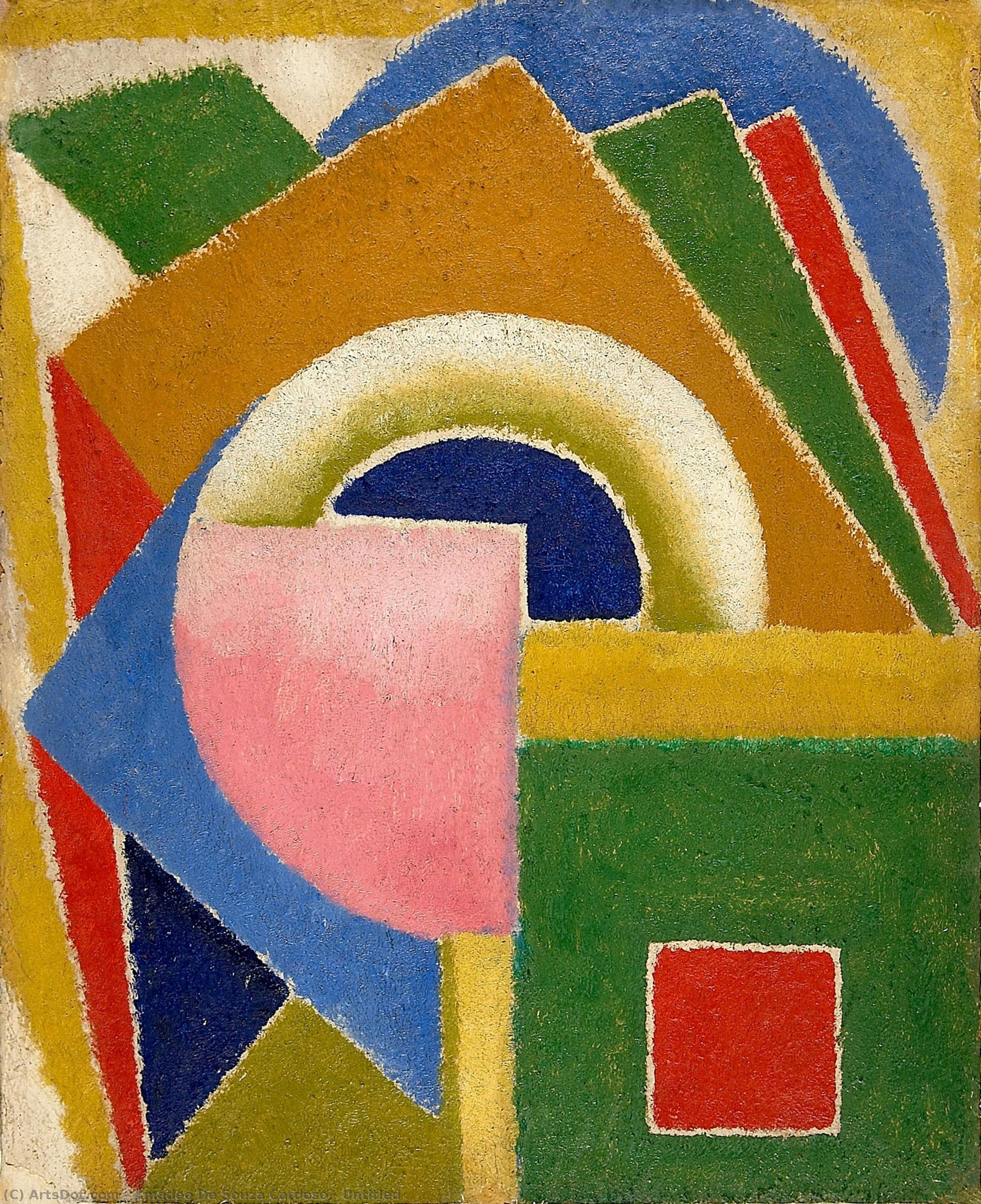
This artwork is a bold exploration of abstraction featuring geometric shapes and expressive blues and reds. Inspired by early Cubism and Expressionism, it showcases Souza-Cardoso's pioneering spirit in Portuguese art.
Discover Amadeo de Souza-Cardoso (1887-1918), a pioneering Portuguese modernist painter. Explore his vibrant, abstract compositions influenced by Cubism & Futurism and lasting artistic legacy.
Explore Portuguese modern & contemporary art at the Centro de Arte Moderna Gulbenkian! Discover masterpieces by Paula Rego, innovative architecture, and a vibrant cultural hub in Lisbon's beautiful gardens.
A Pioneer's Bold Vision: Unveiling Amadeo de Souza-Cardoso’s “Untitled”
Amadeo de Souza-Cardoso stands as a cornerstone of Portuguese Modernism, an artist whose brief but incandescent career irrevocably altered the landscape of European art. Born in Manhufe, Portugal, in 1887, his artistic journey began with architectural studies before swiftly gravitating towards painting—specifically caricature—where he honed his skills and developed a distinctive style that would propel him to international acclaim. This captivating piece, “Untitled,” created in 1913, embodies the spirit of his era: a defiant embrace of abstraction amidst the burgeoning influence of Cubism and Expressionism.
The Composition’s Geometric Dance
“Untitled” immediately commands attention with its striking visual vocabulary. At its core lies a dominant circle—a motif frequently revisited by Souza-Cardoso—representing wholeness, unity, and perhaps even spiritual contemplation. Surrounding this central element are several smaller circles, meticulously arranged to generate an intricate pattern that pulsates with movement. These concentric shapes aren’t merely decorative; they speak to the artist's fascination with geometric forms, mirroring the revolutionary ideas circulating within the artistic circles of Paris at the time. Two triangles punctuate the canvas—one positioned on the left and another on the right—adding dynamism and visual balance to the composition. Their angular lines contrast sharply with the circular shapes, symbolizing opposing forces and contributing to the artwork’s overall tension.
Technique and Color Palette: Echoes of Parisian Avant-Garde
Souza-Cardoso executed “Untitled” in oil on canvas using a technique characterized by layering and blending—a hallmark of Expressionist painting—allowing for rich textures and luminous colors. The predominant hues are deep blues and vibrant reds, colors often associated with passion, energy, and emotional intensity. These bold shades aren’t applied haphazardly; rather, they are carefully considered to evoke specific moods and create a visual experience that transcends mere representation. Souza-Cardoso skillfully manipulates color to convey feeling, mirroring the stylistic choices of artists like Gris and Delaunay who were experimenting with similar palettes in Paris during this period.
Historical Context: Embracing Modernism’s Disruptive Force
“Untitled” emerged from Portugal's burgeoning modernist movement—a reaction against academic conventions and a fervent desire to explore new artistic horizons. Souza-Cardoso’s exposure to Parisian avant-garde artists profoundly impacted his creative vision, fostering an unwavering commitment to experimentation and innovation. He actively engaged with the intellectual debates surrounding Cubism and Expressionism, absorbing their influence while forging his own unique voice within these influential movements. The painting reflects a broader cultural shift toward embracing abstraction as a means of conveying emotion and challenging traditional artistic norms—a legacy that continues to inspire artists today.
Symbolic Resonance: Circles and Triangles – Representations of Harmony and Conflict
Beyond its formal qualities, “Untitled” resonates with symbolic significance. The circle, recurring throughout Souza-Cardoso’s oeuvre, symbolizes completeness, cyclical time, and the interconnectedness of all things—concepts central to philosophical thought during his lifetime. Simultaneously, the triangles represent opposing forces—stability versus dynamism, reason versus intuition—reflecting the anxieties and aspirations inherent in navigating a rapidly changing world. These geometric elements aren't merely visual devices; they embody deeper ideas about human experience and artistic expression.
Emotional Impact: A Window into Souza-Cardoso’s Soul
“Untitled” transcends mere aesthetic beauty; it invites contemplation and evokes profound emotional responses. The artwork’s bold colors, combined with its dynamic composition, convey a sense of urgency and excitement—a testament to Souza-Cardoso's unwavering belief in the transformative power of art. Viewing this piece is akin to stepping into a realm where form follows feeling, mirroring the core tenets of Expressionist painting and capturing the artist’s innermost convictions. It remains a powerful reminder that art can communicate ideas beyond words, resonating with viewers long after they have gazed upon its surface.