A Glimpse into Modern Village Life
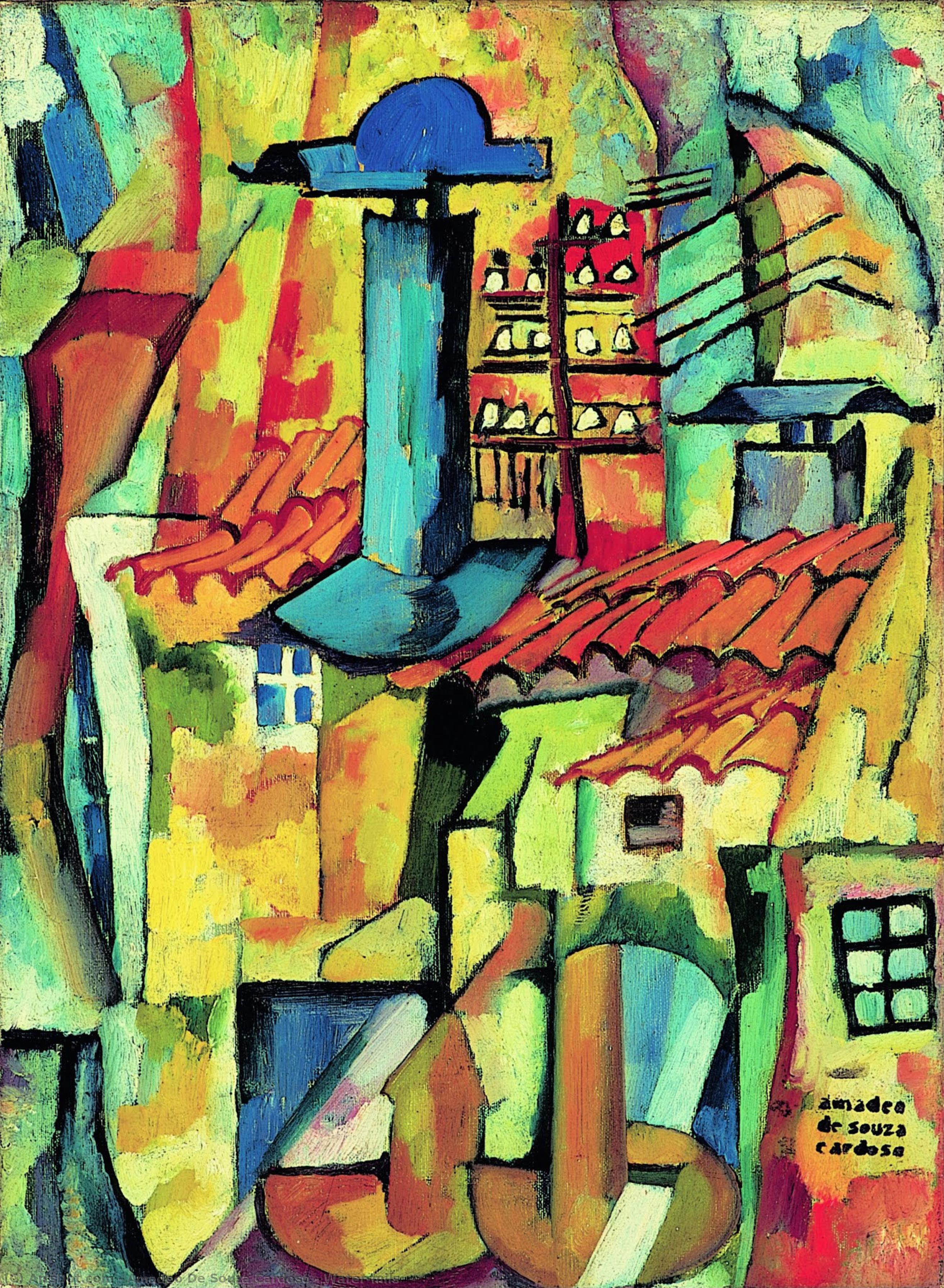
Amadeo de Souza-Cardoso’s Water-mils transports the viewer directly into the vibrant heart of a bygone village scene, rendered with an almost intoxicating energy. This painting is far more than a mere depiction of architecture; it is a celebration of communal life captured at a moment brimming with activity. One can almost hear the murmur of voices and the distant rush of water powering the titular mills. The composition is richly populated, featuring figures scattered throughout the square, lending an immediate sense of narrative depth. Notice the details—the bright splash of an umbrella amidst the earthy tones of the buildings—these small touches elevate the scene from a simple landscape to a complex tapestry of human experience.
The Brushwork of Modernism
Technically, Souza-Cardoso employs a palette that is both colorful and deeply textured. His handling of paint suggests an engagement with the burgeoning spirit of early 20th-century modernism. The colors do not simply exist; they vibrate against one another, creating a palpable sense of atmosphere. While the subject matter—the village square dominated by the towering chimney—grounds the piece in a recognizable reality, the execution is anything but literal. His brushwork possesses that characteristic modernist dynamism, suggesting an emotional resonance beneath the surface depiction. It speaks to an artist who was absorbing the avant-garde currents sweeping through Paris while remaining deeply connected to the spirit of his Portuguese roots.
Historical Echoes and Cultural Resonance
Painted in 1915, this work emerges from a period of profound global upheaval, yet Souza-Cardoso captures a moment of enduring, almost idyllic community life. This contrast—the backdrop of potential turmoil against the vibrant persistence of daily routine—lends the piece a poignant resonance. For the collector or designer, owning this reproduction is acquiring a piece of art history that speaks to resilience. It embodies the spirit of human gathering, making it a powerful focal point for any space meant to feel lived-in and soulful.
Symbolism of Place and People
The village itself acts as a symbol of rootedness and tradition, while the people within are embodiments of fleeting moments—the passing parade of life. The large chimney, dominating the skyline, can be interpreted as a beacon, perhaps symbolizing industry, warmth, or simply the enduring presence of community structure. The umbrella, an object so mundane yet highlighted by the artist, becomes a subtle symbol of protection or anticipation. These elements combine to create a visual poem about belonging, making Water-mils not just art to be observed, but a feeling to be absorbed.