Admire Modigliani’s ‘Beatrice Hastings’! This poignant 1914 portrait showcases Expressionist beauty & melancholic mood. Explore its unique style, technique & artistic details.
Explore the captivating art of Amedeo Modigliani (1884-1920): iconic portraits & sculptures defined by elongated forms, expressive eyes, and a hauntingly beautiful style. Discover his legacy! #Modigliani #Expressionism
A Study in Melancholy: Modigliani’s ‘Beatrice Hastings Leaning on Her Elbow’
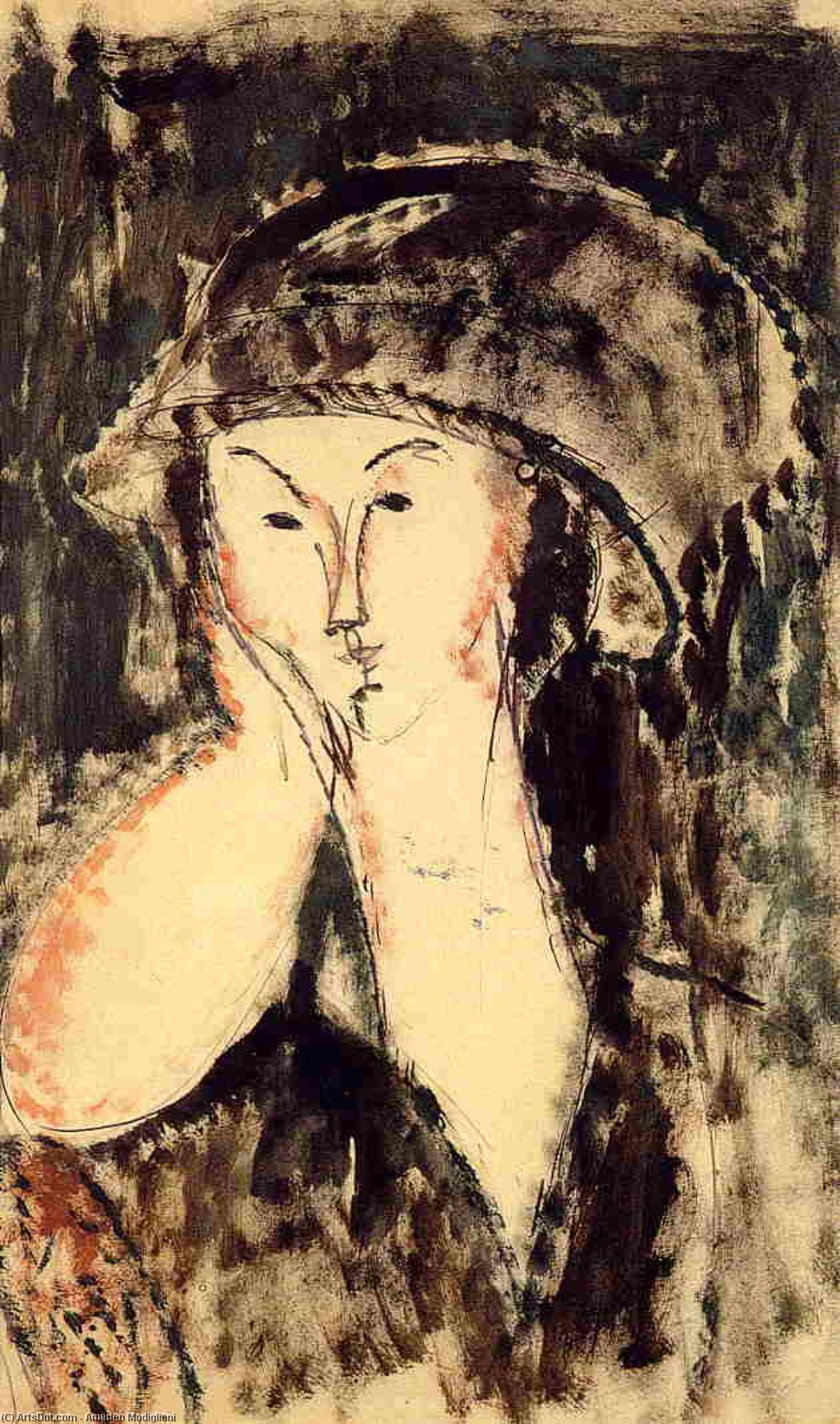
This captivating portrait, created in 1914, offers a poignant glimpse into the artistic world of Amedeo Modigliani, and his intimate connection with his muse, Beatrice Hastings. More than just a likeness, this work is an exploration of emotion, rendered with a striking simplicity that defines Modigliani’s unique style.
The Subject & Her Story
Beatrice Hastings was a British artist and poet who had a turbulent romantic relationship with Modigliani during his early years in Paris. She served as one of his most frequent models, appearing in numerous paintings and drawings. This particular portrait captures her in a moment of quiet contemplation, leaning on her elbow – a pose that suggests both weariness and introspection. The downturned curve of her mouth hints at an underlying sadness, inviting the viewer to ponder her inner world.
Style & Influences: A Bridge Between Tradition and Modernity
Modigliani’s style in this work is firmly rooted in Expressionism, yet subtly informed by his earlier studies of Renaissance art and African sculpture. The elongated neck and simplified facial features are hallmarks of his signature aesthetic, drawing comparisons to the elegant forms found in Italian Mannerist painting and the stylized representations prevalent in primitive art. However, unlike some of his contemporaries who embraced radical abstraction, Modigliani retained a recognizable human form, imbuing his portraits with a haunting sense of humanity.
Technique & Materials: The Power of Restraint
Executed primarily in watercolor or ink wash on paper, the painting demonstrates Modigliani’s mastery of tonal variation and line work. He employs loose, expressive brushstrokes and washes of color – predominantly browns, ochres, and blacks – to create a textured surface that feels both delicate and emotionally charged. The deliberate lack of detail forces the viewer to focus on the essential forms and emotional resonance of the subject. Hatching and cross-hatching are skillfully used to define shadows and add depth, particularly around the face and hands.
Historical Context: Paris in 1914
Created on the cusp of World War I, ‘Beatrice Hastings Leaning on Her Elbow’ reflects a sense of unease and premonition that permeated Parisian artistic circles at the time. The war would soon shatter the vibrant cultural landscape of Montparnasse, but before that, artists like Modigliani were pushing boundaries and exploring new modes of expression. This portrait stands as a testament to that era of experimentation and innovation.
Symbolism & Emotional Impact
The painting’s somber color palette and the subject's melancholic pose contribute to its overall mood of quiet sadness. The dark, indistinct background isolates Beatrice, emphasizing her solitude and introspection. While there is no overt symbolism, the very act of portraying her in this vulnerable state can be interpreted as a commentary on the complexities of human emotion and the challenges of artistic life. It’s a work that resonates with viewers on a deeply personal level, inviting them to connect with the subject's inner world.
For Collectors & Designers
‘Beatrice Hastings Leaning on Her Elbow’ is a powerful example of Modigliani’s enduring artistic vision. Its muted tones and elegant composition make it a versatile piece for interior design, complementing both modern and traditional settings. A high-quality reproduction would serve as a striking focal point in any room, adding a touch of sophistication and emotional depth. For collectors, this work represents an opportunity to own a piece of art history – a testament to the genius of one of the 20th century’s most influential artists.