A Study in Longing: Modigliani’s “Blonde Nude”
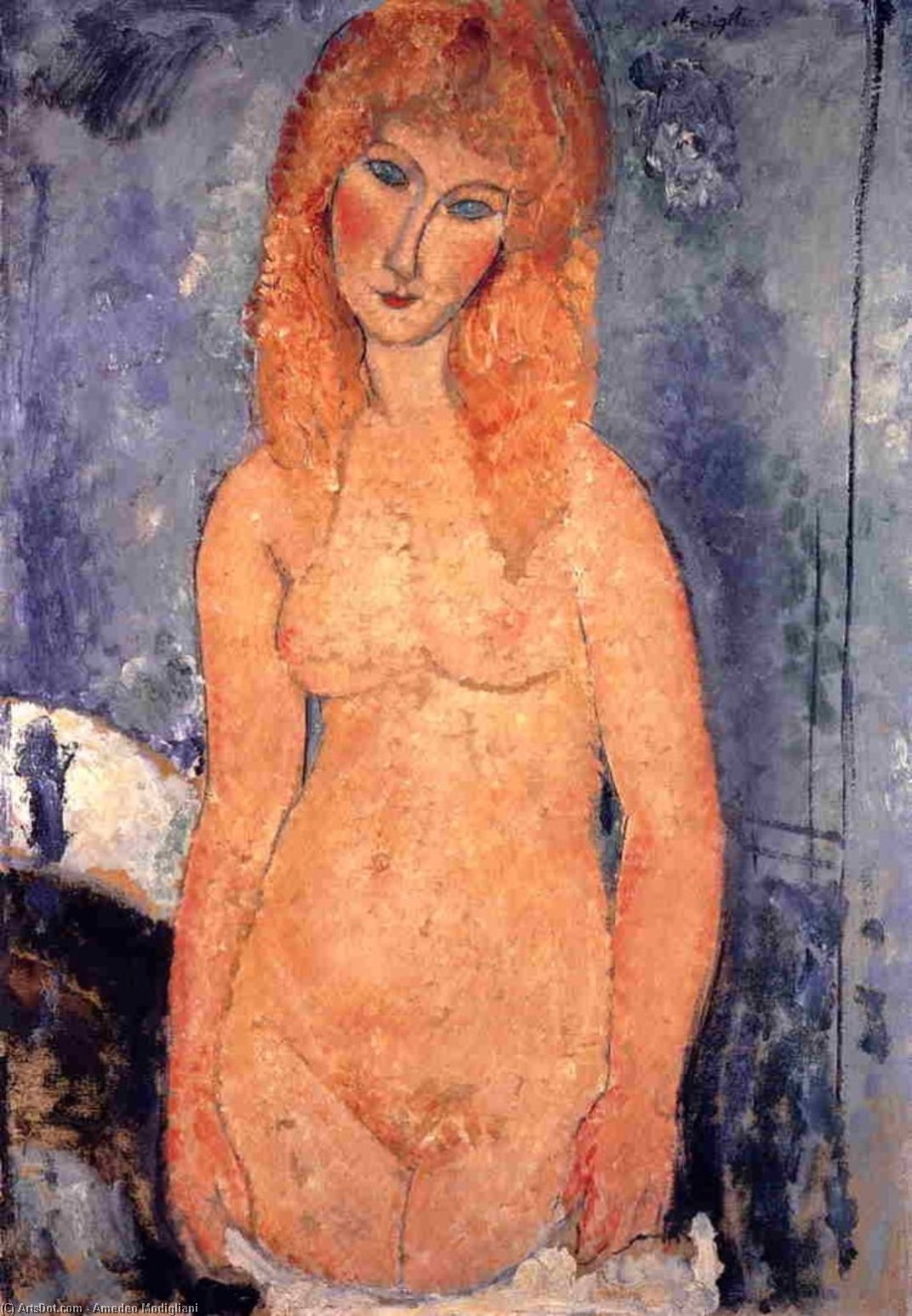
Amedeo Modigliani's "Blonde Nude," painted in 1917, is not merely a depiction of a woman; it’s an embodiment of profound melancholy and a poignant exploration of the human condition. This oil-on-canvas work, featuring a strikingly beautiful figure with vibrant red hair – a deliberate departure from the traditional blonde subject matter favored by many artists of the period – immediately draws the viewer into a world of quiet contemplation. The woman, seated and gazing directly at the observer, possesses an almost unnerving stillness, her expression hinting at a deep-seated sadness that resonates across a century.
- Subject & Composition: The central subject is a nude female figure, rendered with Modigliani’s signature elongated neck and simplified features. Her pose, relaxed yet alert, suggests both vulnerability and defiance. The composition emphasizes her isolation within the vastness of the blue background, intensifying the sense of introspection.
- Technique & Style: Executed in his characteristic style, Modigliani employs a flattened perspective and subtly distorted forms, hallmarks of early Cubism’s influence. The brushstrokes are loose and expressive, contributing to the painting's raw emotional intensity. The use of oil paint allows for rich textures and subtle gradations of color, particularly evident in the modeling of her flesh and the delicate rendering of her hair.
Historical Context: Modernity and Melancholy
Painted in 1917, “Blonde Nude” exists within a pivotal moment in art history – the transition from Impressionism to Cubism and beyond. The aftermath of World War I cast a long shadow over Europe, fostering a sense of disillusionment and anxiety that permeated artistic expression. Modigliani, like many artists of his generation, grappled with these anxieties, translating them into works characterized by a haunting beauty and an underlying current of sadness. His personal life, marked by poverty, illness, and unrequited love, undoubtedly informed the emotional depth of his art.
- Cubist Influence: While not strictly Cubist, Modigliani’s work demonstrates a clear engagement with the movement's principles – particularly its emphasis on geometric forms and multiple perspectives.
- Symbolism of Color: The dominant blue background is significant. Blue has long been associated with melancholy, spirituality, and introspection, further amplifying the painting’s emotional impact.
The Figure of Modigliani's Muse
The identity of the woman depicted remains somewhat enigmatic, though she is widely believed to be Ora Etzradsky, a model and artist who frequented Modigliani’s studio in Paris. Their relationship was complex and passionate, marked by both artistic collaboration and personal turmoil. The painting can be interpreted as a reflection of this intimate connection – a portrait not just of a woman, but of a shared experience of longing and vulnerability. Modigliani's ability to capture the essence of his models, imbuing them with an aura of quiet dignity and profound sadness, is a testament to his exceptional artistic talent.
Symbolism: The elongated neck, a recurring motif in Modigliani’s work, has been interpreted as representing aspiration, spiritual yearning, or perhaps the artist's own feelings of inadequacy. The direct gaze of the subject compels the viewer to confront their own emotions and contemplate the nature of beauty, sorrow, and existence.
Emotional Impact & Reproduction
“Blonde Nude” continues to captivate viewers with its raw emotional power and timeless appeal. It’s a work that invites contemplation and evokes a sense of melancholy – a reminder of the fragility of human life and the enduring nature of longing. ArtsDot offers meticulously crafted hand-painted reproductions of this iconic masterpiece, allowing you to bring this extraordinary artwork into your home or office. Our skilled artisans faithfully recreate Modigliani’s technique and color palette, ensuring that your reproduction captures the full beauty and emotional depth of the original.