The Ethereal Gaze of Elvira
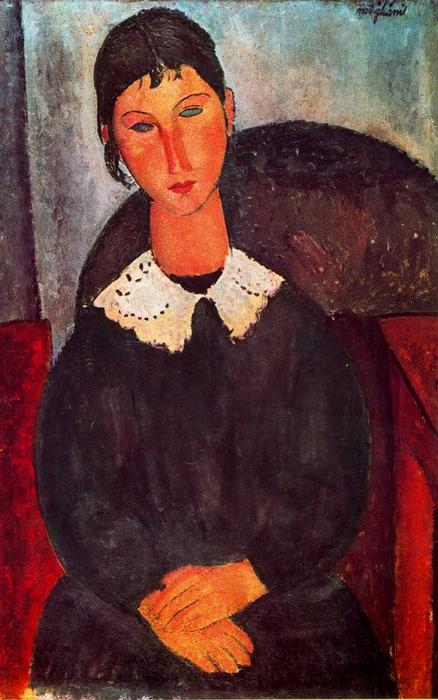
In the quiet, evocative realm of Amedeo Modigliani’s portraiture, few works capture the delicate tension between presence and absence as poignantly as Elvira with a white collar. Painted in 1918, this masterpiece serves as a profound window into the soul of one of the early 20th century's most tragic and brilliant figures. The subject, Elvira, is presented not merely as a sitter, but as an embodiment of the melancholic grace that defined the École de Paris. Clad in a stark black dress that contrasts sharply with the crisp, luminous white of her collar, she sits with a poised yet haunting stillness. Her face, the focal point of this intimate composition, possesses that unmistakable Modigliani signature: a subtle elongation of features and an enigmatic expression that seems to look through the viewer, inviting a deep, contemplative connection.
The composition is further enriched by unexpected elements that break the solemnity of the portrait. Two birds, positioned with a dreamlike spontaneity near the upper left and right edges of the canvas, introduce a sense of fragile life into the stillness of the scene. These avian visitors act as silent witnesses to Elvira's introspection, adding a layer of symbolic complexity—perhaps representing the fleeting nature of beauty or the restless spirit of the bohemian era in which Modigliani lived and breathed.
A Symphony of Line and Melancholy
Technically, this work is a masterclass in the use of line and simplified form. Modigliani, heavily influenced by both the classical traditions of the Renaissance and the primal aesthetics of African sculpture, eschews unnecessary detail to focus on the rhythmic flow of the silhouette. The artist employs a deliberate, sculptural approach to the canvas, where the sweeping curves of the neck and the tapered contours of the face create a sense of architectural elegance. His brushwork is controlled yet expressive, allowing the textures of the black fabric and the bright collar to anchor the viewer's eye amidst the more ethereal elements of the background.
For the discerning collector or interior designer, this painting offers an unparalleled emotional depth. It is a piece that does not merely decorate a space but transforms it, imbuing a room with an air of sophisticated nostalgia and quiet intellect. The stark contrast between the dark attire and the light accents makes it a versatile centerpiece, capable of anchoring a minimalist modern gallery or adding a layer of historical gravity to a classic, richly textured study. To possess a reproduction of this work is to bring a fragment of Paris's golden, bohemian age into the contemporary home, offering a timeless reminder of the beauty found in vulnerability and the enduring power of the human gaze.