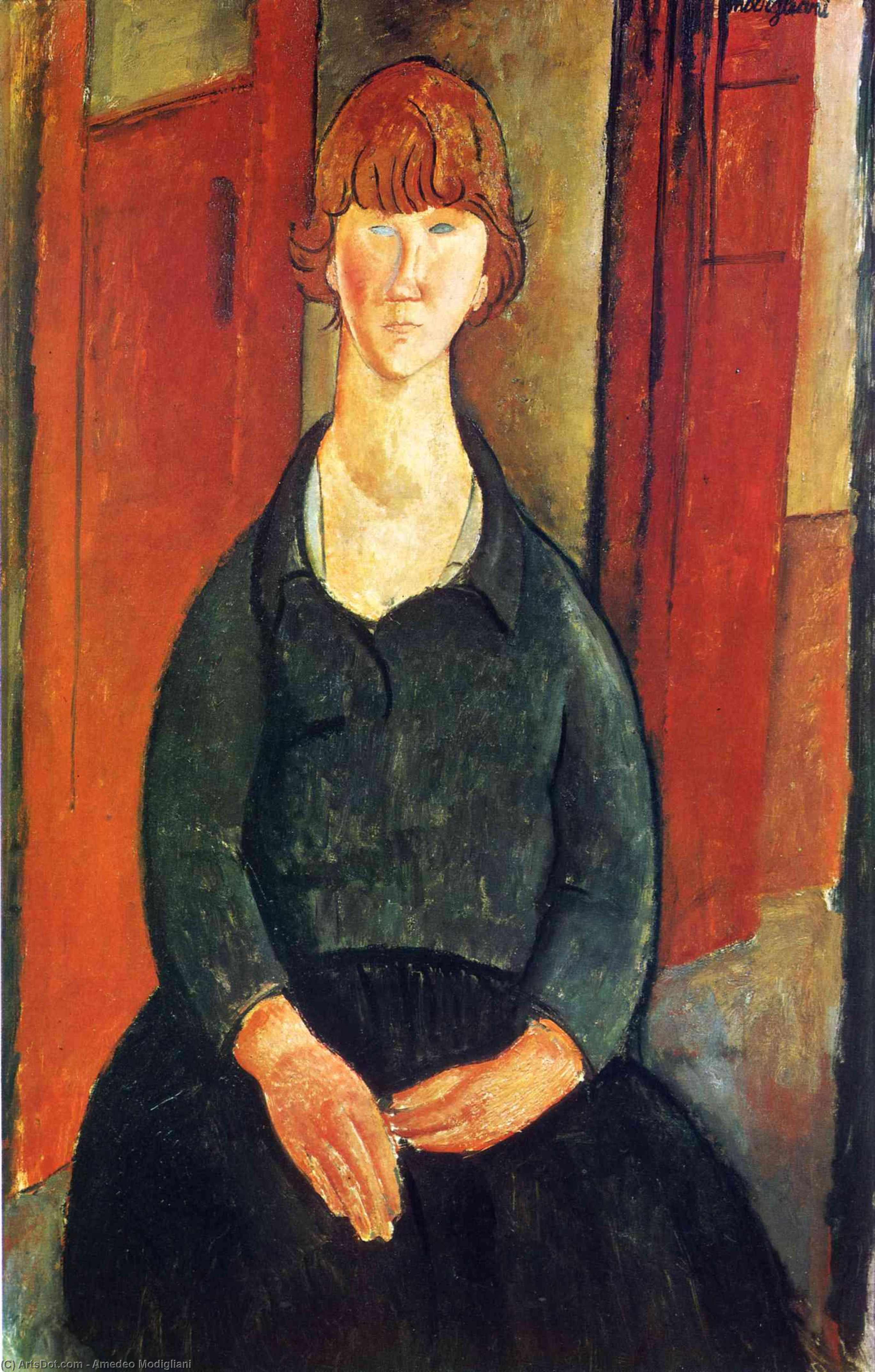
Experience the profound melancholy of Amedeo Modigliani's 1919 Expressionist masterpiece Flower Vendor, featuring elongated forms and muted tones that invite you to explore this timeless portrait of quiet contemplation.
Explore the captivating art of Amedeo Modigliani (1884-1920): iconic portraits & sculptures defined by elongated forms, expressive eyes, and a hauntingly beautiful style. Discover his legacy! #Modigliani #Expressionism
A Symphony of Melancholy and Grace
In the quietude of Amedeo Clemente Modigliani’s 1919 masterpiece, Flower Vendor, we encounter more than a mere portrait; we step into a profound psychological landscape. This evocative oil on canvas serves as a quintessential window into the heart of Expressionism, where the artist moves beyond the superficiality of realism to capture the very essence of human vulnerability. The subject, a woman captured in a moment of deep introspection, gazes softly away from the viewer, her hands clasped in a gesture that suggests both stillness and a quiet, internal dialogue. Modigliani, ever the poet of the human form, utilizes his signature stylistic innovations—the elongated neck and the subtly tapered features—to imbue the figure with a sculptural, rhythmic grace that transcends the boundaries of traditional portraiture.
The Language of Line and Muted Light
Technically, Flower Vendor is a masterclass in the controlled use of color and form, reflecting a sophisticated synthesis of Cubist structure and Fauvist sensitivity. Eschewing the jarring, vibrant outbursts often associated with his contemporaries, Modiglani employs a restrained, earthy palette dominated by ochre, deep browns, and somber greys. This deliberate choice of muted hues creates an atmosphere of gentle melancholy, enveloping the subject in a soft, atmospheric light that feels both intimate and timeless. The brushwork, while precise enough to define the elegant contours of the woman's silhouette, retains a tactile quality that adds depth to the canvas. For the discerning collector or interior designer, this painting offers a sophisticated tonal anchor, providing a sense of historical weight and emotional resonance that can transform the ambiance of any curated space.
An Echo of Existential Beauty
To understand the soul of this work, one must look toward the intellectual currents that flowed through Modigliani’s life in Paris. Influenced by the existential explorations of Nietzsche and the lyrical decadence of Baudelaire, the artist sought to depict the internal truth of his subjects. In Flower Vendor, the flowers themselves—often symbols of ephemeral beauty and the cyclical nature of life—act as a poignant counterpoint to the subject's enduring, contemplative gaze. There is a haunting beauty in this tension between the fleeting bloom and the permanent weight of human emotion. This painting does not merely decorate a room; it invites conversation, prompting the viewer to reflect on their own moments of solitude and the quiet strength found within introspection. It remains an enduring icon for those who seek art that speaks not just to the eye, but to the very depths of the spirit.