A Portrait of Quiet Elegance: The Soul of Modigliani’s Vision
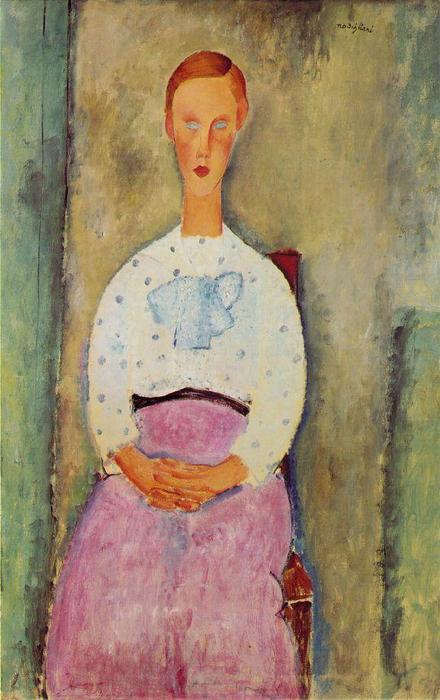
To encounter Amedeo Modigliani’s “Girl with a Polka-Dot Blouse” is to step into a realm of profound, quiet longing. Painted in 1919, this masterpiece serves as a poignant meditation on beauty and the delicate fragility of the human spirit. The portrait captures a young woman seated with a grace that feels both timeless and deeply intimate. Her presence is defined by the signature Modigliani silhouette—an elegant elongation of the neck and a subtle, sculptural treatment of the face that transcends mere anatomical accuracy to reach for a higher emotional truth. As she gazcepts the viewer with a gaze that seems simultaneously distant and vulnerable, the painting invites us into a shared moment of introspection, making it an ideal centerpiece for those who appreciate art that speaks to the depths of the human condition.
The composition is a masterful study in balance and atmosphere. The subject, adorned in a vibrant polka-dot blouse and a soft pink skirt, sits amidst a setting that suggests a quiet domesticity, with the presence of chairs and a couch in the background adding layers of depth to the scene. This arrangement creates a sense of lived-in reality, yet the stylized elements—the almond-shaped eyes and the rhythmic lines of her form—elevate the work from a simple portrait to an Expressionist icon. For the discerning collector or interior designer, this piece offers a sophisticated interplay of pattern and form, providing a focal point that is both visually stimulating and emotionally grounding.
Technique and the Language of Expressionism
Executed in oil on canvas, the technical brilliance of this work lies in its deceptive simplicity. Modigliani possessed a remarkable ability to blend pigments to achieve subtle gradations of color, creating a luminous surface that seems to glow from within. The artist’s palette, while featuring the playful pattern of the blouse, is anchored by a masterful harmony of tones that brings a warmth to the woman's skin. His brushwork, particularly in the rendering of the delicate folds of her clothing and the soft texture of her hair, demonstrates a precision that balances the loose, expressive energy characteristic of the École de Paris.
This technique is deeply intertwined with the movement of Expressionism, where the primary goal was to convey inner psychological states rather than objective reality. Modigliani’s fascination with the aesthetics of African sculpture is palpable here; the way he distorts and streamlines the figure serves as a conduit for conveying melancholy and grace. The painting does not merely depict a woman; it captures a mood—a fleeting moment of stillness in a rapidly changing modern world. This depth of character makes a high-quality reproduction of this work an extraordinary addition to any curated collection, offering a sense of historical weight and artistic prestige.
A Timeless Legacy for the Modern Interior
Beyond its historical significance, “Girl with a Polka-Dot Blouse” possesses a versatile aesthetic appeal that transcends eras. The rhythmic patterns of the polka dots and the soft, romantic hues of the pink skirt allow the painting to integrate seamlessly into various design styles, from classical European elegance to contemporary minimalist settings. It is a work that commands attention without overwhelming its surroundings, acting as a window into the early 20th-century bohemian spirit of Paris.
For those seeking to infuse their living spaces with inspiration, this artwork offers more than just decoration; it offers a conversation. It brings with it the tragic romance of Modigliani’s own life and the enduring power of his artistic vision. Whether displayed in a sunlit gallery or a private study, the painting continues to whisper stories of innovation, beauty, and the eternal search for connection, making it a truly transformative piece for any connoisseur of fine art.