Explore the captivating art of Amedeo Modigliani (1884-1920): iconic portraits & sculptures defined by elongated forms, expressive eyes, and a hauntingly beautiful style. Discover his legacy! #Modigliani #Expressionism
A Portrait of Quiet Intensity: Exploring Jeanne Hebuterne by Amedeo Modigliani
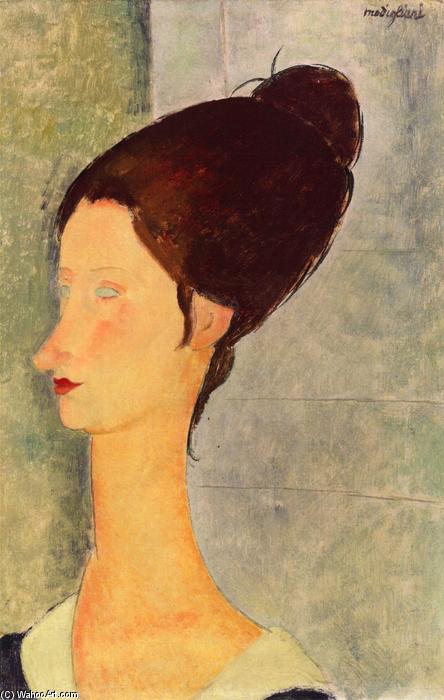
The painting “Jeanne Hebuterne” by Amedeo Modigliani stands as a poignant emblem of Expressionism’s ability to distill emotion into visual form. Completed in 1918, amidst the turbulent backdrop of World War I, this deceptively simple portrait transcends mere representation; it delves into the depths of human experience—a testament to Modigliani's unparalleled skill at capturing psychological nuance. Measuring 47 x 33 cm, the canvas is dominated by a woman’s face – Jeanne Hebuterne herself – rendered in Modigliani’s signature elongated style, instantly recognizable for its subtly distorted proportions and melancholic gaze.
The Style of Long Lines: Modigliani's Distinctive Technique
Modigliani’s artistic approach was revolutionary for his time. Rejecting academic conventions, he prioritized conveying feeling over meticulous realism. The technique employed here—oil on canvas—allowed for a velvety texture that enhances the emotional resonance of the image. Notice how the artist utilizes subtle shading to sculpt the contours of Jeanne's face, emphasizing her stillness and conveying an unspoken sadness. This deliberate simplification of form is characteristic of Expressionism’s core belief: art should communicate inner turmoil rather than merely depict external appearances. The elongated neck and stylized eyes are not accidental; they serve as visual metaphors for vulnerability and contemplation—elements central to Modigliani's artistic vision.
A Window into Parisian Modernity
“Jeanne Hebuterne” resides within a broader context of artistic innovation during the Belle Époque in Paris. Influenced by artists like Picasso and Matisse, Modigliani embraced experimentation while maintaining an unwavering focus on portraiture. The Musée National d'Art Moderne houses a significant collection of Modigliani’s works, offering visitors a chance to immerse themselves in his distinctive aesthetic—a style that anticipates the stylistic developments of subsequent generations. This painting reflects the anxieties and aspirations of a generation grappling with profound social change, mirroring the spirit of its time.
Symbolism Beyond Appearance: The Woman's Expression
Beyond its formal qualities, “Jeanne Hebuterne” is laden with symbolic significance. Jeanne’s averted gaze speaks volumes about inner thoughts—a refusal to confront external realities and a preoccupation with introspection. Her posture exudes quiet dignity despite the palpable sadness conveyed by her expression. These details invite contemplation on themes of solitude, resilience, and perhaps even unspoken longing – emotions that resonate powerfully across time. The muted palette contributes to this atmosphere of melancholy, reinforcing the painting’s emotional impact.
A Legacy of Beauty and Sorrow
“Jeanne Hebuterne” continues to captivate audiences today not merely for its visual beauty but also for its profound psychological depth. It exemplifies Modigliani's ability to transform ordinary subjects into vehicles for universal emotion—a skill that cemented his place as one of the most influential artists of the early 20th century. Reproductions of this masterpiece offer collectors and interior designers alike an opportunity to experience firsthand the enduring power of Expressionist art, capturing a moment frozen in time – a portrait imbued with both exquisite artistry and heartbreaking sensitivity.