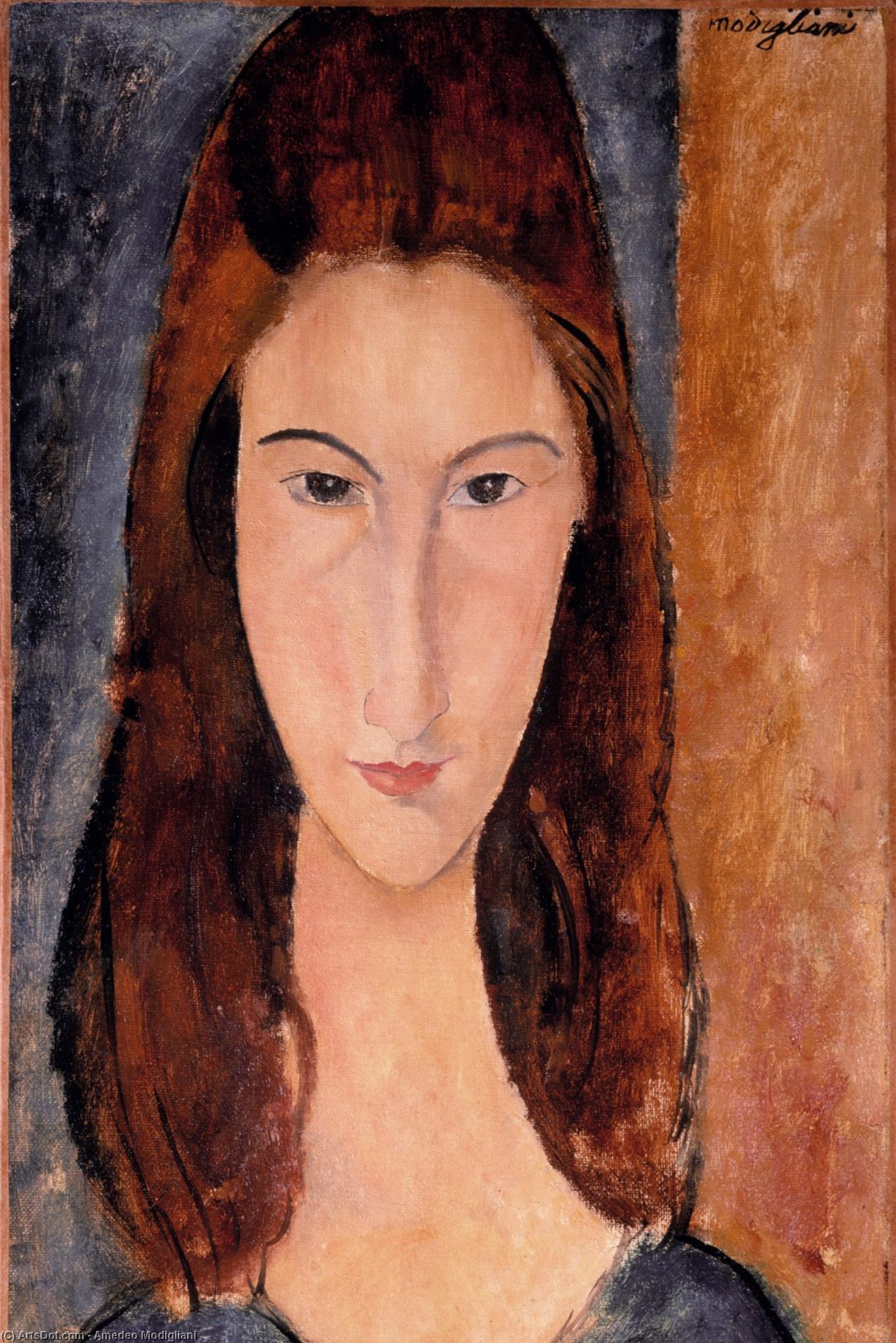
jeanne hebuterne

Met Museum's 25 Masterpieces: Art History & Decor Inspiration | ArtsDot


Amedeo Clemente Modigliani (1884 - 1920)

Explore the captivating art of Amedeo Modigliani (1884-1920): iconic portraits & sculptures defined by elongated forms, expressive eyes, and a hauntingly beautiful style. Discover his legacy! #Modigliani #Expressionism

A Portrait of Quiet Intensity: Exploring Jeanne Hébuterne by Amedeo Modigliani

  • Subject Matter Jeanne Hébuterne, a Parisian muse and lover of Modigliani himself, occupies the central position in this striking portrait. Captured at approximately 35 years old, Hébuterne embodies an idealized femininity—a gaze directed towards the horizon that speaks volumes about contemplation and unspoken emotion.
  • Style Modigliani’s signature style is instantly recognizable: elongated figures with stylized facial features characterized by almond-shaped eyes and simplified contours. This deliberate distortion serves not to diminish Hébuterne's beauty but rather to elevate it, transforming her into an emblem of timeless elegance.

Technique and Material Considerations

  • The painting is executed in oil on canvas, a technique favored by Modigliani for its ability to capture subtle tonal variations and achieve remarkable luminosity. Careful blending and layering contribute to the velvety texture of the skin tones—particularly noticeable around Hébuterne’s eyes—creating an illusion of depth and realism despite the stylized aesthetic.
  • Modigliani's meticulous attention to detail extends beyond mere representation; he employs a technique known as “masking,” where he applies thin layers of paint over areas of color to create highlights and enhance visual impact. This masterful manipulation of light is crucial to conveying the portrait’s melancholic mood.

Historical Context: The Belle Époque and Artistic Rebellion

  • Created in 1916 during the tumultuous period of World War I, Jeanne Hébuterne reflects the broader artistic currents of the Belle Époque—a time marked by optimism alongside anxieties about societal change. Modigliani’s rejection of academic conventions aligns with a growing movement towards expressive abstraction and psychological realism.
  • The portrait speaks to the fascination with the female nude and idealized beauty prevalent in Parisian art circles during this era. However, unlike many depictions of women at the time, Hébuterne's gaze is not overtly sensual; instead, it conveys a profound sense of introspection—a yearning for something beyond immediate perception.

Symbolism and Emotional Resonance

  • The yellowish hue of the background subtly underscores Hébuterne’s vulnerability and fragility. It contrasts sharply with her skin tone, emphasizing the delicate beauty she possesses. The positioning of Hébuterne—looking out towards the horizon—symbolizes hope amidst despair, suggesting a desire for transcendence.
  • Ultimately, Jeanne Hébuterne transcends mere likeness; it is an embodiment of Modigliani’s artistic vision—a poignant meditation on love, loss, and the elusive nature of human experience. Its enduring appeal lies in its ability to evoke feelings of quiet contemplation and melancholic beauty.