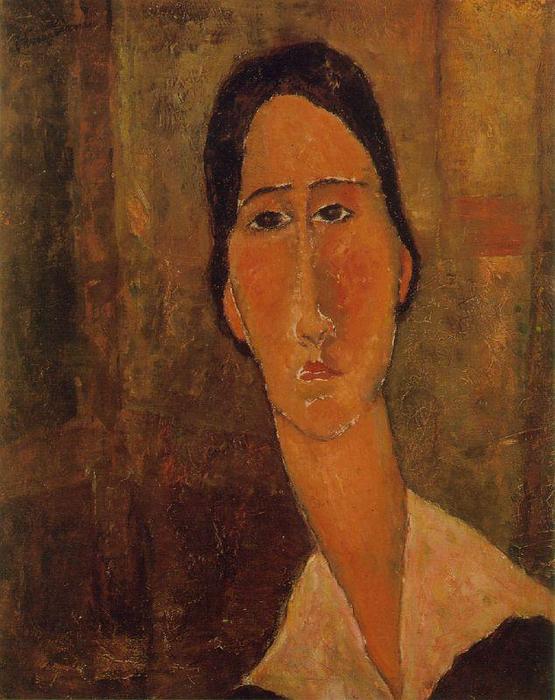
A Glimpse into Intimacy: Modigliani’s ‘Jeanne Hebuterne with White Collar’
This captivating portrait by Amedo Modigliani offers a poignant glimpse into the artist's personal life and artistic evolution. Painted in 1919, it depicts Jeanne Hebuterne, Modigliani’s lifelong companion and muse, rendered in his signature style – a compelling blend of Cubist influence and graceful elongation. The work transcends a simple likeness, becoming an intimate study of character and emotion.
Stylistic Innovation & Artistic Influences
Modigliani's approach to portraiture was revolutionary for its time. While he initially experimented with more radical Cubist forms, as seen in his earlier works, by 1919 he had developed a uniquely personal style.
‘Jeanne Hebuterne with White Collar’ exemplifies this – the figure is simplified into elegant geometric shapes, particularly noticeable in the face and neck. The influence of African sculpture, which fascinated many early Modernist artists, is subtly present in the almond-shaped eyes and stylized features. However, Modigliani tempers these influences with a distinctly Italian sensibility for line and form, creating an aesthetic that is both modern and timeless.
Technique & Materiality
The painting’s power lies not only in its composition but also in Modigliani's masterful technique. He employed a thick
impasto, layering oil paint onto the canvas with visible brushstrokes, creating a palpable texture and depth. This tactile quality adds to the emotional weight of the portrait, suggesting both vulnerability and resilience. The limited color palette – predominantly muted tones punctuated by the crisp white collar – focuses attention on Jeanne’s face and expression.
Historical Context & Personal Narrative
1919 was a pivotal year for Modigliani. He was struggling with illness, addiction, and financial hardship, yet his artistic output remained remarkably prolific. Jeanne Hebuterne served as his constant support during this turbulent period. Tragically, she would die by suicide just months after Modigliani’s death in 1920 while pregnant with their second child. Knowing this context imbues the portrait with a profound sense of melancholy and foreshadowing. It's not merely a depiction of a woman; it is a testament to a deeply felt love story cut short.
Symbolism & Emotional Resonance
The white collar, seemingly simple, acts as a focal point, drawing the eye and creating a sense of formality against the more loosely rendered background. It could symbolize Jeanne’s purity or perhaps her role as a stabilizing force in Modigliani's chaotic life. The subject’s gaze is direct yet introspective, conveying both strength and vulnerability. The overall effect is one of quiet dignity and profound sadness.
Interior Design & Collectible Appeal
This artwork would serve as a striking focal point in any interior space. Its muted color palette complements a variety of décor styles – from modern minimalist to classic bohemian. The portrait’s intimate scale makes it suitable for both smaller rooms and larger collections. As a highly sought-after work by a master of Modernism, a high-quality reproduction of
‘Jeanne Hebuterne with White Collar’ offers an opportunity to bring a piece of art history into your home or office.
Key Characteristics
- Artist: Amedeo Modigliani
- Year: 1919
- Style: Modernism, Cubist-influenced Portraiture
- Medium: Oil on Canvas
- Subject: Jeanne Hebuterne, the artist’s companion