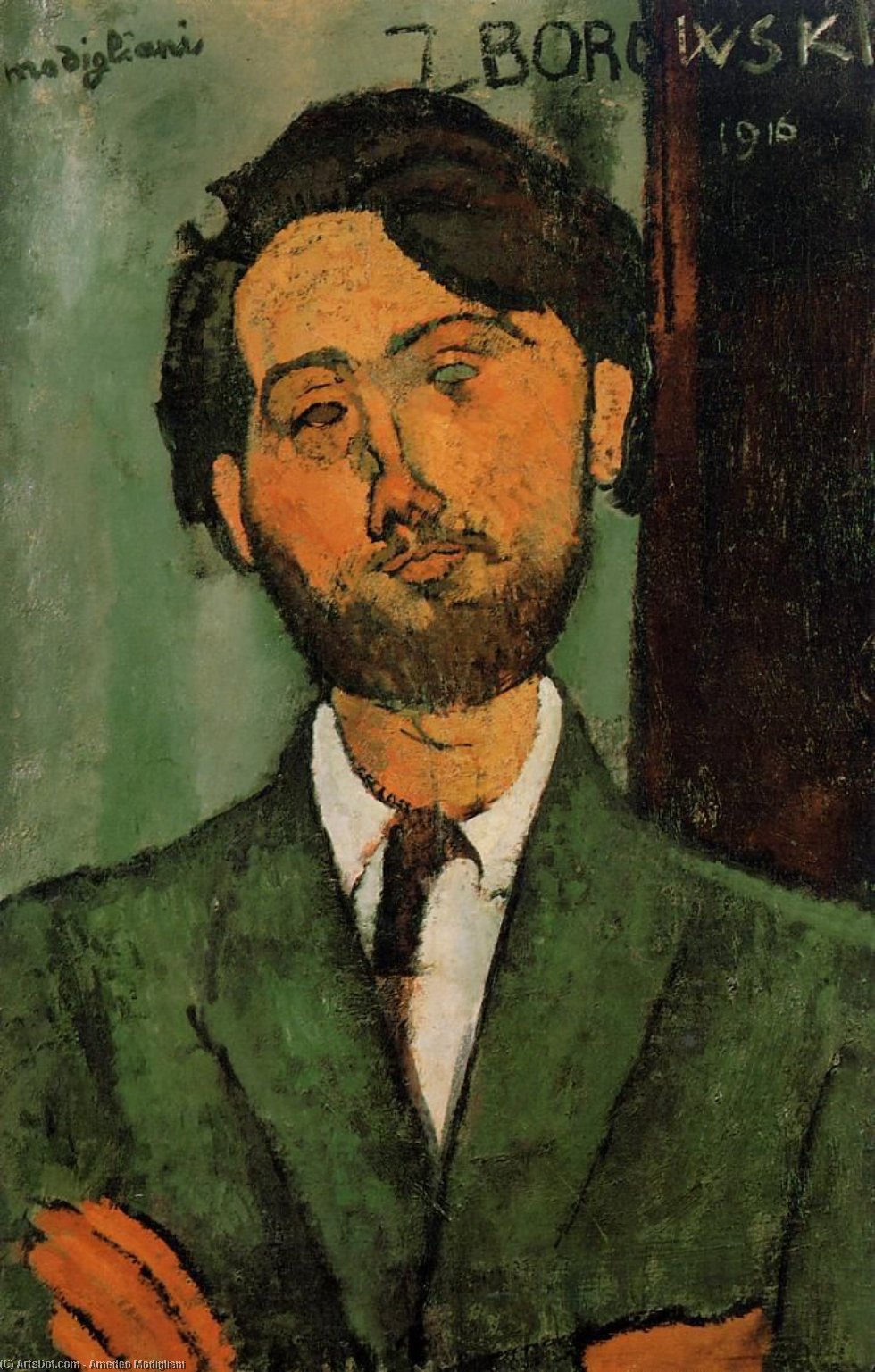
A Portrait of Melancholy Dignity: Exploring Modigliani’s Zborowski
Amedeo Clemente Modigliani's 1889 portrait of Leopold Zborowski stands as a testament to the artist’s masterful ability to distill profound emotion into deceptively simple forms. More than just a likeness, it’s an investigation into character—a glimpse beneath the surface of intellect and ambition—rendered with a distinctive Cubist fragmentation that simultaneously captures both solidity and vulnerability. The warm hues dominating the canvas – ochre yellows and earthy reds – lend an air of intimacy to the scene, drawing viewers into Zborowski's gaze. This particular painting exemplifies Modigliani’s signature style: elongated figures, stylized faces characterized by almond-shaped eyes and subtly flattened planes, a technique that deliberately disrupts traditional representational conventions.
- Style & Technique: Modigliani’s approach aligns with the burgeoning Cubist movement, albeit tempered by his own singular vision. He eschews meticulous detail in favor of expressive distortions, prioritizing tonal harmony and sculptural quality over photographic accuracy.
- Historical Context: Painted during a period of artistic experimentation and disillusionment following World War I, Zborowski reflects the anxieties of the era—a preoccupation with mortality and spiritual contemplation. Modigliani’s oeuvre speaks to the broader cultural currents of his time, capturing the mood of uncertainty and yearning for beauty amidst societal upheaval.
- Symbolism & Composition: The positioning of Zborowski – seated formally yet subtly turned towards the viewer—suggests a deliberate engagement with observation. The wall behind him serves as an anchor, grounding the figure within a space that feels both contained and expansive, mirroring perhaps the complexities of human experience.
The Poet’s Expression: Decoding Zborowski's Intense Stare
Modigliani’s masterful manipulation of light and shadow contributes significantly to the portrait’s emotional resonance. The artist employs a chiaroscuro technique—the dramatic contrast between illuminated areas and darkened recesses—to sculpt Zborowski’s face, emphasizing his gaze with an unwavering intensity. This stare isn't merely descriptive; it conveys a palpable sense of thoughtfulness and perhaps even melancholy – qualities that resonate deeply within the viewer. It invites contemplation on themes of introspection and confronting one's own inner landscape.
Beyond Representation: Modigliani’s Artistic Legacy
Ultimately, Zborowski transcends mere portraiture; it embodies Modigliani’s broader artistic philosophy—a rejection of academic idealism in favor of a deeply personal aesthetic. The painting's enduring appeal lies in its ability to communicate emotion without resorting to explicit narrative. It is a study in stillness and contemplation, capturing the essence of human dignity amidst existential questioning. Reproductions crafted by ArtsDot offer an unparalleled opportunity to experience this masterpiece firsthand—a chance to bring Modigliani’s evocative vision into your home or workspace.