Explore the captivating art of Amedeo Modigliani (1884-1920): iconic portraits & sculptures defined by elongated forms, expressive eyes, and a hauntingly beautiful style. Discover his legacy! #Modigliani #Expressionism
A Portrait of Quiet Contemplation: Madame Zborowska with Clasped Hands by Amedeo Modigliani
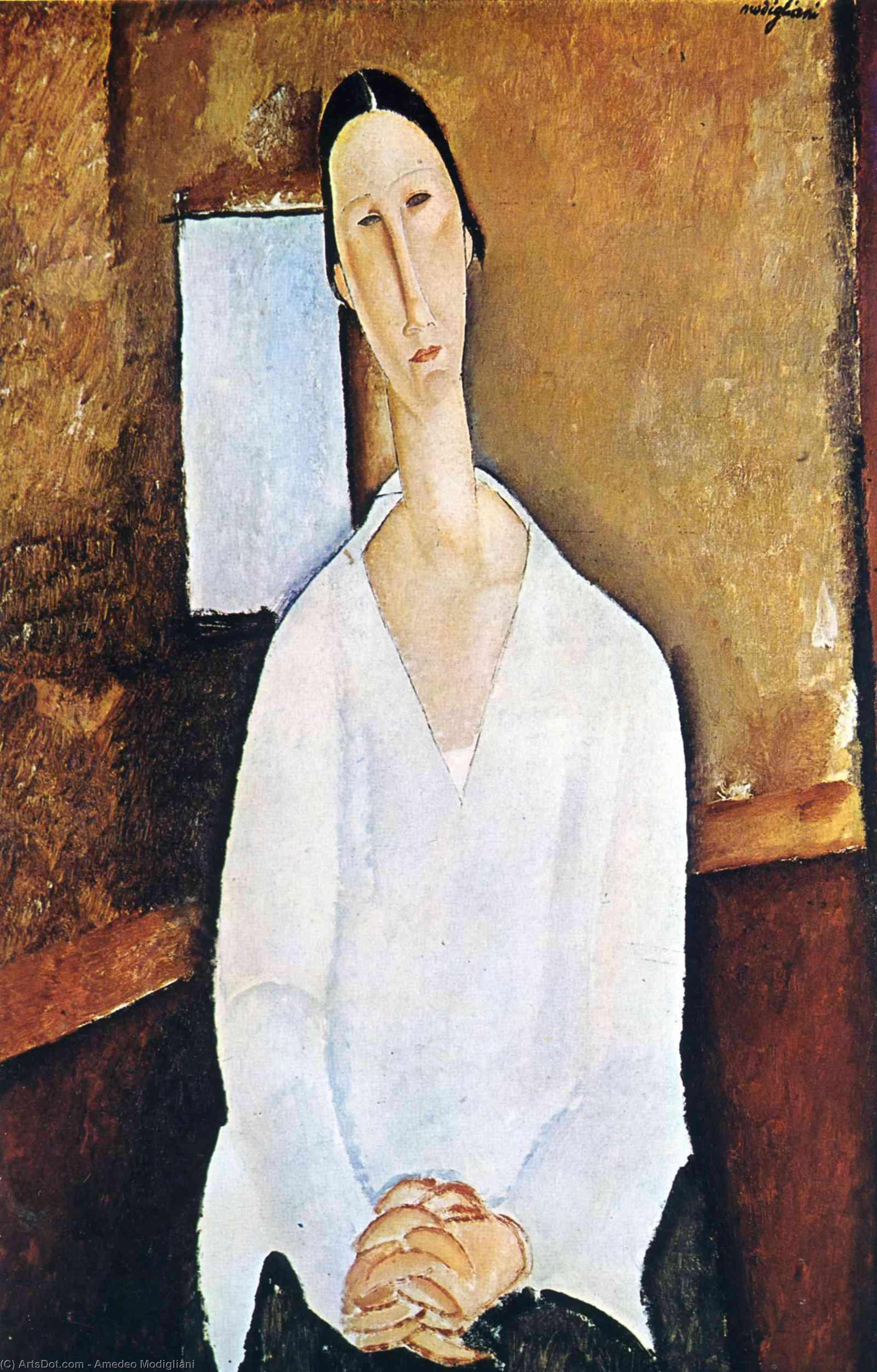
The painting “Madame Zborowska with Clasped Hands,” executed in 1917 by the Florentine sculptor and painter Amedeo Modigliani, transcends mere representation; it embodies the very essence of Expressionism—a movement dedicated to conveying subjective emotion rather than objective reality. Measuring 100 x 65 cm on canvas, this artwork captures a moment frozen in time, presenting Zborowska, Modigliani’s wife and muse, with an arresting stillness that speaks volumes about inner turmoil and profound vulnerability.
The Sculptor's Vision: Style and Technique
Modigliani’s distinctive artistic style is immediately recognizable through his elongated figures—a hallmark of his oeuvre—characterized by subtly distorted proportions that prioritize expressive gesture over anatomical accuracy. The artist skillfully employs bold lines and muted, earthy tones to sculpt the contours of Zborowska’s face and hands, creating a visual rhythm that draws the eye inward. His technique leans heavily on encaustic painting – layering wax mixed with pigment – which lends an unparalleled luminosity and textural richness to the surface, enhancing the palpable sense of melancholy inherent in the composition. The Musée National d'Art Moderne in Paris houses a significant collection showcasing Modigliani’s groundbreaking work, offering visitors a chance to immerse themselves in the spirit of avant-garde art (ArtsDot.com).
Historical Context: Echoes of Uncertainty
Painted during the tumultuous years leading up to World War I, “Madame Zborowska with Clasped Hands” reflects the anxieties and disillusionment prevalent within European artistic circles at the time. Expressionism arose as a reaction against Impressionism’s focus on capturing fleeting visual sensations, prioritizing instead the artist's emotional response to experience. The painting’s quiet intimacy serves as a counterpoint to the broader societal upheaval, suggesting a preoccupation with internal reflection amidst external pressures—a theme that resonates powerfully even today.
Symbolic Resonance: Hands Clasped in Prayer
The central motif of clasped hands is laden with symbolic significance. Traditionally representing faith, devotion, and supplication, they convey Zborowska’s posture as one of quiet contemplation and perhaps unspoken sorrow. The artist's deliberate simplification of form—the flattened planes of the face and hands—further amplifies this emotional impact, stripping away extraneous detail to focus solely on conveying a feeling of profound stillness. Modigliani’s masterful use of color contributes to this atmosphere; the subdued palette reinforces the painting’s melancholic tone and underscores its exploration of human emotion.
Emotional Impact: A Window into Inner Turmoil
Ultimately, “Madame Zborowska with Clasped Hands” succeeds in capturing a moment of exquisite vulnerability—a glimpse into Zborowska's inner world as perceived through Modigliani’s artistic gaze. It is not merely a portrait; it is an embodiment of emotion, inviting viewers to contemplate themes of longing, solitude, and the complexities of human experience. Like Reclining nude with Left Arm Resting on Forehead and Nu couche de dos, this piece exemplifies Modigliani's ability to distill profound psychological states into striking visual form (ArtsDot.com). Its enduring appeal lies in its capacity to evoke empathy and contemplation—a testament to the artist’s genius and a cornerstone of Expressionist art history.