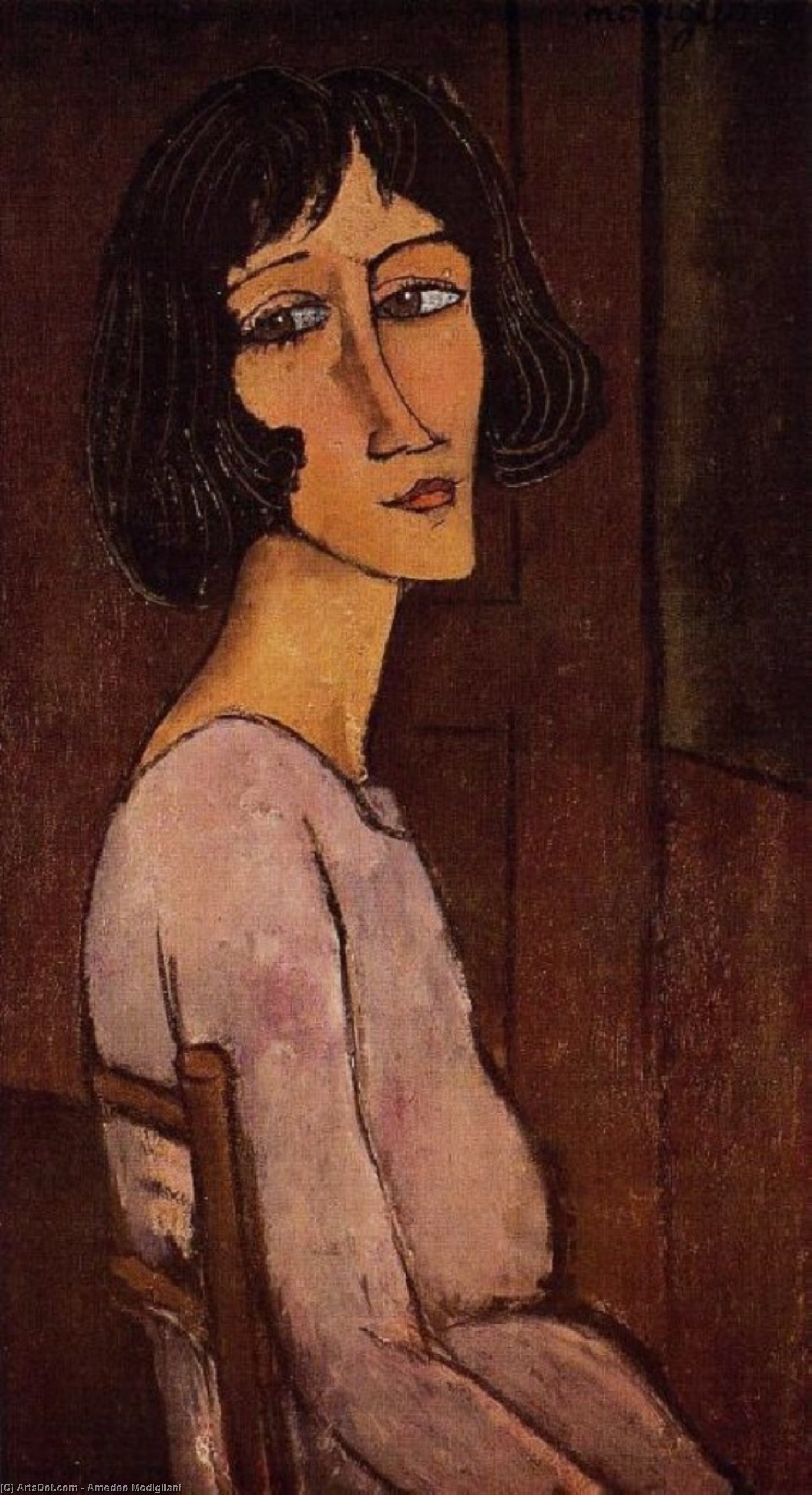
Explore 'Margherita' by Amedeo Modigliani – a captivating Cubist portrait of a melancholic woman. Discover elongated forms & impasto texture in this Expressionist masterpiece.
Explore the captivating art of Amedeo Modigliani (1884-1920): iconic portraits & sculptures defined by elongated forms, expressive eyes, and a hauntingly beautiful style. Discover his legacy! #Modigliani #Expressionism
A Glimpse into Intimacy: Modigliani’s ‘Margherita’
This captivating portrait, titled ‘Margherita’, is a quintessential example of Amedo Modigliani's signature style – a poignant exploration of the human form and emotional depth. Likely depicting his sister or a close acquaintance, the work embodies the artist’s unique ability to convey both beauty and melancholy through simplified forms and expressive lines.
Stylistic Innovation: Cubism & Beyond
While demonstrably influenced by the burgeoning Cubist movement of early 20th-century Paris, ‘Margherita’ transcends simple categorization. Modigliani doesn't fully embrace the fractured planes of Picasso or Braque; instead, he *synthesizes* Cubist principles with a distinctly personal aesthetic. The elongated neck and face, almond-shaped eyes, and simplified features are hallmarks of his style – drawing inspiration from African sculpture and Renaissance portraits alike. This fusion creates a sense of elegant distortion, imbuing the subject with an otherworldly quality.
Technique & Texture: A Tactile Experience
Modigliani’s masterful technique is evident in the application of oil paint. The use of impasto, particularly noticeable in the background and drapery, creates a rich, tactile surface. This textural quality isn't merely decorative; it adds weight and volume to the composition, enhancing the sense of form. The dark, textured planes of the background serve not only as contrast but also contribute to an atmosphere of quiet introspection. The brushwork is deliberate yet fluid, guiding the viewer’s eye across the canvas.
Historical Context: Paris & the School of Paris
Created during Modigliani's prolific period in Paris (1906-1920), ‘Margherita’ reflects the vibrant artistic climate of the time. He was deeply embedded within the *School of Paris*, a community of avant-garde artists pushing the boundaries of representation. However, Modigliani carved his own path, resisting strict adherence to any single movement. His focus remained consistently on portraiture, seeking to capture not just physical likeness but also the inner life of his subjects. The period was marked by both artistic freedom and personal hardship for Modigliani, factors that undoubtedly informed the emotional resonance of his work.
Symbolism & Emotional Impact
The symbolism in ‘Margherita’ is subtle yet powerful. The subject's gaze – often described as distant or melancholic – invites contemplation. The simplified forms and muted color palette contribute to a sense of quiet dignity, even vulnerability. While not overtly dramatic, the painting evokes a profound emotional response, prompting viewers to consider themes of identity, loneliness, and the complexities of human connection. The lack of elaborate detail forces us to focus on the essence of the subject – her humanity.
Interior Design & Collectibility
‘Margherita’ is a versatile piece for interior design. Its muted tones and elegant composition complement a range of styles, from modern minimalist spaces to more traditional settings. The painting's vertical format makes it ideal for hallways or above furniture. As a work by one of the 20th century’s most celebrated artists, a high-quality reproduction of ‘Margherita’ is not merely a decorative element but an investment in artistic heritage – a conversation starter and a source of enduring beauty.