A Study in Quiet Intensity: Exploring Modigliani’s Portrait of Paul Alexander
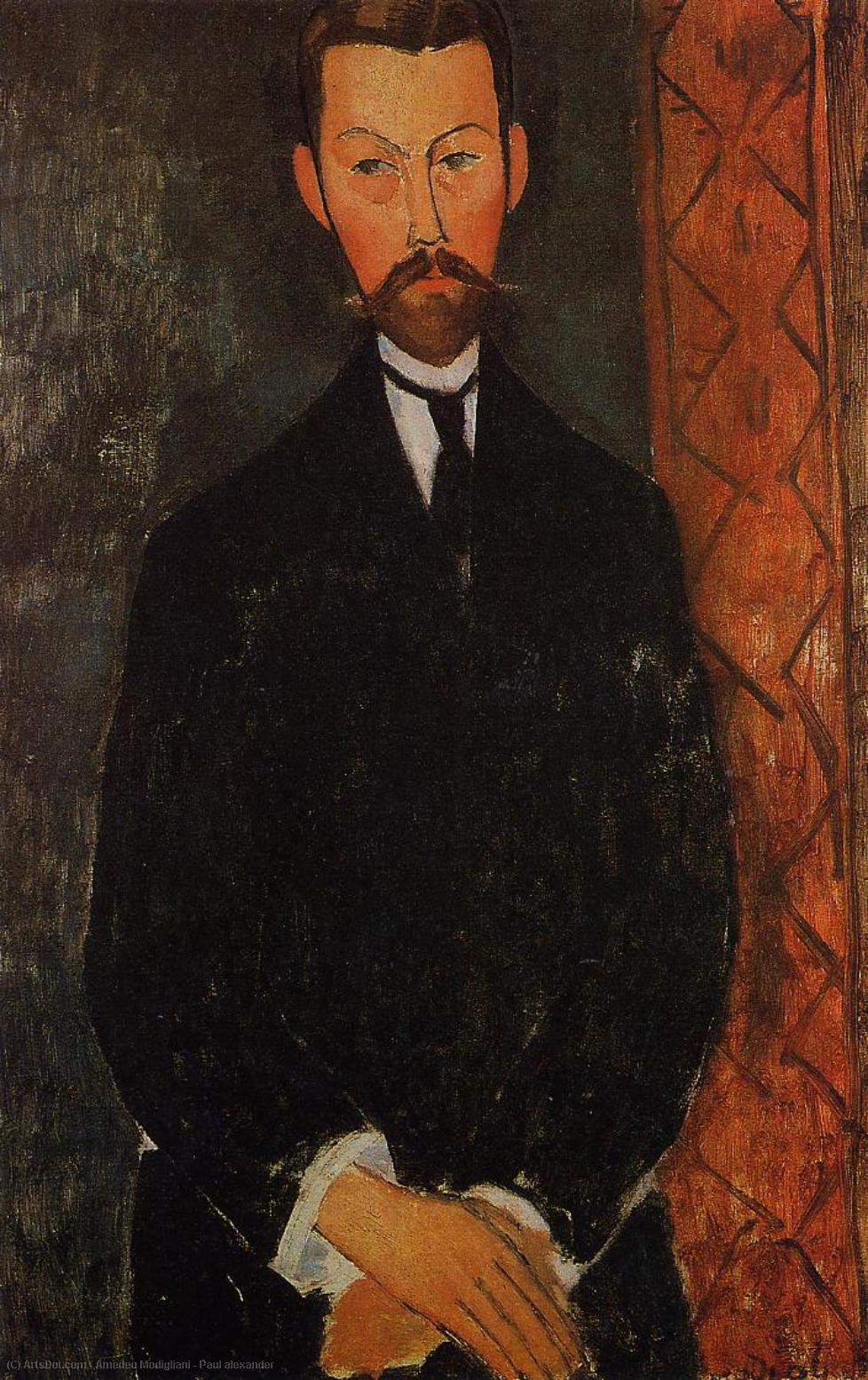
The painting depicts Paul Alexander, a figure rendered with Modigliani's signature elongated form—a stylistic hallmark that distinguishes his oeuvre from more conventional portraiture. Standing before a stark crimson wall, Alexander gazes directly at the viewer, conveying an aura of contemplative seriousness. The artist skillfully employs expressive brushstrokes and muted color palettes to capture not merely likeness but also psychological depth. This piece exemplifies Modigliani’s distinctive approach to portraying human subjects—a deliberate rejection of academic realism in favor of a hauntingly beautiful abstraction that prioritizes emotion over precise detail.
- Style: Expressionism – Modigliani's style transcends mere representation, delving into the realm of subjective experience. The elongated proportions and simplified features are characteristic of expressionist tendencies, reflecting an artist’s preoccupation with conveying inner turmoil and emotional resonance rather than objective observation.
- Technique: Oil on Canvas – Modigliani favored oil paints on canvas, allowing for rich textures and subtle tonal variations that contribute to the painting's dramatic atmosphere. The brushwork is loose and deliberate, emphasizing gesture and capturing fleeting impressions of light and shadow.
- Color Palette: Dominated by muted reds and browns—the crimson wall serves as a grounding element against which Alexander’s figure emerges with subdued hues. This restrained color scheme enhances the painting's melancholic mood and underscores Modigliani’s artistic sensitivity to tonal harmony.
Historical Context: Parisian Modernism and Artistic Rebellion
The painting emerged during the vibrant period of Parisian modernism—a movement that challenged established artistic conventions and embraced experimentation with form and technique. Modigliani, alongside Picasso and Matisse, was at the forefront of this revolutionary spirit, rejecting academic traditions in favor of exploring new visual languages. This rebellious stance aligns with broader cultural anxieties surrounding identity and displacement experienced by artists who migrated to Paris from Eastern Europe—particularly those grappling with questions of nationality and artistic heritage. The painting reflects a desire to capture the essence of human experience beyond superficial appearances, mirroring the philosophical currents of Nietzsche and Baudelaire that profoundly influenced Modigliani’s worldview.
Symbolism Beyond Appearance: Loneliness and Contemplation
Beyond its formal qualities—the elongated form and muted colors—the portrait carries symbolic weight. Alexander's gaze directs attention inward, suggesting a preoccupation with introspection and confronting existential questions. The crimson wall acts as a barrier, symbolizing isolation and perhaps representing the artist’s emotional distance from the viewer. Modigliani skillfully utilizes visual cues to convey psychological states—a subtle gesture of melancholy that speaks to the universal human condition. This quiet intensity is palpable in every brushstroke, inviting viewers to contemplate themes of solitude and contemplation alongside the depicted subject.
Emotional Impact: A Moment Frozen in Time
Ultimately, Modigliani’s Portrait of Paul Alexander transcends mere visual representation; it evokes a profound emotional response. The painting captures a fleeting moment—a gaze exchanged between artist and sitter—that encapsulates the complexities of human connection and vulnerability. Its haunting beauty resides not in idealized perfection but rather in its honest portrayal of inner emotion—a testament to Modigliani’s ability to distill psychological truth into an unforgettable visual experience. It remains a poignant reminder of the artist's enduring legacy as one who dared to explore the depths of human consciousness through innovative artistic expression.