A Gaze Through the Veil of Melancholy
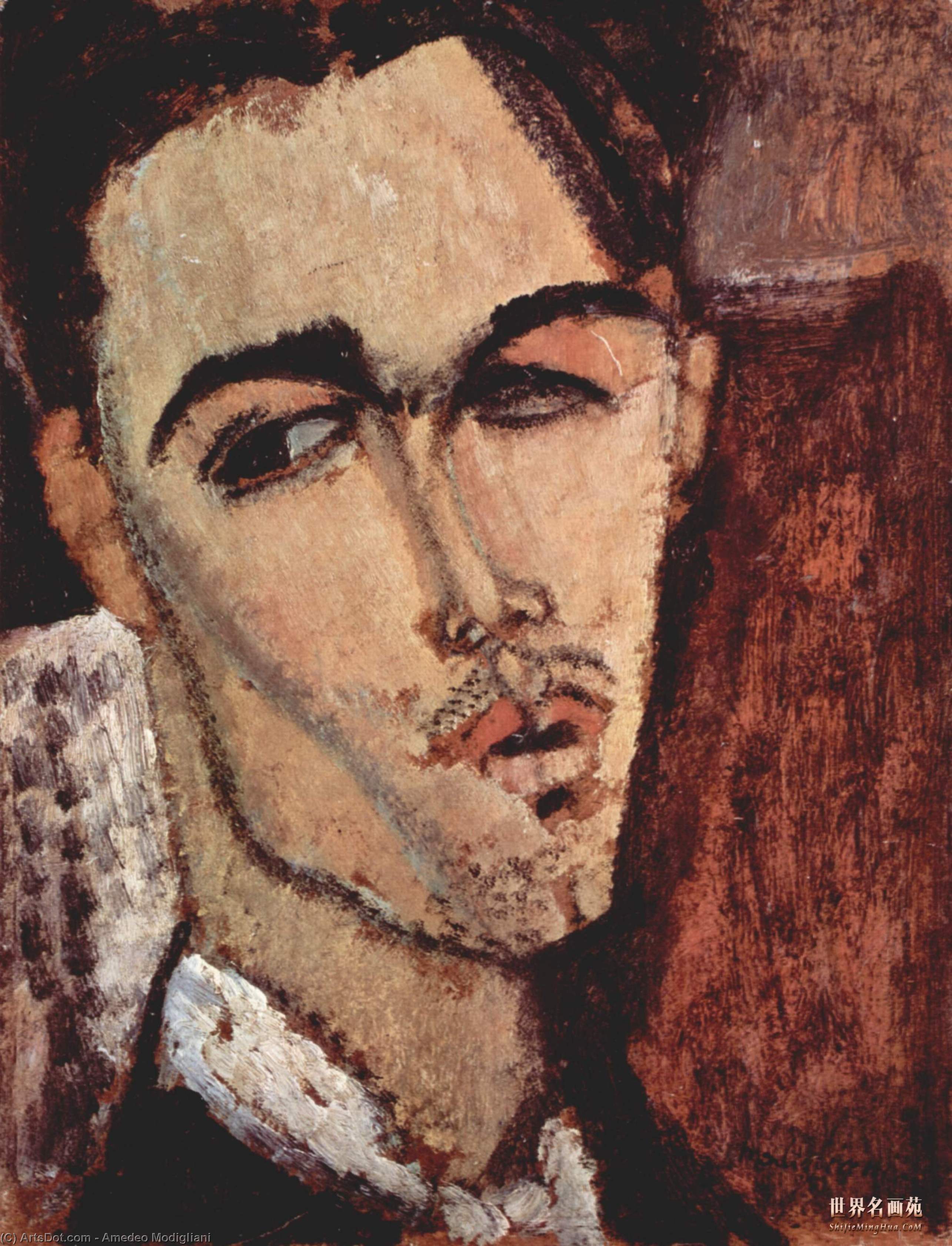
In the quiet, haunting corridors of early 20th-century modernism, few images possess the arresting intimacy of Amedeo Modigliani’s "Portrait of Celso Lagar." Created in 1915, this masterpiece is far more than a mere likeness of a Romanian businessman; it is a profound psychological study that captures the very essence of the human condition. When one encounters this portrait, the first sensation is an inescapable connection established by the sitter's gaze. Lagar looks directly at the viewer, his eyes possessing a depth that seems to pierce through the canvas, inviting us into a shared moment of quiet introspection and subtle, beautiful sorrow.
The painting serves as a window into the soul of the Expressionist movement, where the artist’s internal emotional landscape takes precedence over the objective reality of the subject. Modigliani, a master of the elongated form, utilizes his signature stylistic distortions to amplify the sitter's presence. The subtle stretching of the facial features and the elegant, rhythmic lines of the neck create an ethereal, almost otherworldly quality. This is not a portrait meant to document a face, but rather to distill a feeling—a delicate balance of dignity and vulnerability that resonates deeply with anyone who has ever felt the weight of longing.
Mastery of Technique and Luminous Texture
The technical execution of "Portrait of Celso Lagar" reveals Modigliani’s sophisticated command over the medium of oil on canvas. To achieve the painting's characteristic glow, the artist employed a meticulous process of applying thin, translucent glazes over carefully prepared underlayers. This technique allows light to penetrate the surface of the paint, creating a luminous effect that gives the skin tones a soft, breathing quality. The interplay of light and shadow is not used to create dramatic chiaroscuro, but rather to sculpt the flattened planes of the face, lending a sense of weight and permanence to the ephemeral emotion captured within.
For the discerning collector or interior designer, this piece offers a remarkable study in color harmony and structural elegance. The palette is restrained yet deeply evocative, utilizing earthy tones and subtle transitions that ground the subject while allowing the expressive lines to take center stage. The way the paint clings to the canvas, creating a smooth yet textured surface, makes a high-quality reproduction of this work an exquisite addition to any curated space. It provides a focal point that is both intellectually stimulating and aesthetically soothing, perfect for environments that value sophisticated, soulful decor.
A Legacy of Intellectual and Emotional Depth
To understand the gravity of this portrait, one must consider the turbulent intellectual atmosphere of 1915 Europe. Modigliani was a man shaped by the radical philosophies of his time, drawing inspiration from the unsettling poetry of Lautréamont and the existential inquiries of Nietzsche. These influences are woven into the very fabric of "Portrait of Celso Lagar." The painting embodies the Decadent movement's fascination with beauty found in decay and the profound beauty of sadness. There is a certain tragic grace in the way Lagar is presented—a man caught in a moment of timeless, quiet contemplation.
Owning or displaying a reproduction of this work allows for the preservation of this historical and emotional legacy. It brings into a modern home the spirit of the Montparnasse era, offering a piece that transcends mere decoration to become a conversation starter about art history, human emotion, and the enduring power of the gaze. Whether placed in a private study or a grand living gallery, Modigliani’s portrait remains a timeless testament to the beauty that can be found within the depths of melancholy.