A Meditation on Fragility and Presence
In the quietude of
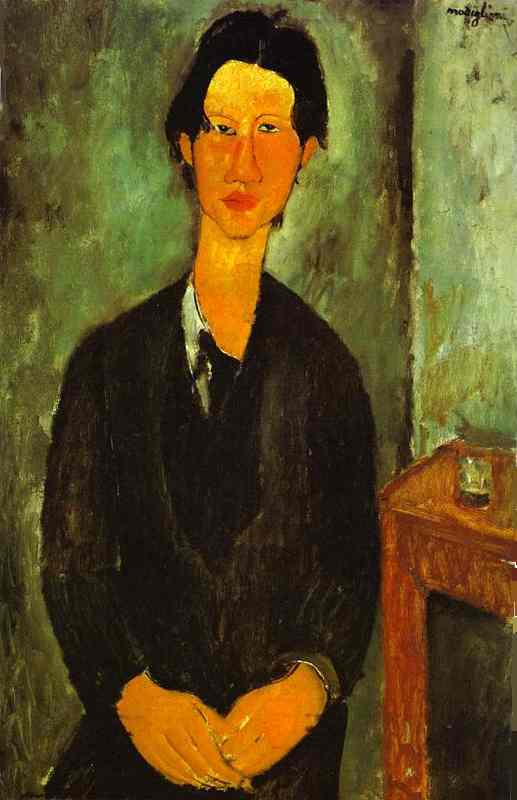
Amedeo Modigliani’s Portrait of Chaim Soutine Seated at a Table, one finds far more than a mere likeness of a fellow artist; one encounters a profound meditation on the human condition. The painting captures Soutine in a moment of heavy stillness, his hands clasped before him, inviting the viewer into an intimate, almost whispered, dialogue. There is a palpable sense of vulnerability etched into the composition, as if the subject is caught in a private moment of deep introspection. Modigliani does not seek to overwhelm with grand gestures; instead, he utilizes a subdued, earthy palette of greens, browns, and blacks to create an atmosphere of melancholic grace. This restraint allows the emotional weight of the sitter’s gaze to resonate, making the artwork a powerful study of loneliness and contemplative strength.
The Geometry of Emotion: Technique and Form
To look closely at this masterpiece is to witness the deliberate departure from academic realism that defined the avant-garde era. Modigliani employs his signature elongated style, stretching the forms of the neck and facial features to achieve a rhythmic, lyrical elegance. This technique, heavily influenced by the structural simplicity of
African sculpture and the fragmented planes of
Cubism, reduces the subject to his most essential geometric essence. While much of the canvas possesses a smooth, almost flattened aesthetic that emphasizes tonal harmony, the artist strategically applies thick
impasto around Soutine’s face and torso. This textural depth provides a vital counterpoint to the otherwise minimal brushwork, lending a physical presence to the subject's underlying emotion. The lighting is soft and diffused, casting gentle shadows that define the form without the harshness of high contrast, contributing to the painting's overall sense of quiet solemnity.
An Enduring Legacy for the Modern Interior
Created during the transformative years of the
École de Paris (circa 1916-18), this portrait is a relic of a period marked by intense intellectual debate and artistic rebellion. As the world grappled with the uncertainties of the First World War, artists like Modigliani were redefining the boundaries of personal expression, rejecting bourgeois ideals in favor of something raw and authentic. For the discerning collector or interior designer, this piece offers a unique opportunity to introduce a sense of historical depth and sophisticated tranquility into a space.
The artwork possesses a timeless quality that complements both contemporary and classical settings:
- Visual Harmony: The muted, organic color palette integrates seamlessly with modern, minimalist, or mid-century modern decor.
- Emotional Resonance: It serves as a focal point of quietude, perfect for libraries, studies, or contemplative living spaces.
- Artistic Pedigree: Owning a high-quality reproduction of such an iconic movement allows for a continuous connection to the golden age of Parisian modernism.
Whether viewed as a historical document of the relationship between two great masters or as a stunning example of modernist portraiture, this work remains an evocative testament to the beauty found within fragility.