A Gaze Through the Veil of Melancholy
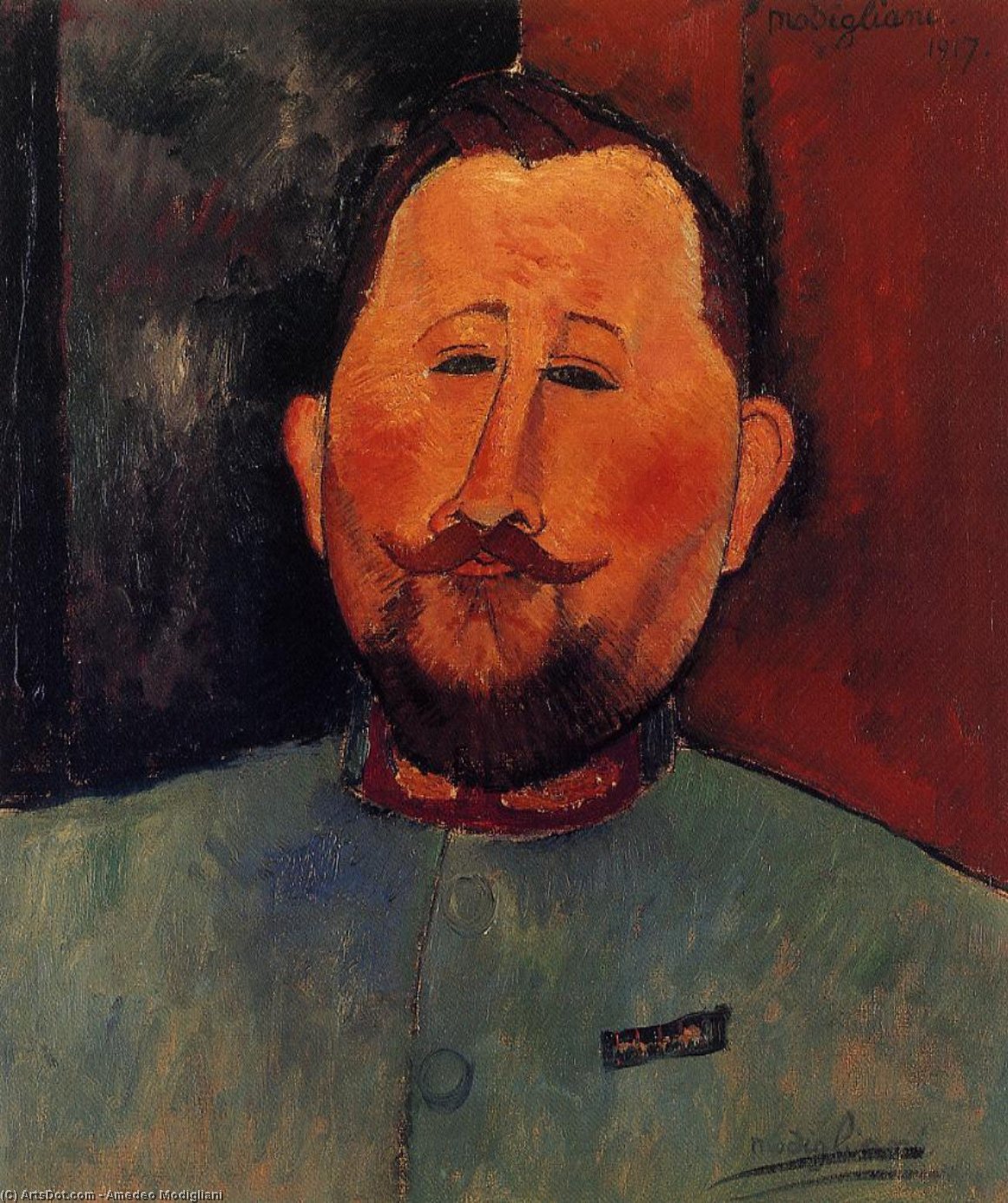
In the quiet, haunting corridors of early twentieth-century Expressionism, few works capture the fragility of the human spirit as poignantly as Amedeo Clemente Modigliani’s 1917 masterpiece, Portrait of Doctor Devaraigne. To encounter this painting is to step into a private moment of profound introspection, where the boundaries between the sitter and the viewer begin to dissolve. The portrait does not merely present a likeness of a man; it offers an invitation into a psychological landscape defined by a subtle, aching stillness. Modigliani, an artist whose life was as much a tragedy as it was a triumph of vision, utilizes his signature stylistic language to strip away the superficialities of the subject, leaving behind an essence that is both unsettling and deeply moving.
The composition is anchored by the doctor's face, rendered with those iconic, elongated features that have become Modigliani’s unmistakable calling card. His gaze, though fixed, seems to look through the physical world toward something unseen—a flicker of sorrow or perhaps a heavy weight of contemplation that resonates long after one turns away. This sense of emotional depth is amplified by the artist's masterful use of flattened planes and simplified forms, a technique that rejects the rigid academic realism of the past in favor of a more rhythmic, sculptural truth. The skin tones, pale and luminous, stand in stark, beautiful contrast against a muted red backdrop, creating a visual tension that breathes life into the canvas.
The Architecture of Emotion and Technique
Beyond the immediate emotional impact, the technical brilliance of Doctor Devaraigne lies in its deliberate use of color and space to construct an atmosphere of quiet intensity. The choice of a deep, somber red for the background serves as more than just a decorative element; it acts as a psychological weight, pressing against the subject and intensifying the sense of isolation. This chromatic decision, paired with the subtle manipulation of light and shadow, creates a chiaroscuro effect that feels modern yet deeply rooted in the classical tradition of portraiture. The presence of two flanking figures, partially obscured or relegated to the periphery, adds a layer of narrative mystery, suggesting a world of unspoken relationships and shared histories that exist just beyond the frame.
For the discerning collector or interior designer, this artwork represents a profound opportunity to introduce a sense of historical gravity and soulful elegance into a space. A high-quality reproduction of this piece does not merely decorate a wall; it anchors a room with its commanding presence and intellectual depth. The painting’s ability to evoke both the turbulent anxieties of the post-World War I era and a timeless, universal human vulnerability makes it a versatile cornerstone for any curated collection. Whether placed in a quiet study or a grand gallery, Portrait of Doctor Devaraigne serves as a constant reminder of the beauty found within the shadows of the human experience.