A Portrait of Melancholy and Modernity: Amedeo Modigliani’s “Portrait of Leon Bakst”
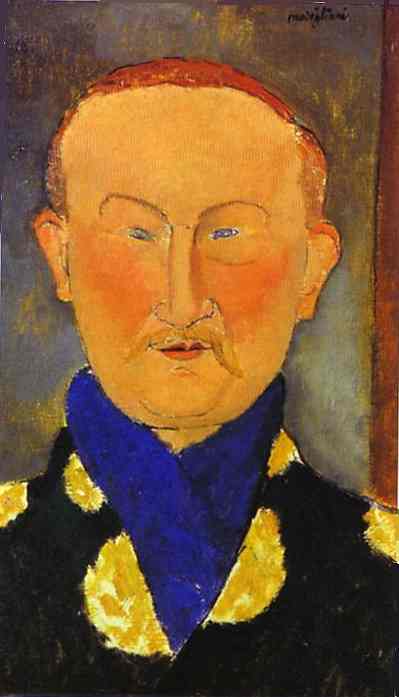
Amedeo Modigliani's "Portrait of Leon Bakst," painted in 1917, is more than just a likeness; it’s a distilled essence of the era – a poignant intersection of artistic innovation and personal longing. This intimate oil on canvas, measuring a modest 55 x 33 cm, resides within the National Gallery of Art's collection, yet its impact resonates far beyond the walls of that institution. The painting immediately draws the eye to Leon Bakst himself, a pivotal figure in the Russian avant-garde movement, instantly recognizable by his distinctive beard and mustache, rendered with Modigliani’s signature elongated features. He sits bathed in a subtle light, a quiet dignity radiating from his gaze, suggesting both intellectual depth and an underlying sadness – a characteristic often attributed to the artist himself.
The Language of Long Lines and Restrained Color
Modigliani’s artistic language is immediately apparent. The painting exemplifies his distinctive style, characterized by elongated forms, simplified shapes, and a remarkably restrained color palette. He eschews dramatic contrasts in favor of muted tones – primarily blues, yellows, and browns – creating an atmosphere of quiet contemplation. This deliberate simplicity isn't a lack of skill; rather, it’s a conscious choice to focus on the essential qualities of his subject, mirroring the principles of Cubism and Fauvism that were simultaneously influencing the art world at the time. Notice how Modigliani subtly distorts the features of Bakst, creating an almost mask-like quality, emphasizing the character's inner life over a purely realistic representation. The background, deliberately blurred and secondary, serves to further isolate Bakst, intensifying the focus on his presence.
Symbolism in Shadow and Gesture
Beyond the technical mastery, “Portrait of Leon Bakst” is rich with symbolic potential. The blue tie and yellow scarf – vibrant yet understated – offer a visual counterpoint to the muted tones of the portrait, hinting at a complex personality. Bakst’s pose itself is significant; he isn't formally posed for the camera but rather appears lost in thought, his hands resting loosely on what might be a table or lap. This gesture conveys vulnerability and introspection, aligning with Modigliani’s own struggles with illness and personal relationships. The two figures glimpsed in the background, though indistinct, could represent the social circles of Bakst, adding another layer to the portrait's narrative – perhaps suggesting the isolation inherent within even the most vibrant artistic communities.
A Window into a Troubled Genius
Painted during a period of immense personal and artistic turmoil for Modigliani himself, “Portrait of Leon Bakst” offers a rare glimpse into the mind of a profoundly talented yet tragically flawed artist. His life was marked by chronic illness, failed romances, and a relentless pursuit of beauty amidst hardship. Knowing this context deepens our appreciation for the painting’s melancholic quality; it's not simply a portrait but a meditation on mortality, longing, and the elusive nature of artistic expression. The work stands as a testament to Modigliani’s ability to capture not just outward appearances, but also the unspoken emotions that reside within the human spirit. ArtsDot offers exquisite, hand-painted reproductions of this captivating piece, allowing you to bring this poignant portrait into your home and connect with the enduring legacy of Amedeo Modigliani.
- Dimensions: 55 x 33 cm (21.65 x 13.4 inches)
- Year: 1917
- Artist: Amedeo Clemente Modigliani
- Location: National Gallery of Art, Washington D.C.