Inspired by Nietzsche, Baudelaire, and Lautréamont, Modigliani’s work embodies longing and fragility. Explore his legacy through stunning reproductions.
A Portrait of Melancholy Beauty: Exploring Modigliani’s ‘Seated Woman’
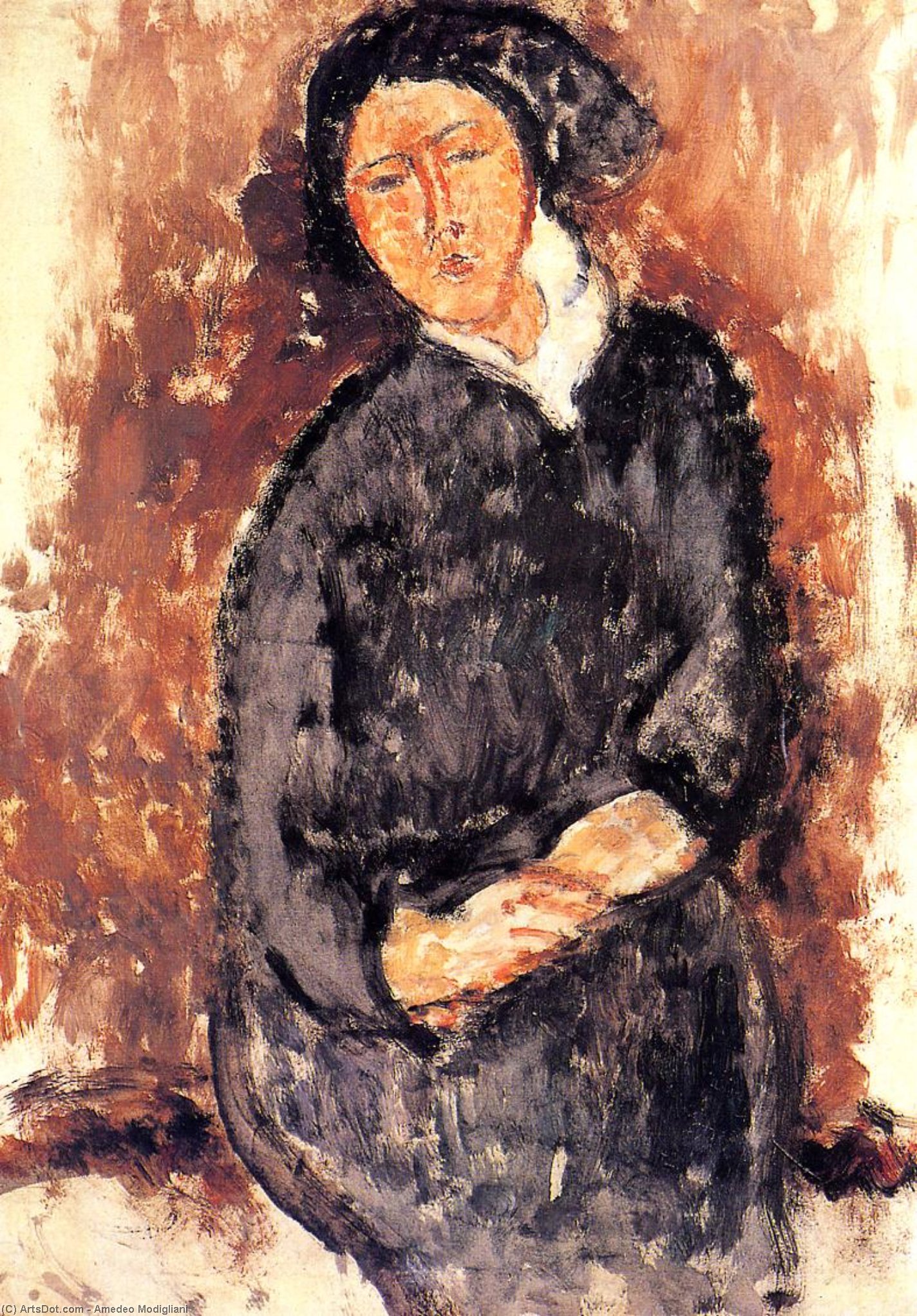
Amedeo Clemente Modigliani's “Seated Woman,” painted in 1919, transcends mere representation; it embodies the very essence of Expressionist artistry and captures a profound sense of longing that continues to resonate with audiences today. This striking portrait depicts a woman seated gracefully on a divan, her gaze directed outwards with an enigmatic stillness—a characteristic feature of Modigliani’s oeuvre that distinguishes him from his contemporaries. The painting's muted palette – predominantly ochre, brown, and ivory – contributes to its somber mood, reflecting the artist’s preoccupation with themes of isolation and vulnerability.
- Style: Expressionism – Modigliani’s approach eschewed academic conventions, prioritizing emotional intensity over meticulous realism. He sought to convey inner feelings rather than external appearances, utilizing distorted forms and flattened planes to achieve this goal.
- Technique: Oil on Canvas – Modigliani employed a masterful technique of layering thin glazes of oil paint onto canvas, creating luminous surfaces that subtly shimmer with color. This method allowed for nuanced tonal gradations and enhanced the expressive quality of his compositions.
- Historical Context: The painting emerged during the turbulent years following World War I, a period marked by disillusionment and artistic experimentation. Expressionism flourished as a reaction against bourgeois ideals, reflecting anxieties about societal change and exploring psychological complexities.
The Anatomy of Emotion: Modigliani’s Distinctive Artistic Vision
Modigliani's signature style—the elongated neck and stylized facial features—is instantly recognizable and deliberately unsettling. This technique wasn’t merely aesthetic; it served as a powerful tool for conveying emotional depth. By exaggerating anatomical proportions, he aimed to capture the inner turmoil of his subjects, mirroring the artist’s own struggles with illness and despair. The woman's gaze, seemingly unfocused yet brimming with unspoken emotion, invites contemplation about solitude and introspection—themes central to Modigliani’s artistic exploration.
Symbolism Beyond Appearance: Interpreting the Woman’s Pose
The seated posture itself carries symbolic weight. Traditionally associated with contemplation and repose, it contrasts sharply with the dynamism of other artistic movements of the time. However, Modigliani subtly disrupts this convention, positioning the woman slightly off-center—a gesture that reinforces her vulnerability and emphasizes her detachment from the viewer. This deliberate imbalance contributes to the painting’s overall sense of melancholy, prompting viewers to consider questions of identity and emotional experience.
A Legacy of Quiet Intensity: Why ‘Seated Woman’ Remains Captivating
“Seated Woman” stands as a testament to Modigliani's ability to distill profound emotion into deceptively simple forms. Its enduring appeal lies in its refusal to offer easy answers or comforting illusions—instead, it confronts viewers with the unsettling beauty of human fragility and invites them to engage in a dialogue about inner life. Reproductions of this masterpiece allow art lovers and collectors alike to experience firsthand the transformative power of Expressionist artistry, capturing a timeless vision of melancholy grace that continues to inspire awe and contemplation.